
On this page
For SaaS founders, organic growth often feels like chasing a moving target. As users move away from rigid keyword fragments and toward natural, conversational queries, the standard SEO playbook is being rewritten by voice assistants and generative AI. Voice search SEO for SaaS is the practice of optimizing your product-led content to be the single, definitive answer read aloud by assistants like Google Assistant, Siri, and Alexa.
Capturing these spoken queries is no longer a niche tactic. Search behavior has shifted from short phrases like "CRM for startups" to specific questions like "What is the best CRM for a ten-person remote team?" This presents a unique opportunity for founders to build authority by providing direct solutions at the exact moment a prospect identifies a problem. By mastering voice and Generative Engine Optimization (GEO), you can ensure your SaaS is discovered as the authoritative voice in the room.
The Mechanics of Voice Discovery in the SaaS Ecosystem
Understanding how voice search differs from traditional text-based search is critical for your content architecture. While text searches are often short and fragmented, voice queries are typically longer and phrased as complete questions. Users speak to their devices as they would to a colleague, prioritizing natural language over technical shorthand.
In the SaaS world, this means your prospects are searching for specific outcomes. Instead of searching for "project management software features," they are asking, "How do I track employee billable hours in a project management tool?" To win these queries, your content must mimic this human-to-human exchange.
Voice assistants prioritize speed and authority. Because voice answers are typically single-source results, search engines favor pages that load rapidly and provide clear, unambiguous information. For a SaaS founder, this implies that technical health—specifically mobile responsiveness and Core Web Vitals—is just as important as the words on the page. If your site is slow, you are effectively invisible to voice discovery.
Winning 'Position Zero' with Conversational Content
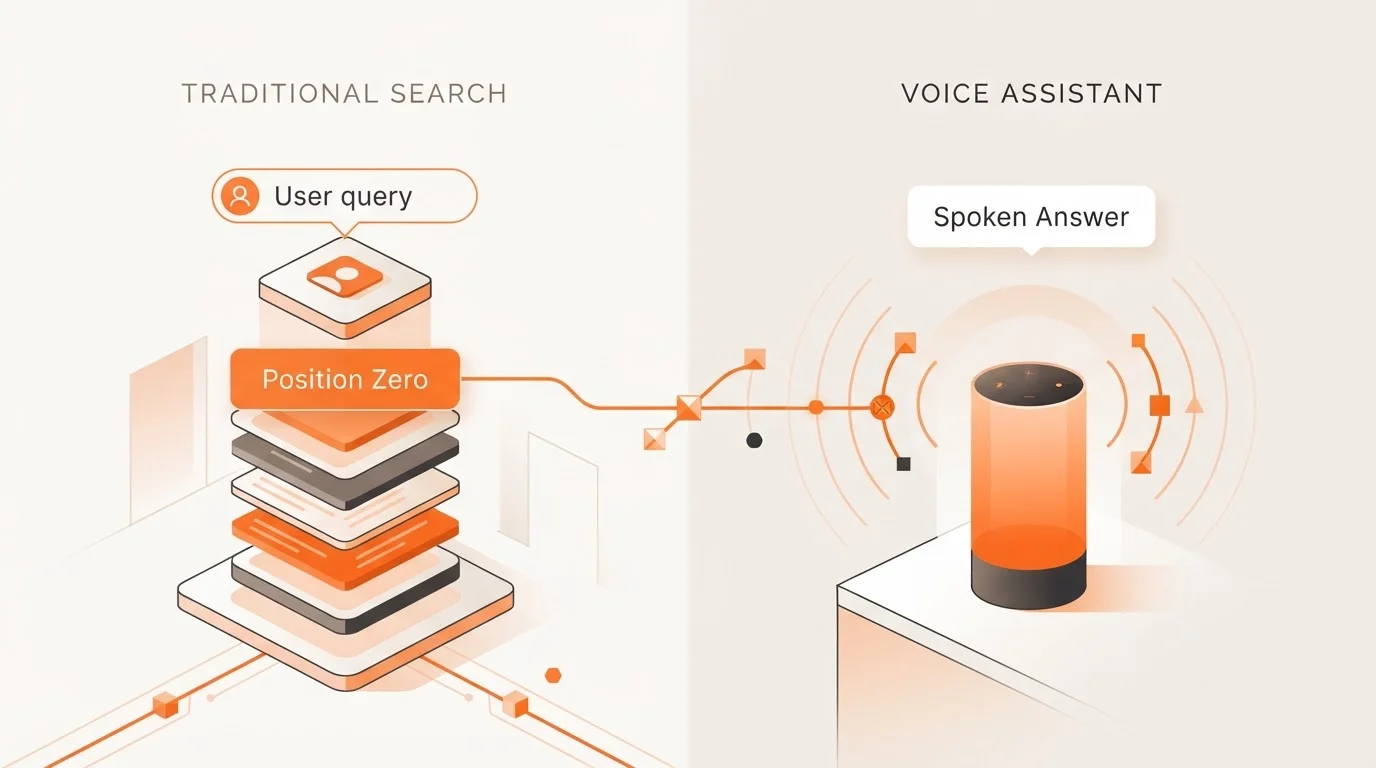
The ultimate goal of voice search SEO is to secure the Featured Snippet, often referred to as 'Position Zero.' This is the block of text that appears at the very top of search results, which voice assistants use as their primary source for spoken answers.
To capture this territory, your product-led content must be structured to answer specific questions early in the article. Start your posts with a clear summary that addresses the primary query in a natural tone. Use H2 and H3 headings to frame the sub-questions your audience is asking. For example, if you sell an automated accounting tool, a blog post shouldn't just be 'Benefits of Automation'; it should include sections like 'How does automated reconciliation save time?'
Maintaining this level of specificity across a high volume of content is the primary challenge for growing SaaS teams. Blogged solves this by acting as an autonomous SEO and GEO blogging platform. It handles the entire lifecycle—research, planning, writing, and publishing—ensuring your content is naturally conversational and structured to hit featured snippet targets. By leveraging a Knowledge Engine that organizes your product facts and positioning, it ensures every AI-generated answer remains factually accurate to your specific SaaS product.
Technical Foundations: Schema and Structured Data

While great writing captures the user's attention, Schema markup (structured data) provides the machine-readable instructions that search engines need to categorize your content accurately. For SaaS companies, implementing the right schema makes it significantly easier for AI engines to parse your value proposition.
Focus on these essential schema types for your SaaS website:
- SoftwareApplication Schema: This identifies your page as a web-based tool. It allows you to define your application category (e.g., CRM, Analytics), browser requirements, and pricing details in a way that AI engines can easily read.
- FAQPage Schema: This is the most powerful tool for voice search. By marking up your frequently asked questions, you provide a clear roadmap for assistants to find direct answers to user queries.
- Product Schema: Use this on your core feature pages to highlight specific capabilities, verified reviews, and pricing limits.
Implementing these technical layers can be daunting for founders focused on building their product. Automated platforms like Blogged integrate these SEO best practices natively into the publishing workflow, adding relevant internal links and structured data automatically so that your organic growth engine runs on autopilot.
Measuring Performance in a Voice-First World
Because search consoles do not always provide a specific 'voice search' filter, founders must use indirect metrics to track success. The most effective way to monitor voice search performance is to filter your search queries for question-based keywords such as "how," "what," "where," and "why."
Monitor your average position for these long-tail queries. If you are consistently in the top results, you are likely being surfaced in voice searches. Additionally, track your appearances in rich results, specifically looking for 'FAQ' and 'Product' snippets.
Advanced tracking allows you to see the full impact of your content strategy. With Blogged, users can track Search Console performance, lead growth, and reader feedback directly within the platform. By seeing which conversational articles are driving actual CTA outcomes and lead generation, you can refine your strategy to focus on the topics that resonate most with your audience's spoken needs.
Frequently Asked Questions About Voice Search SEO for SaaS
Q: What is the most important factor for voice search SEO?
The most critical factor is providing concise, direct answers to conversational questions. Content that appears in featured snippets (Position Zero) is what voice assistants typically read aloud.
Q: How do voice queries differ from text-based searches?
Voice queries are longer and conversational, often phrased as complete questions. Text searches are typically short, keyword-focused fragments.
Q: Can Blogged help me rank for voice search?
Yes. Blogged is an autonomous blogging platform that writes conversational, product-led content designed to answer specific user questions and capture featured snippets through structured data and SEO optimization.
Q: Should I use FAQ schema on every page?
While not every page needs it, FAQ schema is highly effective for product, pricing, and dedicated help pages where users are likely to ask specific "how-to" or "what is" questions.
Mastering voice search SEO is about more than just staying current with technology; it is about meeting your customers where they are. As conversational AI and voice assistants become primary interfaces for discovery, the SaaS founders who win will be those who transform their product expertise into clear, discoverable answers.
Building this organic engine shouldn't take time away from building your software. By utilizing an autonomous platform like Blogged, you can publish high-quality, SEO-optimized content that captures voice traffic and drives growth while you focus on your product. The shift to voice is here—make sure your SaaS is the one being heard.