
On this page
For SaaS founders, technical SEO is the plumbing of organic growth. If your website infrastructure is broken, even the most innovative product-led content will fail to reach your target audience because search engines cannot crawl, index, or understand it efficiently. Technical SEO is not just about ranking; it is about ensuring your platform is accessible to both search engine bots and potential customers.
While many founders focus on high-level strategy, the winners in competitive digital markets are those who ensure their technical foundation is flawless. From site architecture to mobile responsiveness, these elements dictate your visibility in search and AI discovery engines alike. This guide provides a clear roadmap for auditing and optimizing your SaaS platform’s technical health to ensure your product knowledge is correctly interpreted by algorithms.
We will explore the essential components of a SaaS technical SEO audit, the impact of performance metrics like Interaction to Next Paint (INP), and how to leverage SoftwareApplication structured data to stand out. By the end, you will understand how to build a scalable SEO engine that works as hard as your product does.
The Strategic Impact of Technical SEO on SaaS Discoverability
In the SaaS world, discoverability is often the difference between rapid scaling and stagnation. Technical SEO ensures that the entity of your product—what it does, who it is for, and how it is priced—is transparent to Google’s algorithms. Without this clarity, search engines may struggle to differentiate your product pages from documentation or marketing blogs, leading to diluted visibility.
Managing these complexities manually is a significant burden for lean teams. Blogged provides an autonomous SEO and GEO blogging platform specifically for SaaS founders, handling the research, planning, writing, and optimization of product-led content. This allows founders to shift their focus from the minutiae of content formatting to the high-level technical infrastructure that supports the entire domain.
To measure the success of your technical efforts, you must look beyond surface-level traffic. Effective tracking requires monitoring Search Console performance, homepage engagement, and lead growth. Blogged lets users track these key performance indicators, alongside on-site searches and reader feedback, to ensure that technical improvements are translating into tangible business outcomes like increased trial sign-ups or demo requests.
Identifying Early Warning Signs in Google Search Console
Your first step should always be an inspection of Google Search Console (GSC). Look for crawl errors and indexing issues that indicate search bots are getting stuck. For example, a high frequency of "Page with redirect error" reports often points to a broken internal linking structure or unnecessary redirect loops that waste your crawl budget.
Prioritize these fixes based on their potential business impact. A technical error on a high-intent pricing page is far more damaging than a missing meta description on a three-year-old blog post. Record these issues in a central repository to track how technical remediation correlates with improvements in your organic impressions and click-through rates over time.
Core Technical Elements: Crawlability and Site Architecture
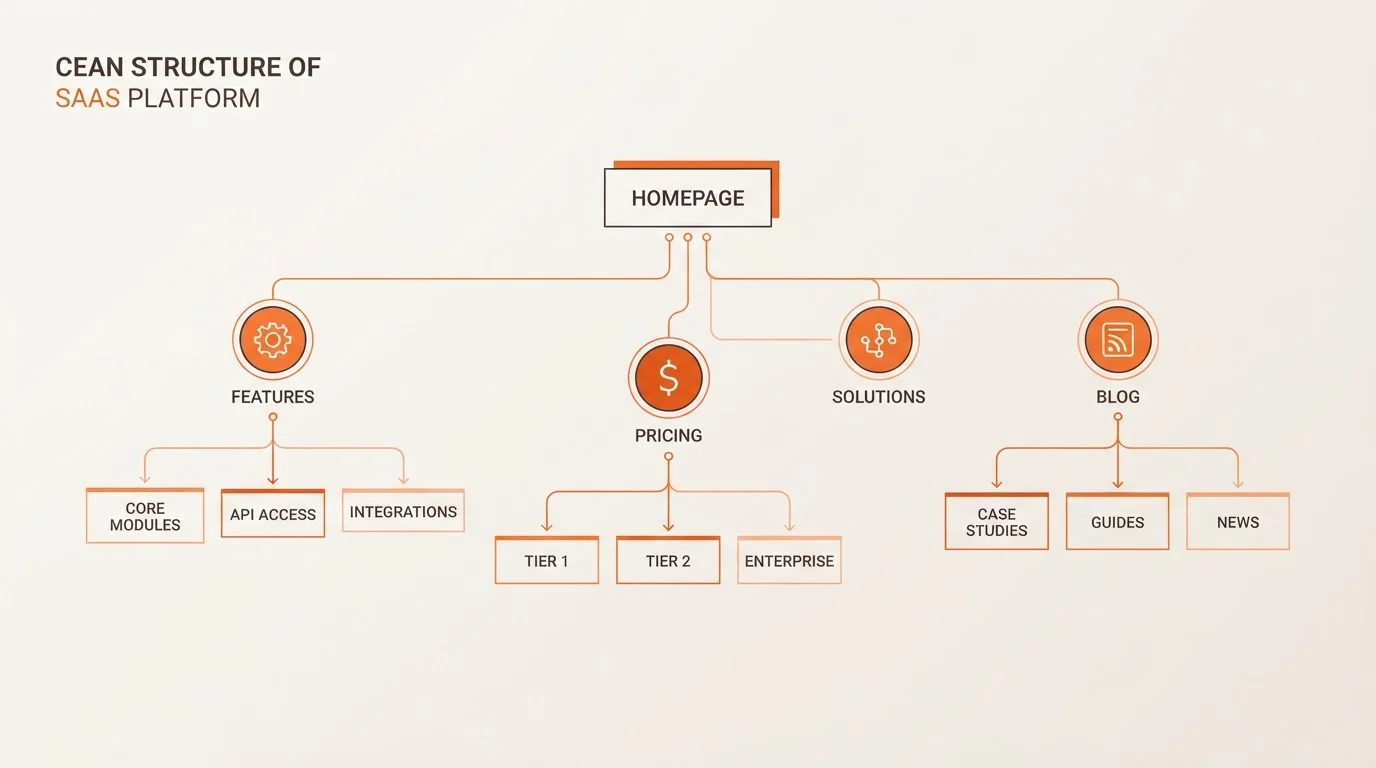
SaaS websites often have complex architectures, spanning marketing sites, product applications, and extensive documentation subdomains. This complexity can confuse search engines, leading to poor indexing. A well-structured site architecture uses a logical hierarchy that allows bots to flow from the homepage to deep feature pages in just a few clicks.
Crawl budget optimization is particularly critical for SaaS companies with large numbers of pages. Since search engines only allocate a limited amount of time to crawl your site, you must ensure they spend it on your most valuable pages. You can protect your crawl budget by using a clean robots.txt file to block unimportant sections, such as internal search result pages, and by ensuring your page load times are fast enough to keep the bot moving efficiently.
URL structure also plays a silent but vital role in discoverability. For SaaS, URLs should be descriptive and consistent, using hyphens to separate words while avoiding cluttered parameters that create duplicate content issues. To combat duplication—common when you have multiple product versions or regional pages—canonical tags are non-negotiable. They tell Google which version of a page is the source of truth, preventing your own content from competing against itself in the rankings.
Leveraging Product Context for Technical Accuracy
Technical SEO fails when the data provided to search engines is inconsistent across your site. For example, if your structured data lists a price that conflicts with your landing page text, trust signals plummet. Blogged’s Knowledge Engine for Autonomous SaaS Blogs addresses this by letting users organize their product description, ICP, positioning, and keywords into a structured knowledge base.
This ensures that when the platform handles internal linking and content optimization, it draws from a single, verified source of truth. By maintaining this consistency, you reduce the risk of technical conflicts that often arise from manual, disjointed content management. This structured approach helps search engines see your brand as a coherent and authoritative entity.
Conducting a High-Impact Technical SEO Audit
A technical audit should be a systematic health check of your digital assets. For most SaaS founders, a comprehensive audit is necessary at least once a year, with quarterly pulse checks to ensure new feature launches haven't introduced regressions. You can start this process using tools like Screaming Frog or Ahrefs to crawl your site exactly like a search engine would.
During your audit, focus on four critical areas: Response Codes, identifying 404 errors and 301/302 redirect chains that dilute link equity; Indexing Status, ensuring your XML sitemap is up to date and submitted to GSC; Metadata Health, checking for duplicate title tags that confuse search engines; and Internal Link Distribution. Audit your site for orphan pages—important pages that have no internal links pointing to them. Without internal links, these pages are effectively invisible to search bots.
By organizing your findings in a spreadsheet, you can prioritize fixes based on their potential to drive lead growth. When your technical foundation is solid, your product-led content can perform at its peak because there are no architectural hurdles blocking its path to the top of the search results.
Schema Markup: Helping AI and Search Engines Understand Your SaaS
Structured data, or schema markup, is a specialized code (JSON-LD) that provides explicit context to search engines. For SaaS companies, this is the best way to ensure your product appears with rich snippets—those enhanced search results that include star ratings, pricing, and FAQ dropdowns. These snippets significantly increase click-through rates by making your result more visually prominent and informative.
The most important schema type for your product pages is SoftwareApplication. By including properties like applicationCategory (e.g., BusinessApplication) and operatingSystem (e.g., Web), you help Google categorize your software correctly. This is increasingly important as AI-driven discovery engines rely on structured data to provide accurate answers to user queries about product features and pricing.
Automating Structured Data for Product-Led Growth
Consistency is the primary challenge with schema when you are publishing frequently. Manually adding JSON-LD to every new blog post or feature page is unsustainable for a busy founder. Blogged’s Autonomous Blog Publishing for SaaS feature streamlines this by building a durable content plan and publishing on your desired cadence.
Because the platform manages the publishing workflow, it can ensure that every piece of product-led content includes the necessary technical metadata and structured data from day one. This systematic approach ensures that your content is always optimized for rich results without requiring constant developer intervention. To validate your setup, use Google’s Rich Results Test to confirm that your schema is valid and eligible for enhanced display.
Performance Standards: Core Web Vitals and the Move to INP
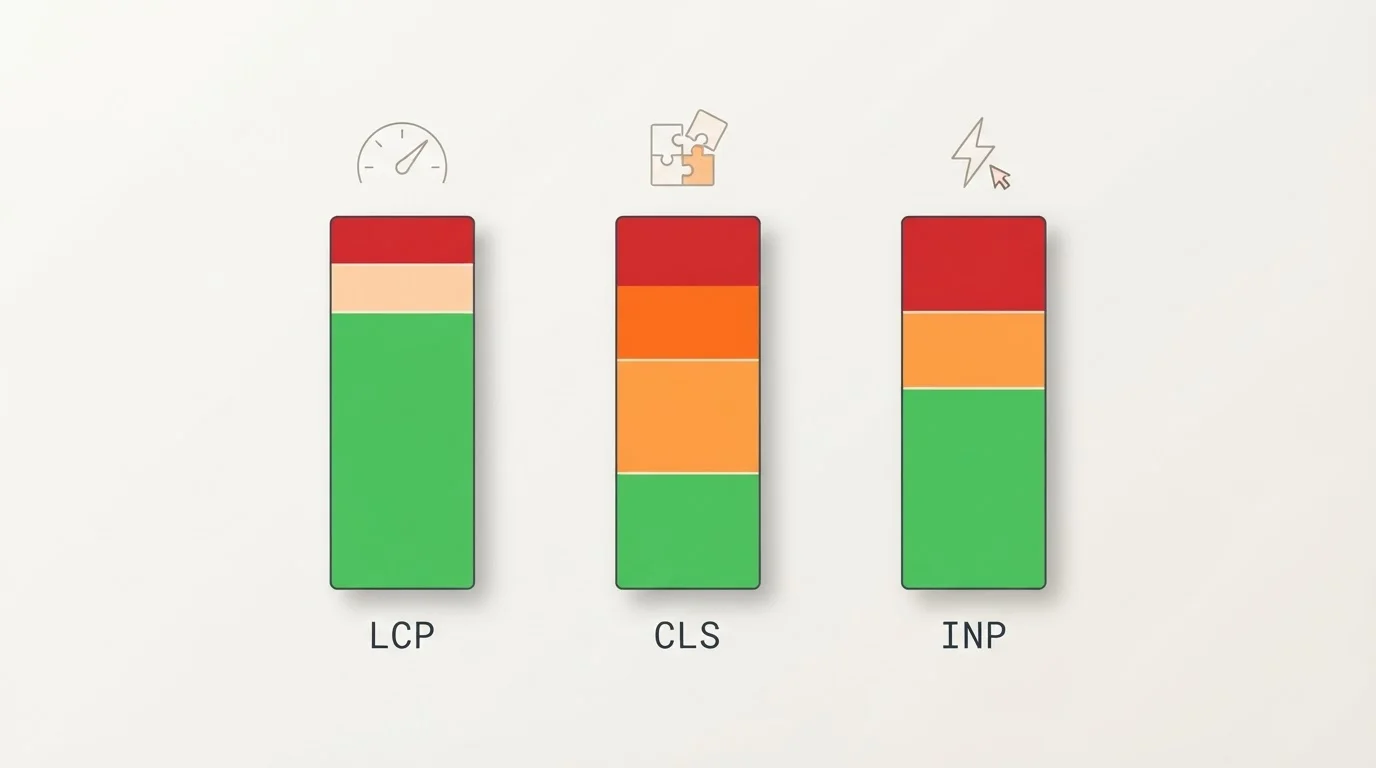
Google’s Core Web Vitals (CWV) are a set of metrics that measure real-world user experience. For SaaS founders, these are not just technical stats; they are indicators of user frustration. A slow-loading app or a marketing site with jumping elements will drive potential customers directly to your competitors. Maintaining high standards here is essential for both SEO and user retention.
The three current pillars of Core Web Vitals are Largest Contentful Paint (LCP), which measures loading performance (aim for under 2.5 seconds); Cumulative Layout Shift (CLS), which measures visual stability (aim for under 0.1); and Interaction to Next Paint (INP). INP replaced First Input Delay (FID) as a stable Core Web Vital in 2024, measuring how quickly a page responds to user actions like clicks or taps. A good INP score is under 200 milliseconds.
Optimizing for INP is particularly important for SaaS tools that involve heavy interactivity, such as dashboards or complex sign-up flows. By minimizing JavaScript execution and prioritizing the critical rendering path, you ensure that your website feels snappy and professional. This snappiness directly supports higher conversion rates by reducing the friction between a visitor’s intent and their action.
How Autonomous Platforms Maintain Technical Compliance
The effort required to keep sitemaps updated, manage canonical tags, and ensure mobile responsiveness across hundreds of pages is immense. This is where autonomous platforms provide their greatest value. They act as a continuous monitoring and optimization layer, preventing the technical debt that usually accumulates as a blog grows.
By leveraging Blogged’s Knowledge Engine, you ensure that your product, competitor, and keyword knowledge is organized into bounded facts. This structure doesn't just help with writing; it ensures the technical metadata remains accurate and fresh. Whether you are using the WordPress AI Blog Publishing integration to deliver articles to a self-hosted site or leveraging Webflow CMS to collect consented visits, the goal is the same: to make technical SEO invisible while keeping results visible.
Autonomous systems ensure that your internal linking is managed dynamically, meaning new content automatically links back to relevant core product pages. This distributes authority across your domain without manual effort. For a SaaS founder, this means your organic growth engine stays tuned and performant while you focus on building the product itself.
Frequently Asked Questions About SaaS Technical SEO
Q: What is the most important technical SEO metric for SaaS?
Crawlability is the baseline. If Google cannot crawl your site, no other metric matters. Once crawlable, focus on Core Web Vitals, specifically LCP and the new INP metric, as these directly impact user experience and retention.
Q: How often should I perform a technical SEO audit?
Conduct a full, deep-dive audit annually. Perform smaller checks quarterly, especially after major product updates or site migrations, to catch errors like broken redirects early.
Q: Does technical SEO help with AI search visibility (GEO)?
Yes. AI discovery engines and large language models rely heavily on structured data and clean site architecture to parse facts about your product. Technical SEO provides the source of truth that AI systems use to generate answers.
Q: Can I automate technical SEO?
You can automate significant portions, such as sitemap generation, canonical tag management, and internal linking via platforms like Blogged. However, server-side infrastructure and complex JavaScript optimization still require occasional developer attention.
Mastering technical SEO is not a one-time project but an ongoing commitment to excellence. For SaaS founders, the goal is to build a foundation so solid that your content can grow and adapt without friction. By prioritizing site architecture, mastering Core Web Vitals like INP, and leveraging the power of structured data, you ensure that your product remains discoverable in an increasingly crowded market.
Don't let technical hurdles stall your organic growth. Whether you are conducting your first audit or looking to automate your entire content workflow, remember that a technically sound website is the first step toward becoming the category leader in your niche. Focus on the infrastructure, and let your product-led content do the rest of the work in converting visitors into loyal customers.