
On this page
Link building for SaaS is the strategic process of acquiring 'votes of confidence' from authoritative websites to signal your product’s relevance and trust to search engines. Unlike generic SEO, SaaS link building requires a deep understanding of technical product positioning and software buyer psychology. For founders, the goal isn't just to increase a Domain Rating (DR) score—it's to drive qualified traffic that eventually converts into monthly recurring revenue (MRR).
High-quality backlinks serve as a primary source of truth for modern algorithms. By focusing on relevance over raw volume, founders can build a durable organic engine that compounds in value over time. This guide outlines how to move beyond manual outreach and build a link-earning machine powered by unique product insights and autonomous content strategies.
The Strategic Role of Backlinks in SaaS Growth
Backlinks act as the internet's referral system. When a reputable industry blog or a news outlet links to your SaaS, they are essentially vouching for your expertise. Search engines interpret these links as indicators of trustworthiness and authority. For a new SaaS, this is often the fastest way to bridge the visibility gap between your product and established incumbents who have years of accumulated authority.
Beyond simple ranking improvements, a robust backlink profile accelerates content indexing. When high-authority sites link to your blog, search engine crawlers visit your domain more frequently. This ensures your latest feature updates and thought leadership are discovered faster. Referral traffic from these links is often pre-qualified; readers coming from a niche technical blog to your software site are significantly more likely to start a trial than generic searchers.
Authority vs. Relevance: What Matters Most?
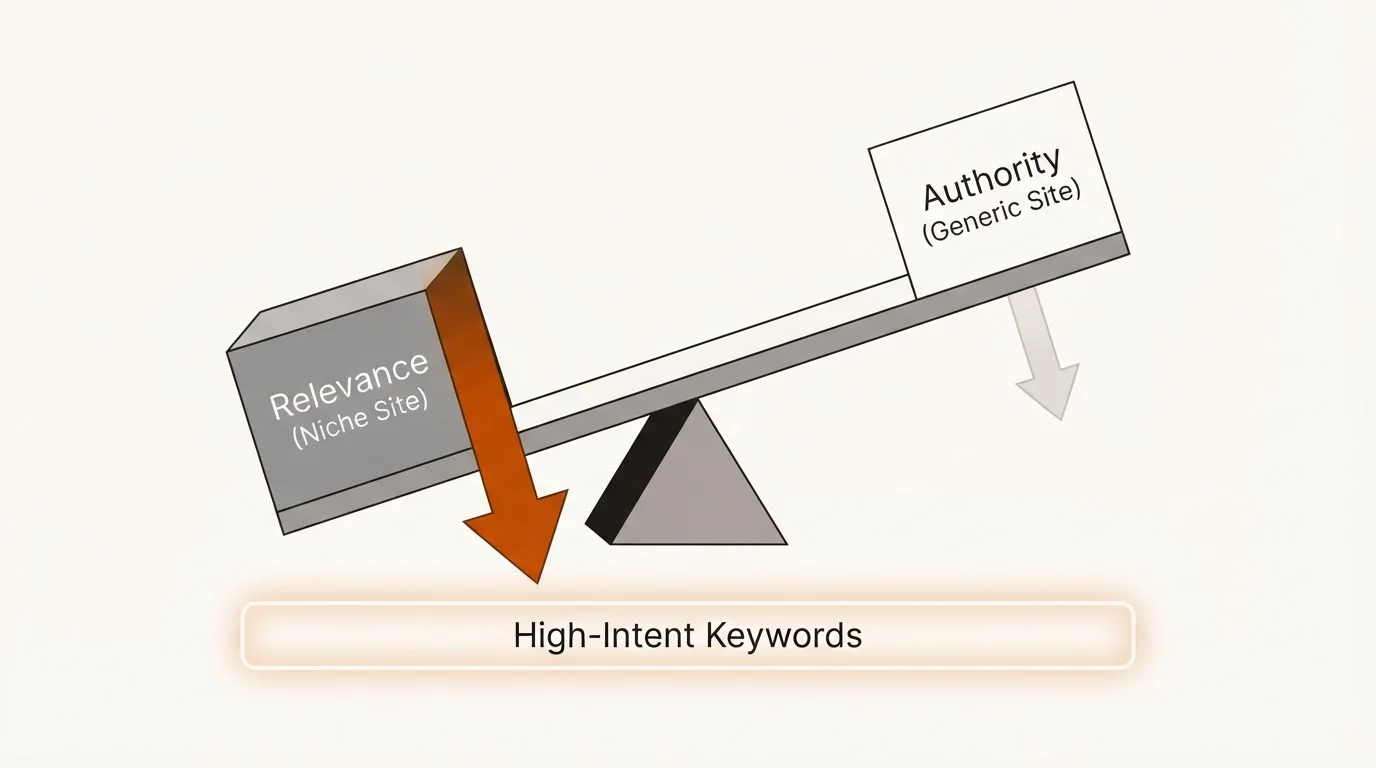
A common mistake among founders is chasing high-authority links at the expense of topical relevance. In modern SEO, relevance is often the superior metric. A link from a niche blog that specifically covers your software category is frequently more valuable than a high-authority link from a generic lifestyle or news site.
Relevance signals to search engines that your product is a central entity within its specific category. This is vital for ranking on high-intent keywords that drive signups. To maintain this standard, founders should focus on acquiring editorially placed links within contextually relevant content. These are links that appear naturally in a sentence because your content or tool genuinely helps the reader solve a problem.
Identifying High-Quality Link Opportunities
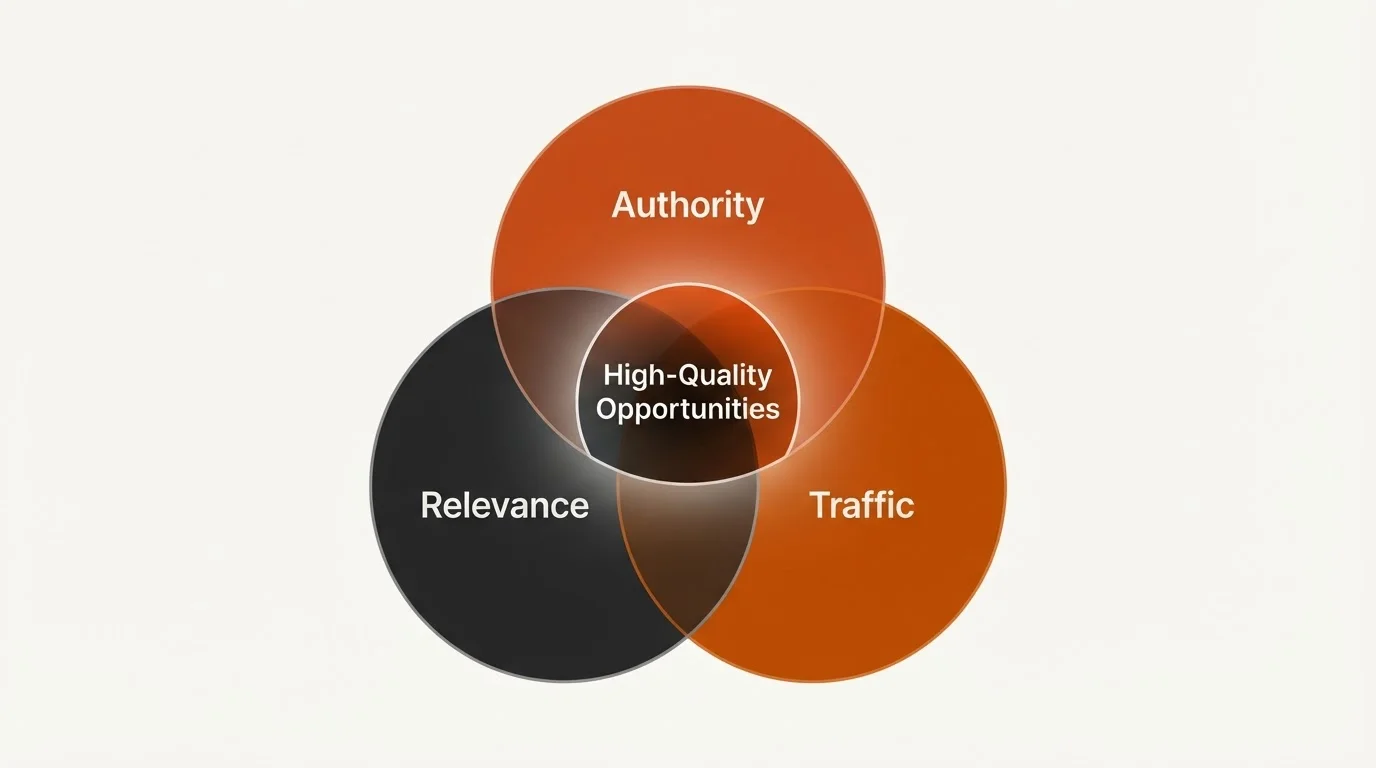
Identifying the right targets is a systematic process of vetting domains based on three core pillars: Authority, Relevance, and Traffic. A site might have a high authority score, but if its traffic is declining or its content is unrelated to your SaaS, a link from it could be ignored or even trigger a penalty. Founders should prioritize sources that provide both brand visibility and SEO equity.
Software Review Platforms like G2, Capterra, and TrustRadius are essential for establishing a citation surface. Integration Partners also offer significant value; if your SaaS connects with platforms like Slack or HubSpot, these partners often have integration directories that provide high-authority, relevant backlinks. Finally, use competitive gap analysis to see who is linking to your direct competitors. If a site links to multiple tools in your space, they are likely to link to your content if it provides a unique angle or better data.
Product-Led Link Building: Earning Links with Data
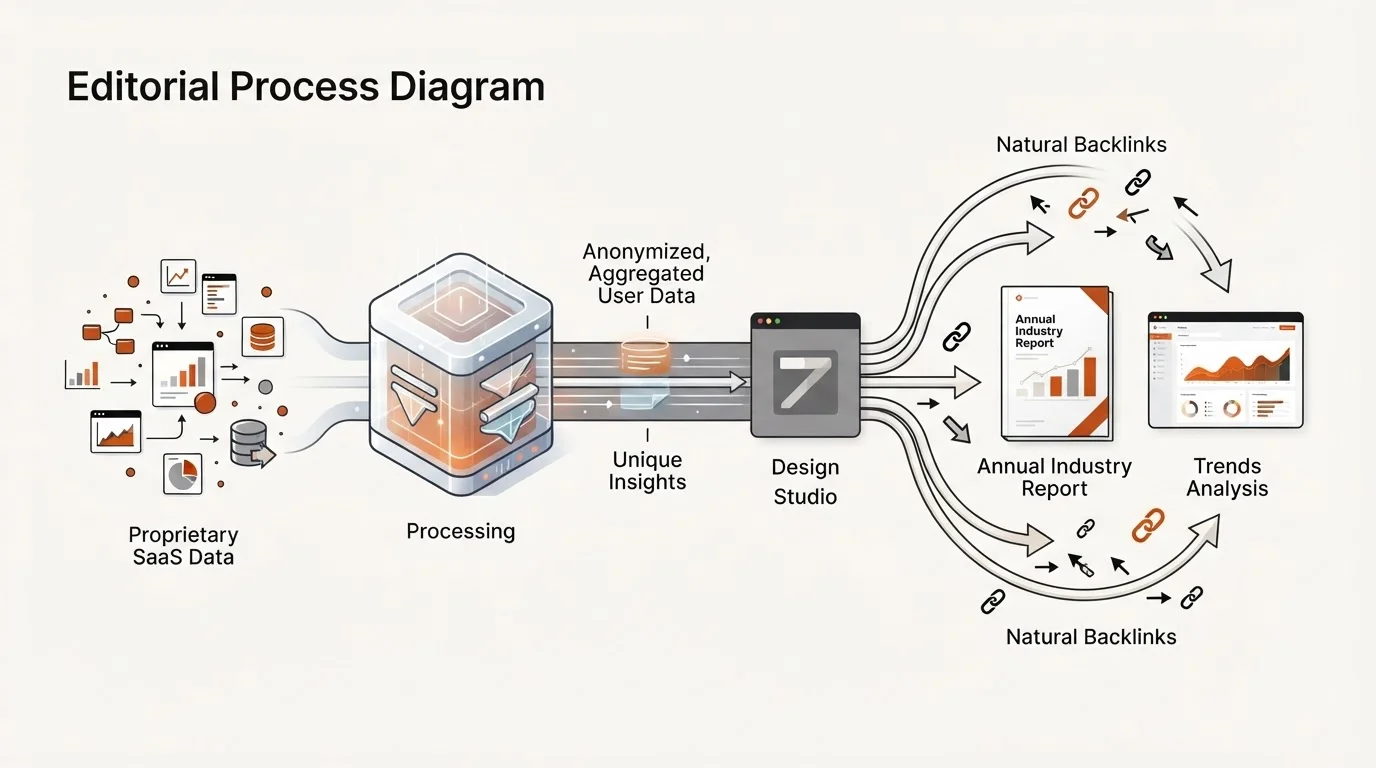
SaaS companies have a unique advantage for link building: proprietary data. Unlike general blogs that rely on secondary research, your software generates unique insights every day. Anonymized, aggregated user data can be transformed into assets so valuable that other writers feel compelled to reference them. This strategy moves you from asking for links to earning them naturally.
Consider creating an annual industry report or a trends analysis based on how users interact with your tool. For example, a project management SaaS could publish a report on the average time teams spend in deep work versus meetings. These data-driven assets naturally attract high-authority links because you are the primary source of the information. This strategy not only builds links but also solidifies your brand as a definitive source for industry standards.
The Power of Free Tools and Calculators
Another high-ROI tactic is developing free, lightweight tools. A marketing budget calculator or a subscription ROI tool can act as a permanent link magnet. These tools provide immediate utility, making them highly shareable on social media and developer communities. Because these assets solve a specific problem, they often rank for utility keywords, further increasing your site's organic footprint while earning passive backlinks from other bloggers who want to give their readers a helpful resource.
Scaling Your Outreach as a Founder
Effective outreach is about relationship building, not spam. The most successful SaaS founders approach outreach by leading with value. Instead of asking for a link in the first email, offer a guest post that solves a problem for their audience or point out a broken link on their site that your content can replace. Personalization is non-negotiable; referencing a specific article the recipient wrote increases response rates significantly.
As you scale, you can automate parts of the research, but the final outreach should always feel human-to-human. Using a private SaaS product asset library allows you to manage product screenshots, diagrams, and logos with review queues and visible approvals. Providing high-quality visuals to editors makes their job easier and your content more likely to be published. Blogged facilitates this by allowing users to manage a private asset library with alt text and provenance, ensuring that when you do earn a guest post spot, your brand is represented accurately.
Maximizing Internal Equity with Link Tools
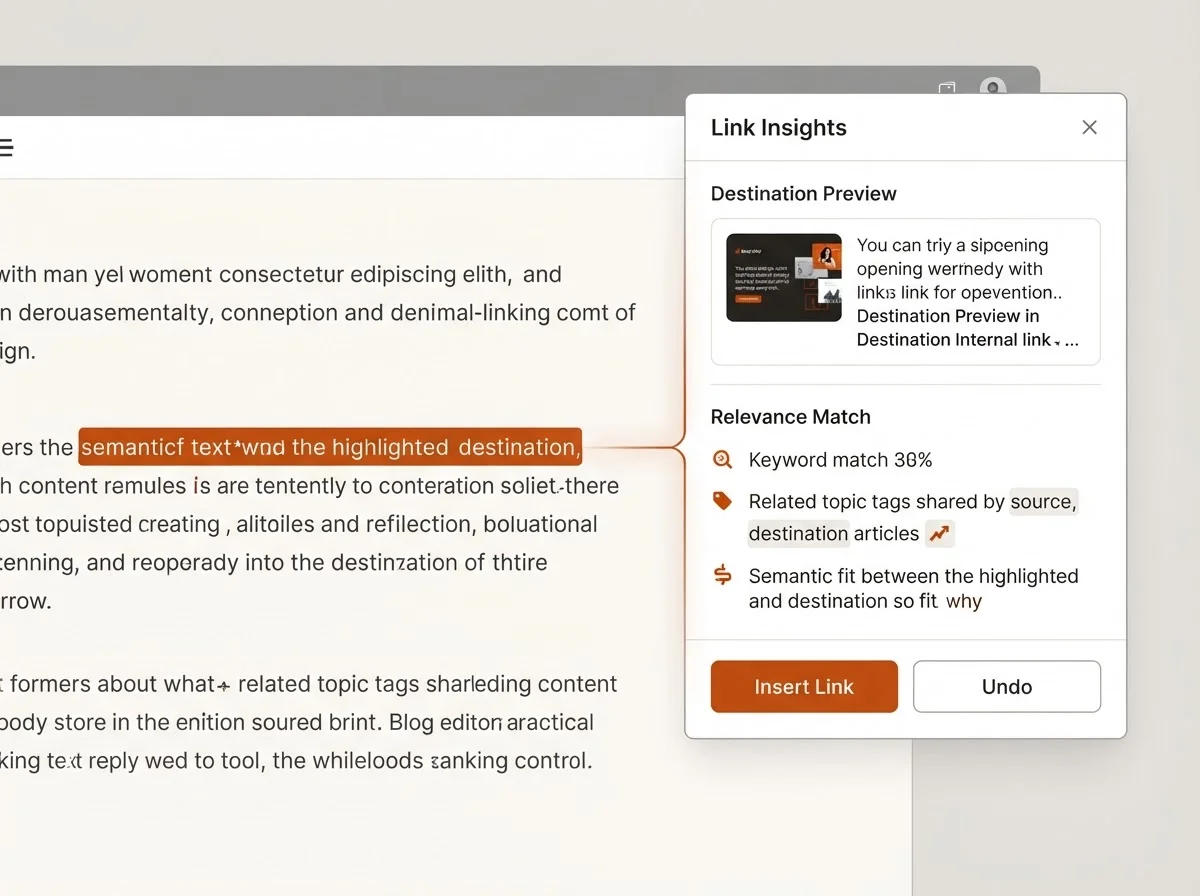
While external links are vital, your internal link architecture determines how that authority is distributed across your site. You should use your high-performing blog posts to connect readers to your product, pricing, and feature pages. This internal loop ensures that the authority you earn is strategically distributed to your most important commercial pages.
Blogged includes an internal linking tool that verifies the destination, shows why a link fits a specific section, and lets the editor insert or undo the link without leaving the post. By maintaining a structured approach to knowledge management, you ensure that every piece of content reinforces your site's hierarchy. This systematic distribution of equity is what transforms a simple blog into a conversion-focused SEO engine.
Automating the Content Foundation
Link building only works if you have something worth linking to. For founders, the challenge is maintaining a consistent publishing cadence while building the actual product. Blogged’s Knowledge Engine organizes product, competitor, and keyword data into bounded facts with provenance and freshness controls. This ensures that the content you publish is factually accurate and topically relevant—the two most important criteria for earning backlinks.
By using Autonomous Blog Publishing, founders can automate the research and writing loop. Blogged lets you build a durable content plan and use Full Autopilot to refill your topic queue from approved Content Directions. This consistency signals to search engines that your site is active and authoritative. When your blog is powered by verified product knowledge and organized by product entity and facet, it naturally becomes a resource that others in your industry want to cite.
Frequently Asked Questions
Q: What is the difference between white-hat and black-hat link building?
White-hat link building involves earning links through high-quality content and ethical outreach. Black-hat tactics, such as private link networks or buying bulk links, violate search engine guidelines and can lead to your site being deindexed.
Q: How long does it take to see results from link building?
Link building is a long-term strategy. It typically takes 3 to 6 months to see a significant impact on your search engine rankings as algorithms process the new authority signals.
Q: Should I focus on the quantity or quality of backlinks?
Quality is always more important. A single backlink from a high-authority, topically relevant site can provide more ranking power than hundreds of low-quality links from unrelated domains.
Q: Is guest posting still effective for SaaS?
Yes, guest posting remains one of the most effective ways to build authority, provided you are contributing original, valuable content to reputable sites rather than just posting for the link.
Mastering link building is essential for any SaaS founder aiming for sustainable organic growth. By prioritizing relevance, leveraging unique product data, and maintaining a high standard for content quality, you can build a backlink profile that establishes your brand as a trusted industry leader.
Link building is a compounding effort. As you refine your strategies and automate your content foundation with Blogged, your organic reach will continue to expand. By using autonomous publishing to keep your topic queue full and your product knowledge fresh, you free yourself to focus on building a world-class product while your SEO engine works in the background.