
On this page
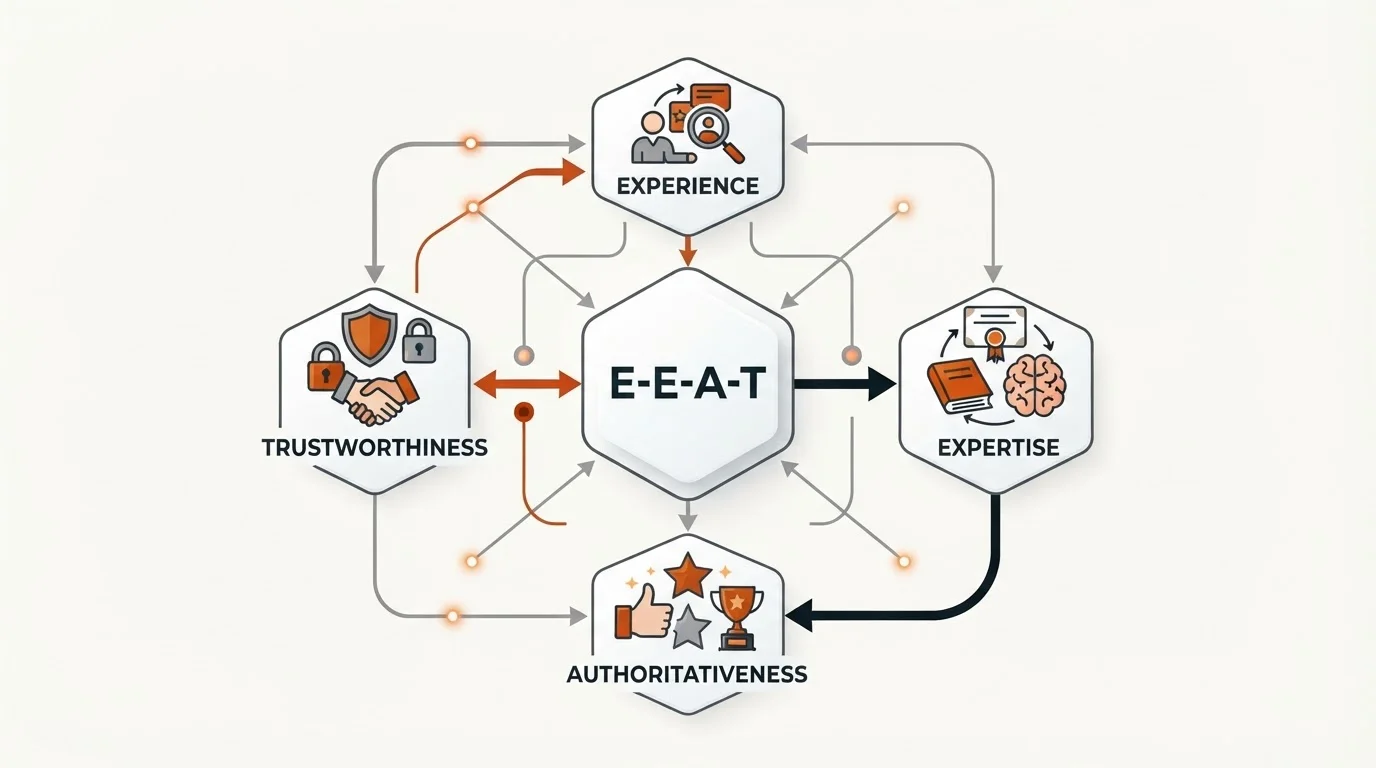
Organic growth for SaaS founders is no longer a game of publishing volume or keyword density. Search engine success now depends on E-E-A-T: Experience, Expertise, Authoritativeness, and Trustworthiness. These principles form the framework that Google and modern AI search engines use to evaluate whether your software and content deserve visibility. For a founder, mastering E-E-A-T means transforming technical product knowledge into a credible, authoritative voice that both search engines and potential customers rely on.
Defining the E-E-A-T Framework for SaaS
Demonstrating high E-E-A-T signals to search engines that your information is produced by knowledgeable practitioners and is safe for users. This is vital for SaaS products that handle sensitive data or business-critical functions, often categorized under "Your Money or Your Life" (YMYL) topics. By systematically improving these signals, you do not just improve search rankings; you build the unwavering trust required to shorten sales cycles and increase customer retention.
The Evolution from E-A-T to E-E-A-T
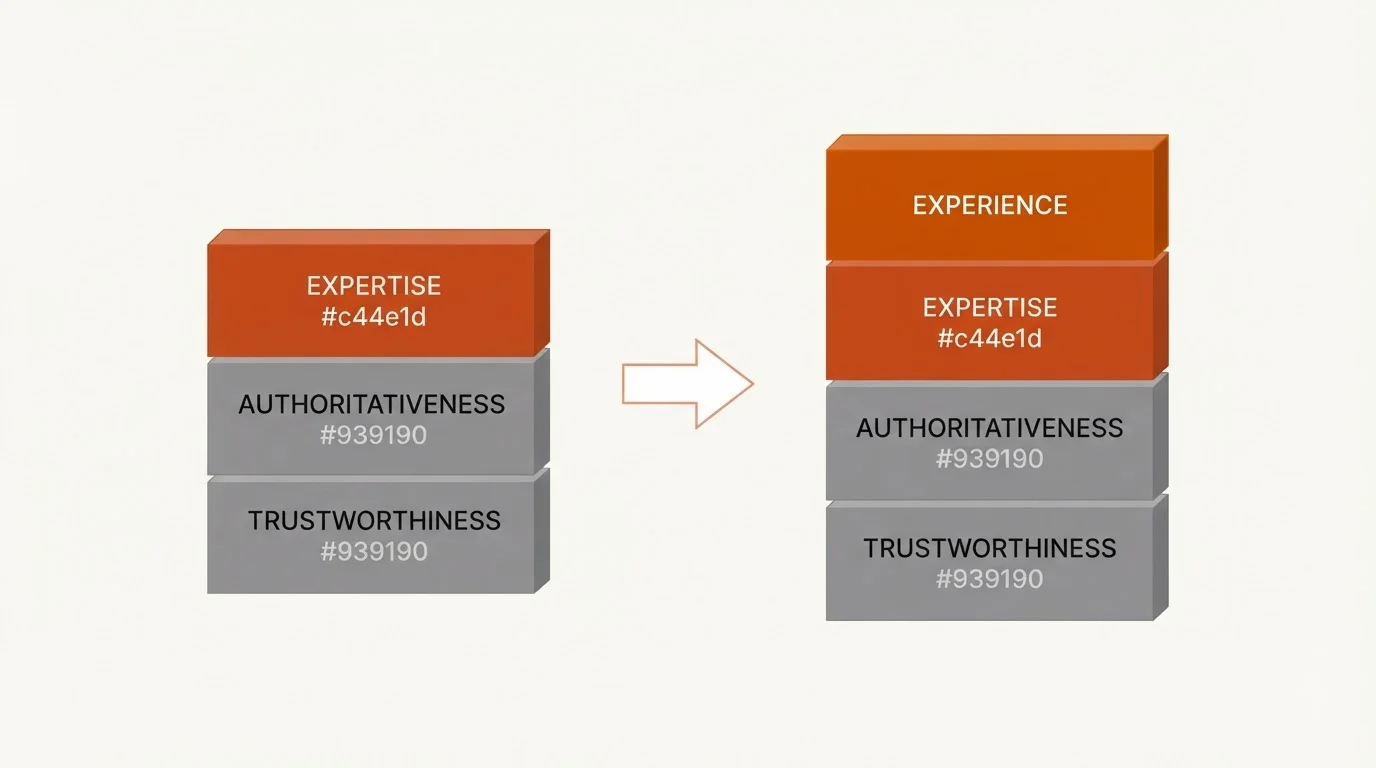
While E-A-T has been a cornerstone of quality guidelines for years, the addition of the second "E" for Experience reflects a shift in how quality is assessed. Search engines now prioritize content that shows first-hand involvement. For a SaaS company, this means moving beyond generic feature descriptions and demonstrating that the content was produced with actual use of the product. Theoretical expertise is no longer sufficient; you must show how your tool solves specific workflow problems.
Demonstrating Experience through Product-Led Content
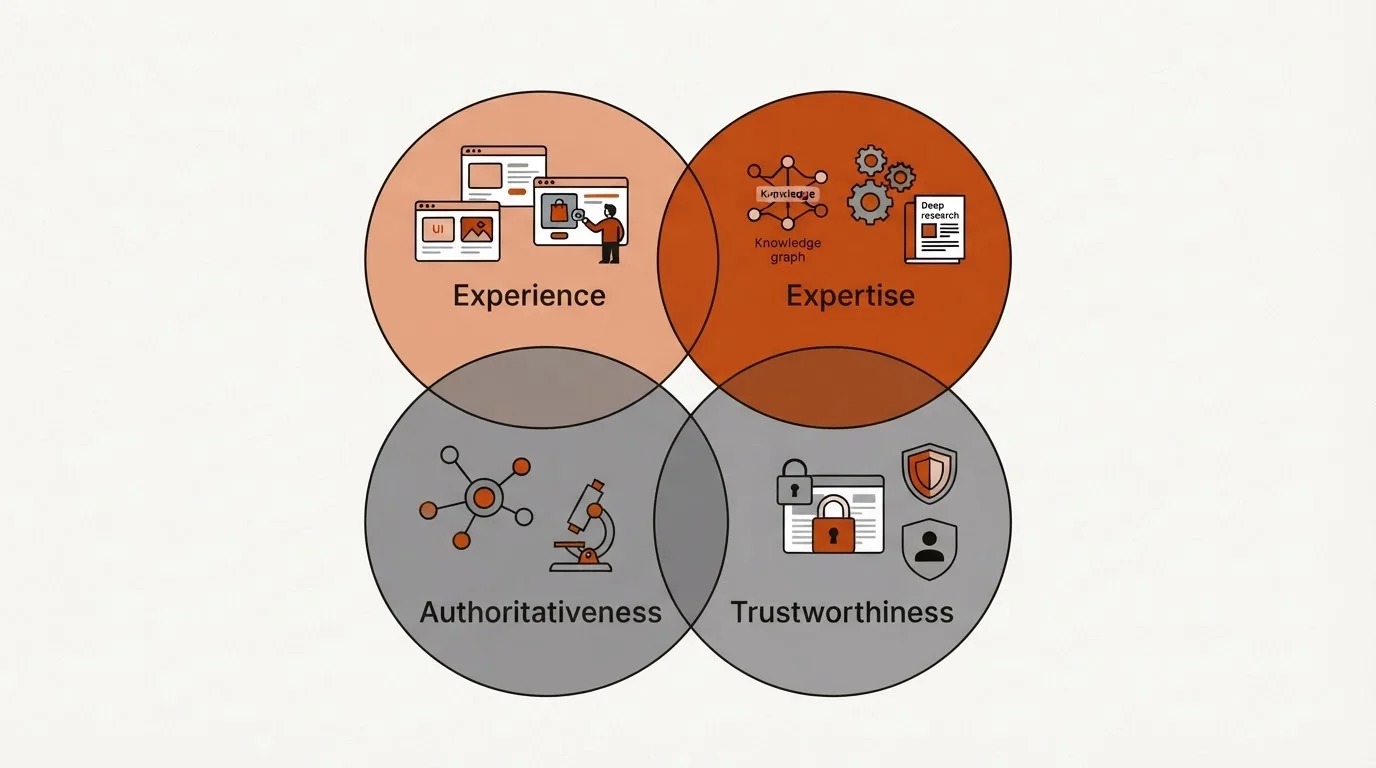
Experience is the most practical way to differentiate your SaaS blog from generic AI-generated noise. To demonstrate experience, you must weave your product's actual workflows into your content. This involves using original media rather than stock imagery. Blogged helps founders manage this by providing a private SaaS product asset library with review queues and provenance controls, ensuring every screenshot used in an article is accurate and reflects the current state of the software.
Founders should focus on publishing content that reflects lived product experience. This includes walkthroughs of new features, case stories showing the product solving a specific pain point, and founder-led postmortems on industry trends. When your blog posts include direct insights from the practitioners who built the tool, search engines recognize the first-hand involvement that automated scrapers cannot replicate.
Scaling Expertise with a Structured Knowledge Engine

Expertise in SaaS SEO refers to the depth and accuracy of your information. It answers whether your brand truly understands the domain it operates in. To demonstrate expertise at scale, you need a system that organizes product, competitor, and industry knowledge into bounded facts. The Knowledge Engine for Autonomous SaaS Blogs performs this by organizing specific product context—such as ICP, positioning, and technical limits—into a central repository with verification states.
Maintaining expertise requires constant vigilance over content accuracy. Outdated pricing or incorrect technical specifications can instantly erode your expertise signals. By using a system that tracks provenance and conflict controls, SaaS founders can ensure every piece of published content is factually sound. High-quality author bios that link to LinkedIn profiles and highlight relevant credentials for your leadership team further reinforce these signals for both users and search evaluators.
Building Authoritativeness as an Industry Leader
Authoritativeness is not something you claim; it is granted by the industry. It is the recognition of your brand as a go-to source for information. In the SaaS context, this is achieved through a consistent publishing cadence and the creation of original research. Autonomous Blog Publishing for SaaS allows founders to automate the loop, building a durable content plan that ensures the blog remains active and authoritative without requiring manual oversight every week.
Authority also grows through external validation. Earning high-quality backlinks from reputable industry sites and having your founders contribute to podcasts are powerful signals. Search systems use entity recognition to assess whether your brand fits naturally within an established topic space. By consistently producing content that others reference—such as proprietary data analyses—you establish your SaaS as a primary entity in your niche.
Establishing Trustworthiness: The Bedrock of Growth
Trustworthiness is the central and most important concept in the E-E-A-T framework. For SaaS, this means demonstrating that your software is secure, your data handling is transparent, and your brand stands by its promises. You must make your privacy policies and security compliance certifications easily accessible. Trust is also signaled through social proof, including customer testimonials and active responses to reviews on platforms like G2 or Capterra.
A trustworthy website must also be technically sound. This includes maintaining HTTPS and ensuring a professional user experience. Blogged supports this by letting users connect approved tracking tags with Global Privacy Control and consent behaviors, ensuring that the blog site itself respects user privacy. Furthermore, the platform's internal linking tool verifies destinations and shows why a link fits a specific section, preventing the spammy patterns that often trigger trust warnings.
Practical Strategies for Improving E-E-A-T Signals
To improve E-E-A-T, SaaS founders should implement a structured evidence pass in their editing process. Before hitting publish, every article should be checked for missing screenshots, expert quotes, and proprietary data. Using structured data markup, such as Organization and Product schema, explicitly tells search engines about the expertise behind your content. Regularly auditing and updating legacy content is also essential, as outdated information is one of the fastest ways to lose trust.
Another key strategy is focusing on the Brand Recommendation Rate. In the era of Generative Engine Optimization (GEO), this metric tracks how often your product is cited as a recommended solution by AI engines like ChatGPT and Gemini. These engines weight E-E-A-T signals heavily when selecting sources. By prioritizing credibility and first-hand experience in your blog, you ensure that your SaaS is the one recommended when potential customers ask AI for the best software in your category.
Frequently asked questions
Q: What is the difference between E-A-T and E-E-A-T?
E-A-T stands for Expertise, Authoritativeness, and Trustworthiness. In late 2022, Google added a second "E" for Experience, which emphasizes the value of first-hand knowledge and actual use of a product or service in content creation.
Q: Is E-E-A-T a direct Google ranking factor?
No, E-E-A-T is not a single ranking factor with a numerical score. Instead, it is a framework that informs Google's algorithms. Systems are trained to identify signals that correlate with these four qualities to prioritize helpful, reliable content.
Q: How can a SaaS founder demonstrate Experience in their blog?
Founders can demonstrate experience by including original product screenshots, walkthrough videos, case studies with measurable results, and insights derived from the actual development and use of the software.
Q: Why is trust the most important part of E-E-A-T for SaaS?
Trust is the foundation because SaaS products often handle sensitive business data. Without signals of reliability, security, and transparency, users are unlikely to convert, and search engines are unlikely to rank the site for high-stakes keywords.
Q: Can autonomous blogging tools help with E-E-A-T?
Yes, autonomous tools like Blogged help by maintaining a consistent publishing cadence for Authority, using a Knowledge Engine to ensure fact-based Expertise, and managing an asset library to provide proof of Experience.
Mastering E-E-A-T for SaaS SEO is a long-term commitment to quality that transcends simple algorithm updates. By focusing on demonstrating genuine experience, scaling your technical expertise, and building a brand that the industry trusts, you create a sustainable organic growth engine. As AI search continues to evolve, the brands that prioritize these human-centric credibility signals will be the ones that dominate both traditional search results and AI-driven recommendations.