
On this page
Achieving content-market fit is the quiet engine behind every successful SaaS growth story. It is the moment when your published content aligns so perfectly with your target audience's pain points that they start finding your product naturally through search, rather than you chasing them through expensive ads. For early-stage founders, however, reaching this milestone is often an uphill battle. The founder's dilemma is real: you have the deep product expertise required to write authoritative content, but you lack the time to do it. Conversely, hiring external writers often leads to generic, high-level articles that fail to capture the technical nuances of your software. InnovateCo, a hypothetical SaaS entity, faced this exact bottleneck. They had a robust product and early signals of product-market fit, but their organic growth was stagnant because their content couldn't keep pace with their engineering. By adopting an autonomous blogging strategy, they moved from manual content production to a product-led model that turned internal specs into an organic traffic engine. This case study examines how InnovateCo leveraged Blogged to bridge the gap between technical expertise and search engine visibility, achieving faster content-market fit without scaling their marketing headcount.
The Challenge: Achieving Content-Market Fit in SaaS
For most SaaS startups, content-market fit is not just about ranking for high-volume keywords; it is about ensuring that every article reflects the unique value proposition of the software. InnovateCo's initial struggle was rooted in content fragmentation. Their product was evolving rapidly, but their marketing copy was stuck three versions behind. Product use cases and technical breakthroughs were often buried in Slack threads, internal documentation, or developer wikis. This technical knowledge was invisible to search engines and potential buyers. The marketing team spent the majority of their time hunting down product managers to explain new features, rather than strategizing on growth. Without a centralized system to translate these technical truths into public-facing content, the blog remained a neglected asset. To solve this, InnovateCo needed a way to manage information that didn't require constant human intervention. They required a platform that could maintain a private SaaS product asset library where they could manage images, metadata, and product-specific facts with a clear audit trail. By prioritizing the organization of their product knowledge first, they created the foundation for a scalable content operation that actually spoke to the needs of their users.
InnovateCo's Journey to Autonomous Blogging
The shift toward automation was born from a failed experiment with outsourcing. InnovateCo's leadership initially hired a content agency, but the results were underwhelming. The agency's writers, while capable, lacked the 'insider knowledge' necessary to explain InnovateCo's complex API integrations and data processing workflows. Each draft required hours of heavy editing from the founders, effectively negating the time savings of hiring an outside firm. This friction led them to explore autonomous SEO and GEO (Generative Engine Optimization). The goal was to find a solution that could act as an extension of their own brains—ingesting their technical documentation and outputting product-led content that felt authentic. They needed a system that wouldn't just generate text, but would 'ground' itself in verified facts about their SaaS. The transition required a mindset shift: moving from seeing a blog as a series of individual articles to viewing it as a dynamic reflection of their product knowledge base.
4 Steps for Evaluating Autonomous Platforms
Founders can follow the framework InnovateCo used to determine if an autonomous platform is ready to handle their SaaS content. First, assess knowledge ingestion. The platform must be able to handle diverse data sources, such as public documentation, uploaded internal documents, and pasted links. Accuracy is non-negotiable for SaaS founders. Second, evaluate the editing workflow. While the AI does the heavy lifting, human oversight remains critical. Look for features like review queues, bulk decisions, and the ability to undo changes. Third, review technical integrations. A content platform that doesn't connect to your existing stack is just another silo. Ensure it supports WordPress, Ghost, Next.js, or Webflow. Finally, consider scalability and seats. As your product grows, you will want more eyes on the content. Blogged, for example, includes unlimited team seats on its plans, allowing product managers and marketers to collaborate on reviews without per-user fees. This ensures that the cost of content remains predictable even as your team expands.
Implementing Blogged: From Product Knowledge to Discoverable Content
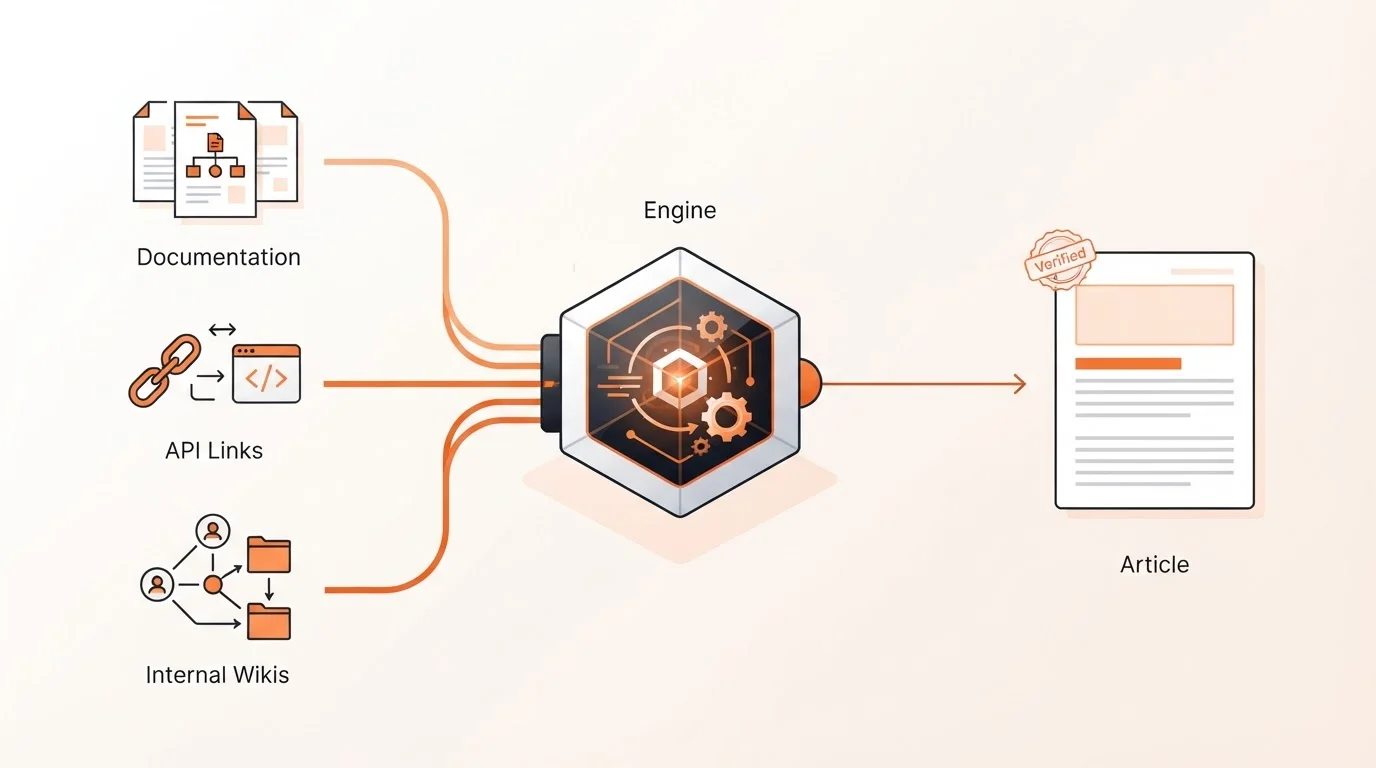
Once InnovateCo integrated Blogged, the focus shifted to the Knowledge Engine. Instead of starting from a blank page, they pointed the platform toward their existing public API docs and uploaded their internal product roadmap. This 'grounding' process is what differentiates autonomous blogging from generic AI writing. The system was now equipped with the specific vocabulary, feature names, and value propositions that defined InnovateCo's brand. The Knowledge Engine for Autonomous SaaS Blogs allowed the team to provide specific sources, ensuring the content remained factually accurate. When a new feature was released, they simply updated the engine with the relevant link or document, and the platform could then produce articles that addressed emerging search trends related to that feature. This approach eliminated the 'hallucination' problem common in generic AI, as the content was strictly bound by the facts InnovateCo provided. It transformed their blog from a static repository into a living extension of their technical documentation.
Bridging Technical Stacks with Integrations
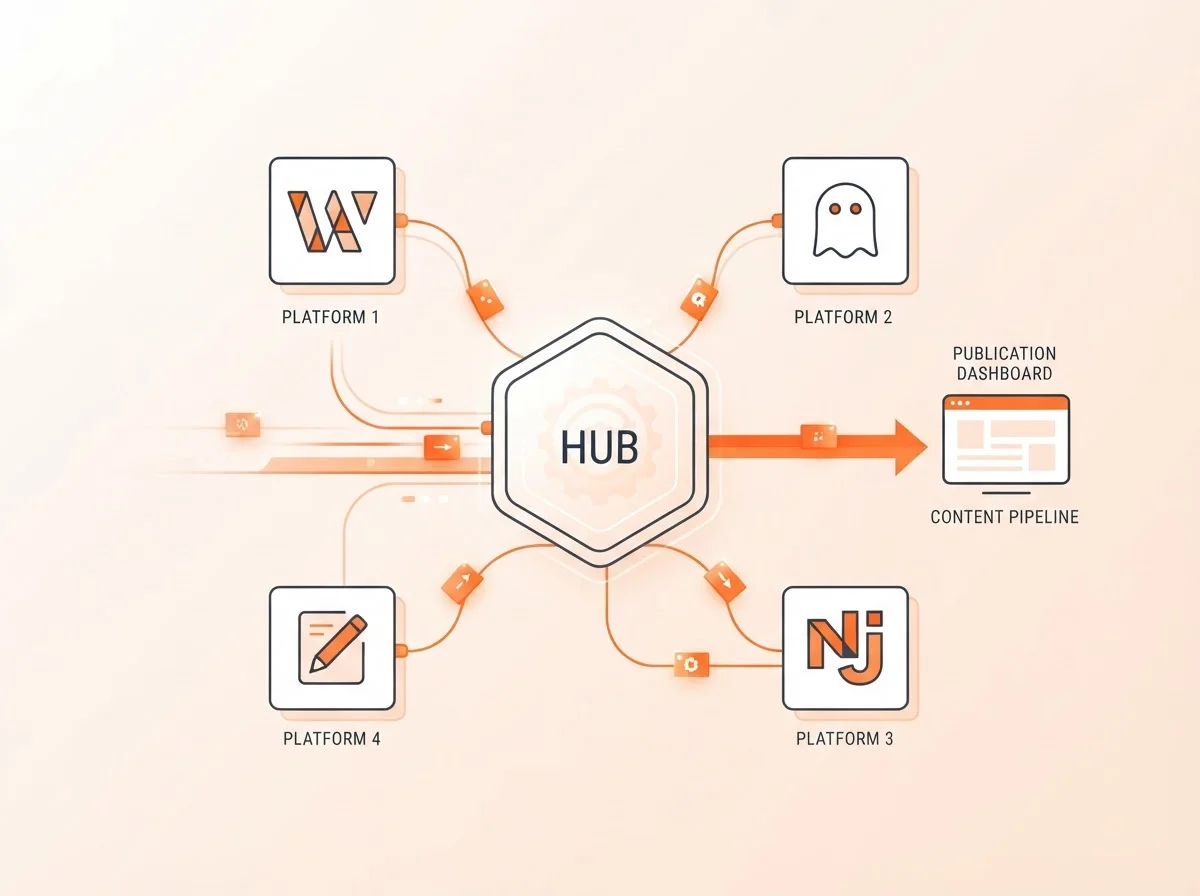
Connectivity was the second pillar of InnovateCo's success. They didn't want to change their entire website architecture to accommodate a blog. By using the Blogged WordPress AI Blog Publishing integration, they connected their self-hosted site via a dedicated plugin and application password. This allowed them to review drafts within the Blogged dashboard and push them live to WordPress with a single click. For their separate developer portal, they utilized the Ghost AI Blog Publishing integration. This flexibility meant that the content creation process remained centralized, even though the reader experience was split across different subdomains. Blogged handled the complex tasks of research, optimization, and interlinking, while the CMS handled the rendering. This integration also enabled them to collect consented visits and track configured conversions for their verified articles, giving them a clear view of how their content was performing across multiple channels simultaneously.
Key Results: Accelerating Content-Market Fit and Organic Growth
The impact of switching to an autonomous model was felt almost immediately. InnovateCo moved from a publishing cadence of two articles per month to over twenty. This increase in volume was not just about noise; it was about coverage. The autonomous platform allowed them to target niche, long-tail queries that were previously too time-consuming to address manually. As their organic search visibility expanded, the quality of their traffic improved. Visitors were no longer landing on general 'how-to' posts; they were finding InnovateCo because the blog specifically solved technical problems using product-centric language. This is the hallmark of product-led content ROI. The faster publishing cycle also created a rapid feedback loop. By testing multiple content angles in a single week, they could quickly identify which topics resonated with their audience and which fell flat. This allowed them to iterate on their content-market fit in real-time, doubling down on high-performing themes and phasing out topics that didn't drive user interest.
Data-Driven Iteration for SaaS Content
To maintain their growth, InnovateCo established a monthly optimization cycle focused on tangible metrics. They utilized the Blogged dashboard to track Search Console performance, lead growth, and CTA outcomes. By looking at which articles triggered the most on-site searches and home page engagement, they could map out a roadmap for future content. When an article underperformed, they didn't just delete it; they adjusted the product context within the Knowledge Engine and requested a revision. Blogged supports these adjustments, including one to three revisions per article depending on the plan, which allows for fine-tuning based on performance data. This turned their organic growth strategy into a scientific process of measure, learn, and iterate, ensuring that every published piece was working toward the ultimate goal of user acquisition.
Lessons Learned: The Role of Autonomous Blogging in Success
The primary lesson from InnovateCo's experience is that autonomous blogging is most effective when it is treated as a strategic partner rather than a replacement for human judgment. The quality of the output is inextricably linked to the quality of the input knowledge base. Investing time in organizing product facts by entity and facet is the single most important step a founder can take. They also found that automation is uniquely suited for capturing the 'long tail' of search. While a human editor might focus on one major keyword, the autonomous system can efficiently cover fifty specific, low-volume keywords that, in aggregate, deliver more qualified leads. By allowing the platform to handle the heavy lifting of research, writing, and internal linking, InnovateCo's founders were able to refocus their energy on product development and high-level strategy, knowing that their organic growth engine was running on autopilot.
InnovateCo's Future with Product-Led Content and Blogged
Looking ahead, InnovateCo is expanding its use of the platform to include high-stakes landing pages and feature guides. Since Blogged includes 2 pages as part of its foundational structure, they are utilizing these for key product service descriptions that require consistent updates as their software evolves. They are also deepening their use of performance tracking to justify further marketing spend. By monitoring lead growth and reader feedback directly within the platform, they can see the exact path a user takes from a discovery search to a trial signup. This full-funnel visibility has transformed their blog from a cost center into a primary driver of revenue. For any SaaS founder looking to escape the content production treadmill, the path forward is clear: ground your strategy in your product knowledge, automate the production, and keep your team in the loop for the final review.
Frequently Asked Questions about SaaS Content Automation
Q: Does autonomous blogging affect SEO rankings negatively?
No. Search engines prioritize content that is helpful, accurate, and relevant. By grounding the AI in your actual product documentation and maintaining a human-in-the-loop review process, you ensure the content meets the high quality standards required for ranking.
Q: How much time does the founder actually save?
While every team is different, founders typically find that their involvement shifts almost entirely from the time-consuming tasks of drafting and formatting to the higher-value tasks of strategic review and approval.
Q: Can the platform handle technical jargon or API specs?
Yes, provided the Knowledge Engine is fed the correct source material. By defining specific product entities and facets, you ensure the AI uses the correct terminology consistently throughout your blog.
Q: Is the content truly product-led?
Yes. Unlike generic AI tools that write broad articles, an autonomous platform like Blogged is designed to weave your specific features and solutions into the narrative, ensuring the reader understands exactly how your SaaS solves their problem.
Get practical updates on faster content market fit saas case study
Receive new articles and practical insights by email.
Conclusion
InnovateCo's transition to autonomous blogging demonstrates that achieving content-market fit doesn't have to be a slow, manual process. By leveraging a system that grounds content in verified product knowledge, they were able to scale their organic reach while maintaining technical accuracy. For SaaS founders, the takeaway is simple: your product is your best marketing asset. By using an autonomous platform to translate your product knowledge into discoverable content, you can build a sustainable, high-ROI growth engine that works even when you are busy building your company. The combination of grounded technical truth and automated scale is the fastest path to dominating your niche and securing long-term organic growth.