
On this page
SaaS founders often find themselves trapped in a growth paradox. Scaling requires a high-volume, high-quality content engine, but building that engine manually consumes the very hours needed to build the product. For many, the blog becomes a neglected graveyard of 'feature announcement' posts or a massive time-sink that leads to founder burnout. The shift from manual production to strategic oversight is the only way to scale without sacrificing product velocity.
Consider the hypothetical case of Mark Davis, a founder who faced this exact bottleneck. By adopting an autonomous content platform, he transitioned from writing and editing drafts to directing a high-output system, successfully reclaiming approximately 20 hours per week. This strategic pivot allowed him to refocus on engineering and market positioning while his organic traffic grew on autopilot.
Autonomous content creation is not about replacing the founder's vision; it is a mechanical lever to multiply it. By automating the loop of research, planning, and publishing, founders can ensure their product remains discoverable in both traditional search engines and the emerging era of AI-driven discovery.
The SaaS Founder's Content Dilemma: Why Manual Blogging Fails
Before implementing an autonomous system, Mark Davis managed his startup's blog using a traditional, manual workflow. Like most technical founders, he understood that search visibility was non-negotiable for long-term customer acquisition costs. However, he quickly realized that 'content is king' is a punishing mantra when you are also the lead developer, recruiter, and salesperson.
Mark’s manual workflow was a sequence of high-friction tasks that drained his cognitive energy. Each week began with the pressure to identify trending keywords, followed by hours of drafting technical explanations that were accurate to his software's specific nuances. Because he was the only one who truly understood the product's edge cases, he could not easily outsource the writing to generic agencies without spending hours in heavy revision cycles.
This cycle created a 'start-stop' cadence that hurt his search performance. When product launches were looming, the blog went dark. When he finally found time to write, the content was often rushed or lacked the internal linking structure necessary to pass authority to his product pages. The opportunity cost was clear: every hour spent tweaking a blog paragraph was an hour not spent shipping features that his users were requesting.
The High Cost of the Content Bottleneck
The bottleneck is rarely just about the writing itself; it is about the entire operational lifecycle of a single article. For a typical SaaS post, a founder might spend hours on deep research and fact-checking to ensure they aren't making false claims about API capabilities or integrations. More time is lost to drafting and iterative editing to maintain a professional, empathetic brand voice.
Beyond the prose, the technical maintenance of the blog adds significant overhead. This includes managing SEO metadata, sourcing relevant images, and manually inserting internal links to ensure new posts support older, high-performing 'pillar' content. For a lean SaaS team, this weekly commitment is functionally equivalent to a part-time hire that the startup may not yet be ready to fund.
Mark eventually realized that his manual approach was not just slow—it was a strategic risk. If he continued this way, he would either burn out or fail to build the organic moat required to compete with larger competitors. He needed a way to transform his product knowledge into discoverable content without being the one to type every word.
The Implementation: Building an Autonomous Knowledge Engine

Mark’s transition to autonomous content creation began with the realization that AI is only as good as the context it is given. He sought a platform that could treat his product knowledge as a structured database rather than a series of prompts. This led him to implement a system focused on autonomous SEO and GEO blogging, specifically designed to handle the research, planning, and publishing of product-led content.
The first step was feeding a centralized Knowledge Engine. Instead of writing individual articles, Mark provided the platform with public product sources, uploaded technical documentation, and pasted links to his existing support docs. This created a foundation of bounded facts with clear provenance and verification states, ensuring the system wouldn't hallucinate features his SaaS didn't actually have.
By organizing product descriptions, Ideal Customer Profile (ICP) data, positioning, and pricing into specific facets, Mark ensured that every generated post was factually grounded. This allowed him to move from a 'creator' role to a 'curator' role. He was no longer staring at a blank page; he was instead reviewing content that already understood his product's limits and unique selling points.
Defining Strategic Content Directions
Autonomy does not mean a lack of control. Mark used his reclaimed time to define 'Content Directions'—high-level strategic guides that told the system which themes to prioritize. For example, he set directions for 'Technical Integration Guides' and 'Customer Problem Solvers,' which allowed the platform's autopilot to refill a topic queue based on his approved strategy.
This system supported both automated and manual workflows without treating them as identical. If Mark had a specific idea for a post, he could manually enter it into the queue. Otherwise, the Full Autopilot feature would identify gaps in his content plan and suggest new topics that aligned with his product's knowledge base. This ensured a consistent publishing cadence, even during the busiest development sprints.
Reclaiming 20 Hours: The Quantified Impact on Founder ROI
The primary outcome for Mark was the immediate recovery of his calendar. By shifting the heavy lifting of research, drafting, and SEO optimization to an autonomous platform, he reclaimed 20 hours per week that were previously lost to manual content management. This fundamental shift changed his startup's trajectory.
These 20 hours were reinvested into high-leverage activities that drove direct product value. Mark used this time to conduct deeper user research sessions, which led to a pivot in his onboarding flow that increased user retention. The quality of his leadership also improved, as he was no longer perpetually exhausted by the 'content deadline' looming over his weekends.
Moreover, the content itself became more effective. Because the autonomous platform managed internal linking at scale—verifying destinations and showing exactly why a link fit a specific section—the blog's structural SEO improved. Mark could insert or undo these links within a dedicated editor, ensuring his content was as technically sound as it was readable.
Get practical updates on autonomous content creation time saving
Receive new articles and practical insights by email.
From Content Executor to Strategic Director
The shift in Mark's role allowed him to focus on performance metrics and lead growth rather than word counts. He used the platform’s integrated analytics to track Search Console performance, homepage engagement, and lead outcomes. Instead of wondering if his writing was 'good,' he had hard data on which Content Directions were delivering the highest ROI.
This data-driven approach allowed him to refine his Knowledge Engine further. When he noticed a specific feature was getting more search interest, he would feed the engine more detailed facts about that entity. The autonomous system would then produce more nuanced content, creating a virtuous cycle of discoverability and product-led growth that required minimal manual intervention.
SEO vs. GEO: Preparing for the Future of Search
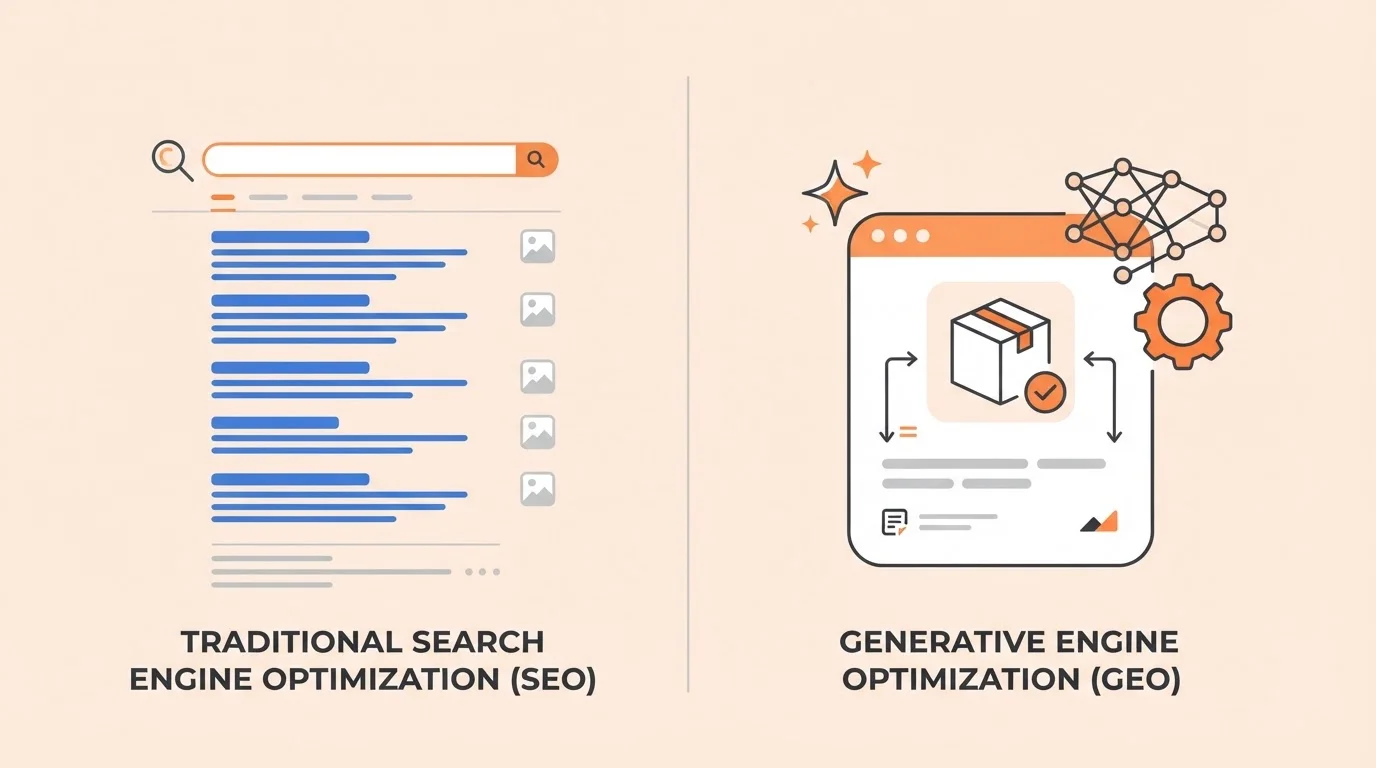
One of the most significant advantages Mark discovered was the platform's focus on GEO (Generative Engine Optimization). Traditional SEO focuses on ranking in search engine results pages, but the rise of AI search engines requires a different approach. These generative engines reward content that is factual, structured, and easy for AI to synthesize.
By using a platform that organizes facts by product entity and facet, Mark’s blog posts were optimized for both humans and AI crawlers. The Knowledge Engine ensured that his product's 'truth' was consistent across the web, making it more likely that AI search engines would cite his SaaS as a top solution. This dual-optimization strategy provided a future-proof moat that manual blogging rarely achieves.
Furthermore, the technical details were handled automatically. The platform managed tags with Do Not Track (DNT), Global Privacy Control (GPC), and consent behavior, ensuring the blog was compliant with global privacy standards without Mark having to write a single line of code. This level of technical maturity is critical for maintaining trust as a SaaS brand grows.
Practical Advice for SaaS Founders Automating Content
If you are considering moving to an autonomous content strategy, the transition requires a shift in mindset. You must stop thinking of your blog as a collection of articles and start viewing it as a distributed knowledge base. The success of the automation depends entirely on the accuracy and depth of the inputs you provide.
Start by centralizing your product truths. Every unique feature, pricing limit, and customer persona should be documented in your platform's Knowledge Engine. This prevents the 'generic AI' feel that plagues many automated blogs. When the AI has access to your specific product facts, the output reads like it was written by an insider, not a generalist bot.
Finally, maintain a consistent review cadence. While the platform handles the production, your role is to ensure strategic alignment. Use the reclaimed time to look at the 'big picture'—are these posts driving the right type of leads? Is the tone empathetic to your user's pain points? By staying in the pilot's seat while the autopilot flies the plane, you achieve a balance of scale and quality that manual efforts cannot match.
Frequently Asked Questions
Q: How do I ensure autonomous content doesn't sound like generic AI?
High-quality autonomous content relies on a Knowledge Engine. By feeding the system specific product facts, source documents, and ICP data, you move away from generic prompts. The platform uses these bounded facts to generate content that is technically accurate and specific to your product.
Q: Does autonomous blogging help with SEO ranking?
Yes. A dedicated autonomous platform handles technical aspects like consistent publishing cadences, metadata, and sophisticated internal linking. Furthermore, by focusing on GEO, the content is structured for both traditional search engines and AI discovery tools.
Q: How much time does it take to set up?
The initial setup involves feeding your product knowledge into the engine—uploading docs, pasting links, and defining your brand voice. Once the foundation is built, your weekly commitment drops significantly. Most founders find they can manage their entire content strategy in just a few hours of review per month.
Q: Can I still edit the posts manually?
Absolutely. Effective platforms support both autonomous and manual workflows. You can let the system handle the first draft and optimization, then step in to add a personal anecdote or specific brand nuance before hitting publish.
Q: Is this strategy expensive for an early-stage SaaS?
Compared to the cost of a full-time content marketer or the opportunity cost of a founder's time, autonomous platforms are highly cost-effective. Many plans offer unlimited team seats, allowing your entire product and marketing team to participate in the review process without additional costs.
The success story of Mark Davis demonstrates that for SaaS founders, time is the most valuable currency. By reclaiming 20 hours per week through autonomous content creation, he was able to stop acting as a bottleneck and start acting as a builder. The result was not just more blog posts, but a more resilient product and a scalable engine for organic growth.
Autonomous blogging is no longer a luxury; it is a strategic necessity for teams that need to stay lean while competing in a saturated market. By leveraging a platform that understands the nuances of product-led content, SEO, and GEO, founders can ensure their product is seen by the right people at the right time—all while focusing on what they do best: building the future of their SaaS.