
On this page
For many SaaS founders, the promise of content marketing often feels like a double-edged sword. While high-quality articles can drive sustainable organic growth, the reality of researching, writing, and optimizing content every week is a massive operational burden. AI content writing is a primary path to scaling output without linearly scaling costs, but speed is a liability if the quality erodes your brand trust.
To achieve true content automation, founders must shift from viewing AI as a simple text generator to an integrated growth engine. This requires a strategic blend of proprietary data, structured prompting, and human-in-the-loop oversight. In a search environment that increasingly rewards specific, product-led content, simply publishing volume is no longer sufficient. You must produce content that provides genuine value to both human readers and generative discovery engines.
By following these eight AI content writing best practices, SaaS teams can produce high-quality, SEO-optimized, and brand-aligned content autonomously. This approach transforms the blog from a manual chore into a durable growth asset, freeing founders to focus on building their product.
1. Establish Strategic, Business-Driven Objectives
The first step to effective AI content is knowing exactly what you want the machine to accomplish. A common mistake is asking AI to "write a blog post about CRM software," which results in generic, low-value filler. Instead, you must align every piece of content with a specific business objective—whether that is driving trial signups, educating users on a new feature, or comparing your solution against a competitor.
Before initiating the writing process, define the target audience's pain points and the primary call to action. For example, if you are targeting CTOs looking to reduce infrastructure overhead, your AI should be directed to produce technical, data-driven content that culminates in a demo request. By setting clear parameters, you ensure the autonomous output serves the bottom line rather than just adding noise to the web.
2. Centralize Proprietary Knowledge via a Bounded Fact Base
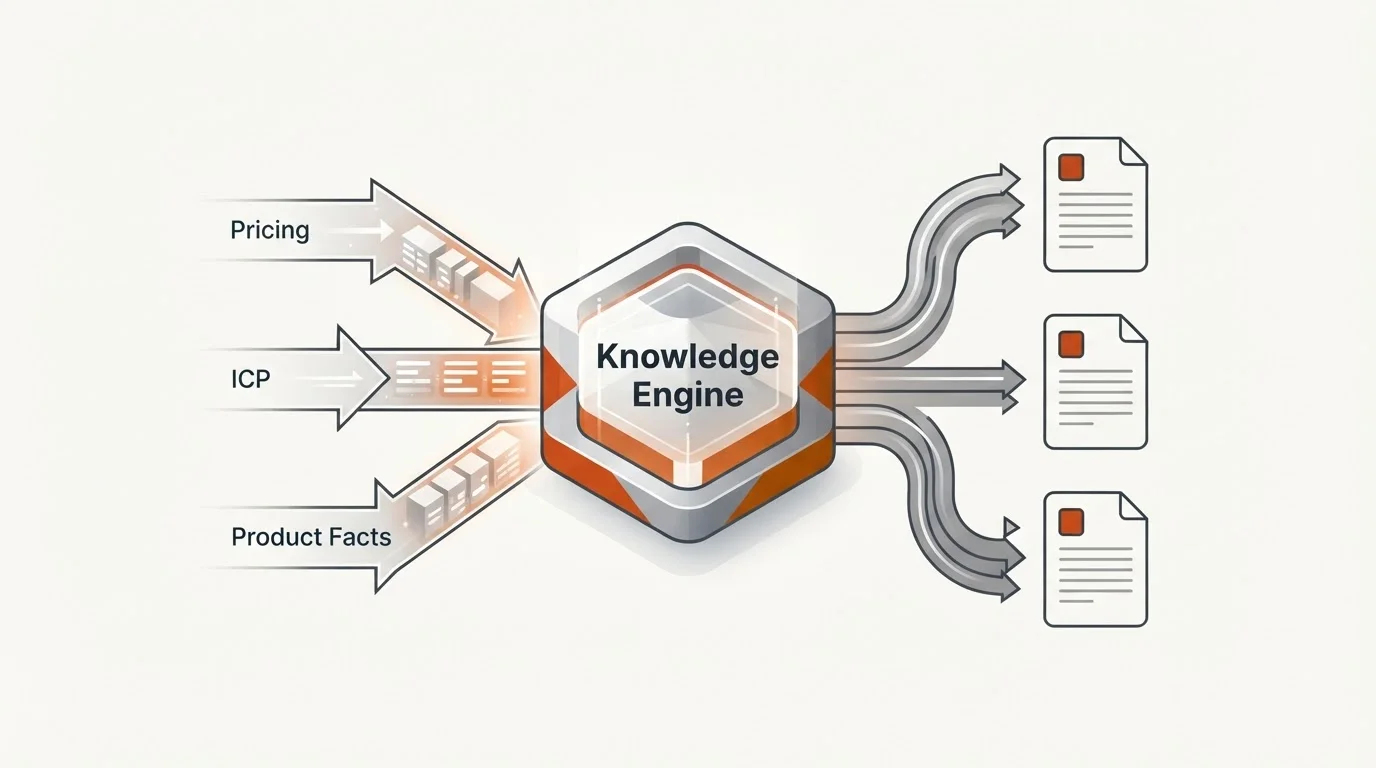
AI models are probabilistic engines; they predict the next likely word, which can lead to technical inaccuracies about your product. To mitigate this, SaaS founders should use a bounded knowledge base rather than relying on the AI's internal training data alone. This involves feeding the AI verified facts about your product features, pricing, Ideal Customer Profile, and positioning.
Platforms like Blogged solve this through a Knowledge Engine that organizes product and competitor knowledge into bounded facts. This engine maintains provenance and verification states, ensuring that every claim the AI makes is grounded in your actual business reality. By organizing your product description, facts, and limits, you enable the AI to reuse specific context across all content, maintaining consistency and accuracy at scale.
3. Master Context-Rich, Multi-Layered Prompting
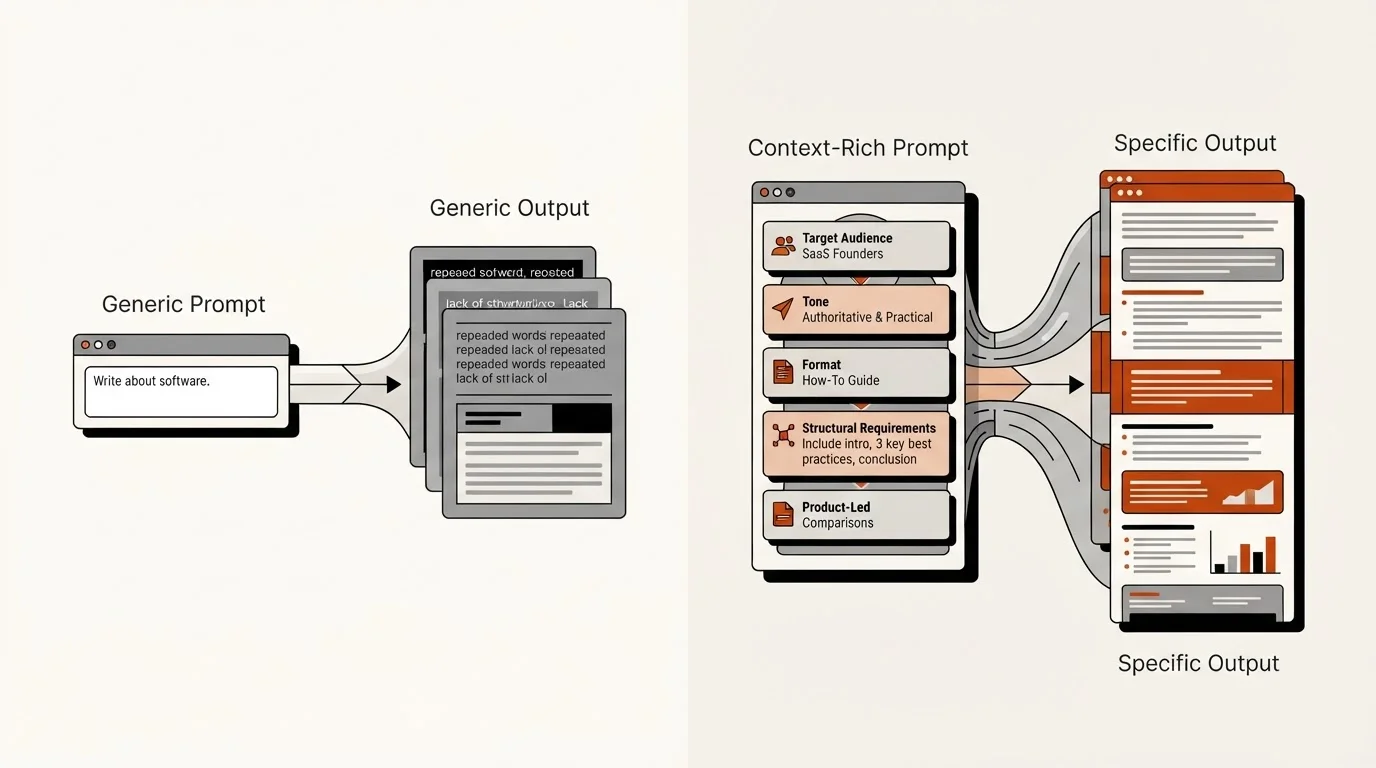
The quality of your output is directly linked to the granularity of your input. To move beyond generic prose, your instructions must include essential elements like target audience seniority, content format, and tone. For instance, a post intended for a DevOps Manager should have a vastly different vocabulary and structure than a post for a non-technical Marketing Director.
Effective prompting involves defining structural requirements such as technical checklists, pricing tables, or case study sections. Instead of asking for broad tips, prompt the AI to include specific product-led comparisons and to use a professional, empathetic tone. This level of detail prevents the AI from defaulting to safe, bland summaries and forces it to address the specific nuances of your SaaS niche.
4. Mandate Human Oversight for Information Gain
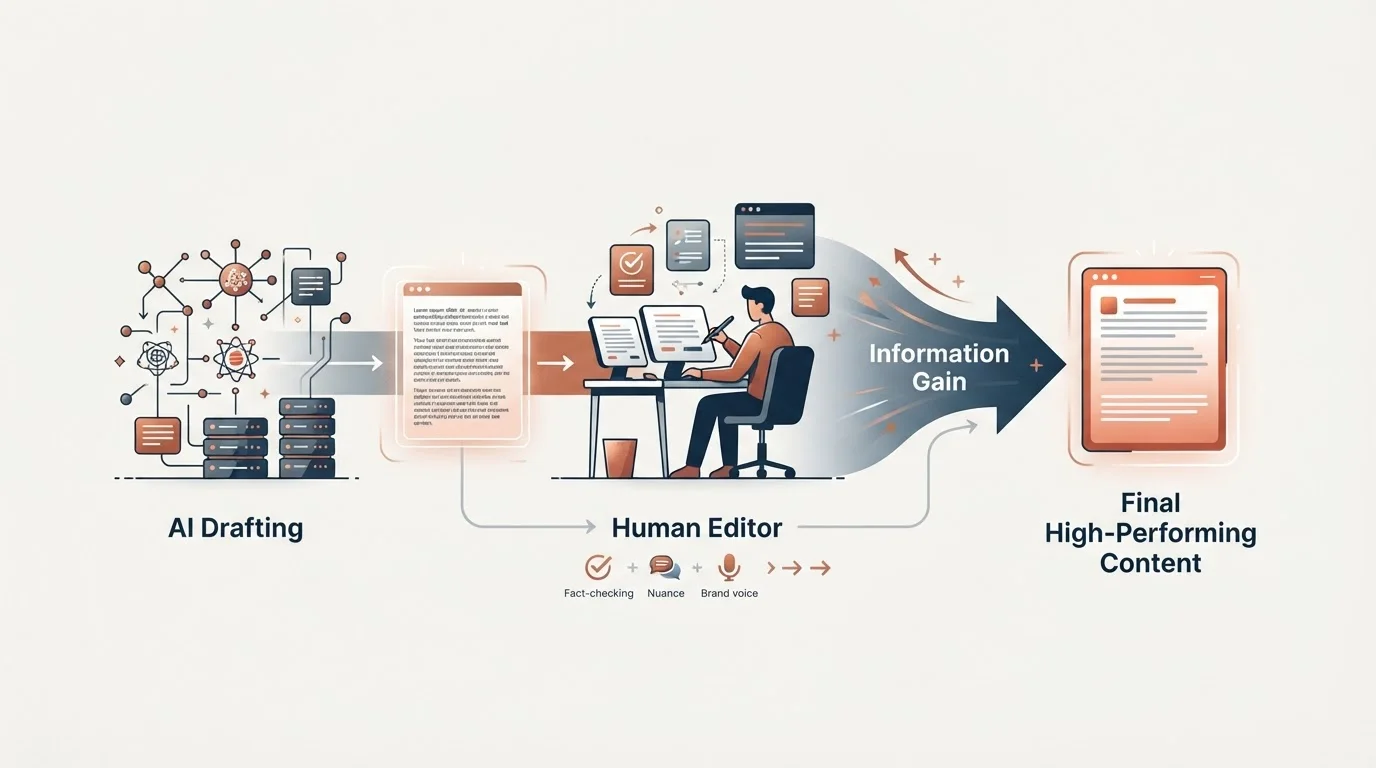
AI is excellent at synthesizing existing information, but it cannot provide the unique perspective or "Information Gain" that modern search engines demand. A best-in-class workflow utilizes AI for the heavy lifting of research and drafting, while leaving the final strategic review to a human editor. A human reviewer is essential for fact-checking statistics, adding personal anecdotes, and ensuring the brand voice is perfectly calibrated.
To implement this, establish a clear protocol where an editor reviews the autonomous draft to inject nuance that a machine might miss. This human layer transforms a standard AI draft into a high-performing asset that demonstrates real expertise and authority. It is the difference between a generic article and a piece of content that actually influences a buyer's decision.
5. Balance SEO with Generative Engine Optimization
Content must be discoverable not just by traditional search engines, but by generative AI tools like ChatGPT, Perplexity, and Gemini. This practice is known as Generative Engine Optimization. While traditional SEO focuses on keywords and backlinks, GEO focuses on making your content citeable and easy for AI to synthesize.
To optimize for GEO, your content should be structured with clear headings and factual, concise language that AI models can easily parse. Avoid excessive marketing jargon and focus on providing direct answers to specific user queries. By being the most reliable source for a specific fact or comparison, you increase the likelihood that AI assistants will cite your SaaS as the primary source in their generated answers.
6. Implement Product-Led Internal Linking
Content automation should never exist in a vacuum. Every article on your blog is a potential doorway to your product. A critical best practice is to strategically interlink your AI-generated content with high-value product pages and related guides. This not only improves your SEO structure but also guides the reader deeper into your conversion funnel.
Tools like Blogged’s Internal Linking Tool simplify this by verifying destinations and showing exactly why a link fits a specific section. This allows you to insert or undo links without leaving the editor, ensuring that every piece of content you publish is connected to your broader ecosystem of product-led pages. Consistent interlinking helps distribute authority across your site and keeps readers engaged with your brand longer.
7. Leverage a Verified Visual Asset Library
Text alone is rarely enough to build trust in a SaaS context. Readers want to see your product in action. A major best practice for content automation is managing a verified visual asset library that the AI or editor can pull from to enhance articles. High-quality product screenshots, infographics, and diagrams improve readability and reduce bounce rates.
Efficiently managing these assets requires a system that handles review queues and visible approvals. Blogged allows users to maintain a private product asset library with bulk decisions and safe archiving. By ensuring your alt text and provenance are pre-verified, you can automate the placement of visual evidence that supports your claims and makes your content more scannable for busy founders.
8. Establish an Autonomous Publishing Loop
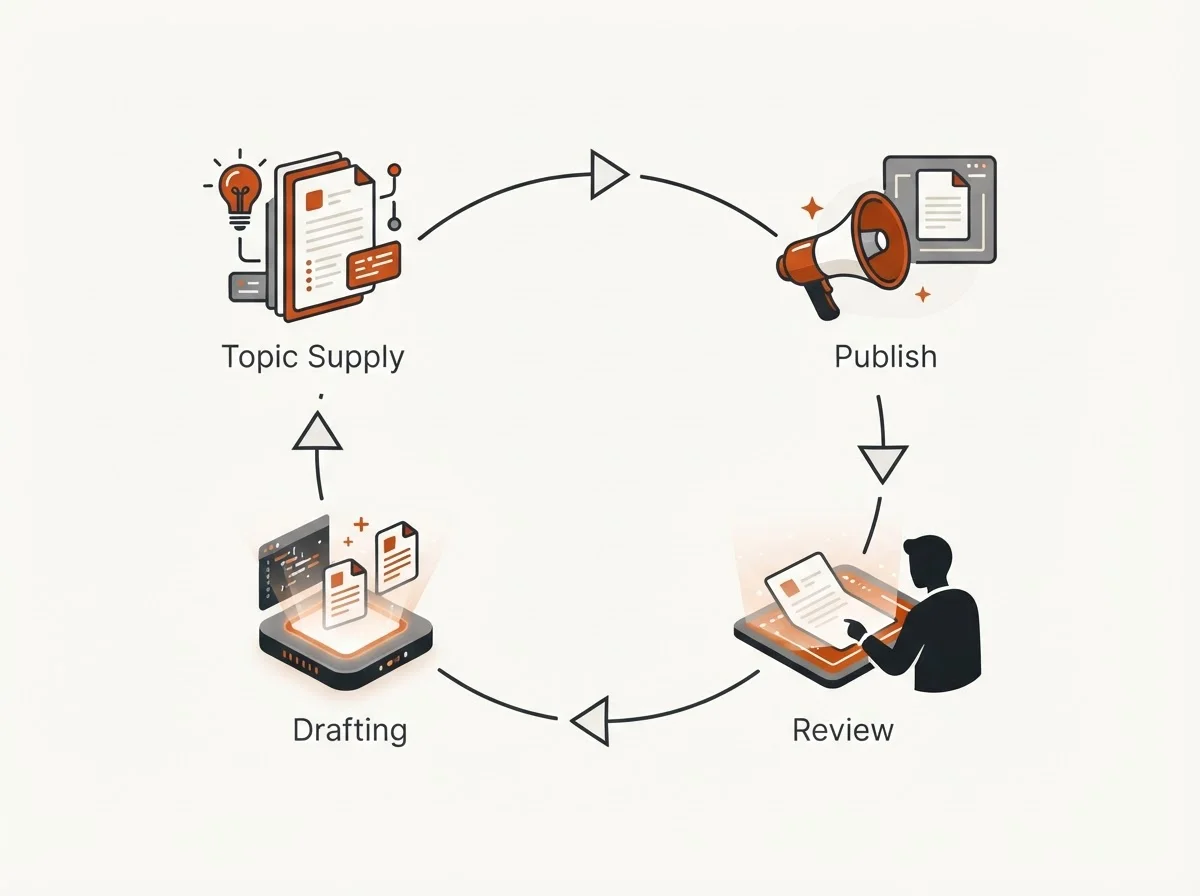
Consistency is the foundation of organic growth, yet most founders struggle to maintain a regular publishing cadence while building their company. The ultimate best practice is to automate the entire content lifecycle—from topic supply to final publishing. This removes the "blank page" problem and ensures your blog remains active even during busy product launch cycles.
By using an Autonomous Blog Publishing system, you can build a durable content plan and let the platform refill your topic queue from approved content directions. This allows you to maintain a steady flow of high-quality, product-led content on your chosen cadence. The goal is to transform your blog from a manual chore that occasionally gets updated into an autopilot growth engine that works in the background.
Frequently Asked Questions
Q: Will using AI content hurt my Google rankings?
No, as long as the content is helpful, accurate, and original. Google's quality standards focus on the usefulness of the content rather than how it was produced. Adding a human review layer to ensure accuracy and unique insight is critical to maintaining high rankings.
Q: How do I prevent AI from sounding robotic?
Provide the AI with specific brand voice guidelines and examples of your best writing. Instruct the AI to use specific tones—such as conversational or no-fluff—and always have a human editor refine the final prose to match your unique brand personality.
Q: Can AI handle technical SaaS documentation?
AI is excellent at drafting technical content if it is grounded in a verified knowledge base. By providing the AI with bounded facts about your API, features, and limits, you can produce highly accurate documentation and guides at scale.
Q: How much time can I save with content automation?
AI-powered workflows significantly reduce manual writing time, allowing small teams to maintain a publishing cadence that would otherwise require multiple full-time writers. This efficiency allows founders to refocus their time on product development and core business strategy.
Get practical updates on ai content writing best practices
Receive new articles and practical insights by email.
Conclusion
Adopting AI content writing best practices is no longer just an efficiency play; it is a competitive necessity for SaaS founders. By centralizing your product knowledge, mastering granular prompting, and maintaining a rigorous editorial process, you can build a content engine that drives sustainable organic growth. Whether you are optimizing for Google or the new wave of AI generative engines, the key to success lies in the balance between autonomous speed and human-verified quality. Start automating your workflow today to turn your product knowledge into discoverable, high-impact content.