
On this page
Blogging is often the first thing to stall when a SaaS founder hits a development sprint. While consistent content is vital for organic growth, the manual overhead of research, drafting, and optimization can feel like a part-time job you never applied for. For lean teams, implementing an automated B2B content pipeline can reclaim an average of 12.4 hours per week per person, shifting the founder's role from manual writer to strategic editor.
Traditional blogging forces you to choose between shipping code and shipping content. Manual content creation typically involves a heavy research phase, a multi-hour drafting process, and the technical friction of SEO metadata and internal linking. In an era where search is evolving toward AI discovery and Generative Engine Optimization (GEO), the complexity only increases.
Autonomous blogging systems solve this by transforming your product expertise into a self-refilling growth engine. By delegating the repetitive logistics of content production to agentic systems, you ensure your brand remains visible to high-intent buyers without sacrificing your product roadmap. This guide explores five specific ways automation removes the operational friction of growth.
1. Shifting from Researcher to Content Curator
The 'research rabbit hole' is perhaps the greatest productivity killer for founders. Manually identifying keyword gaps, analyzing competitor strategies, and finding unique angles for each post can consume an entire workday before a single sentence is written. This process is repetitive and, for the most part, does not require the specialized judgment of a founder at every step.
Autonomous systems replace this manual digging with a strategic approval loop. Instead of starting with a blank search bar, you set high-level 'Content Directions' based on your product's core value propositions. The system then analyzes search patterns and competitor gaps to refill a topic queue automatically.
This shift allows you to act as the final authority rather than the primary researcher. By providing the initial strategic intent, you allow the system to handle the data-heavy lifting of topic selection. This ensures your blog never goes cold, even when you are focused on a high-stakes release or investor meetings.
2. Eliminating Hallucinations with Bounded Product Facts
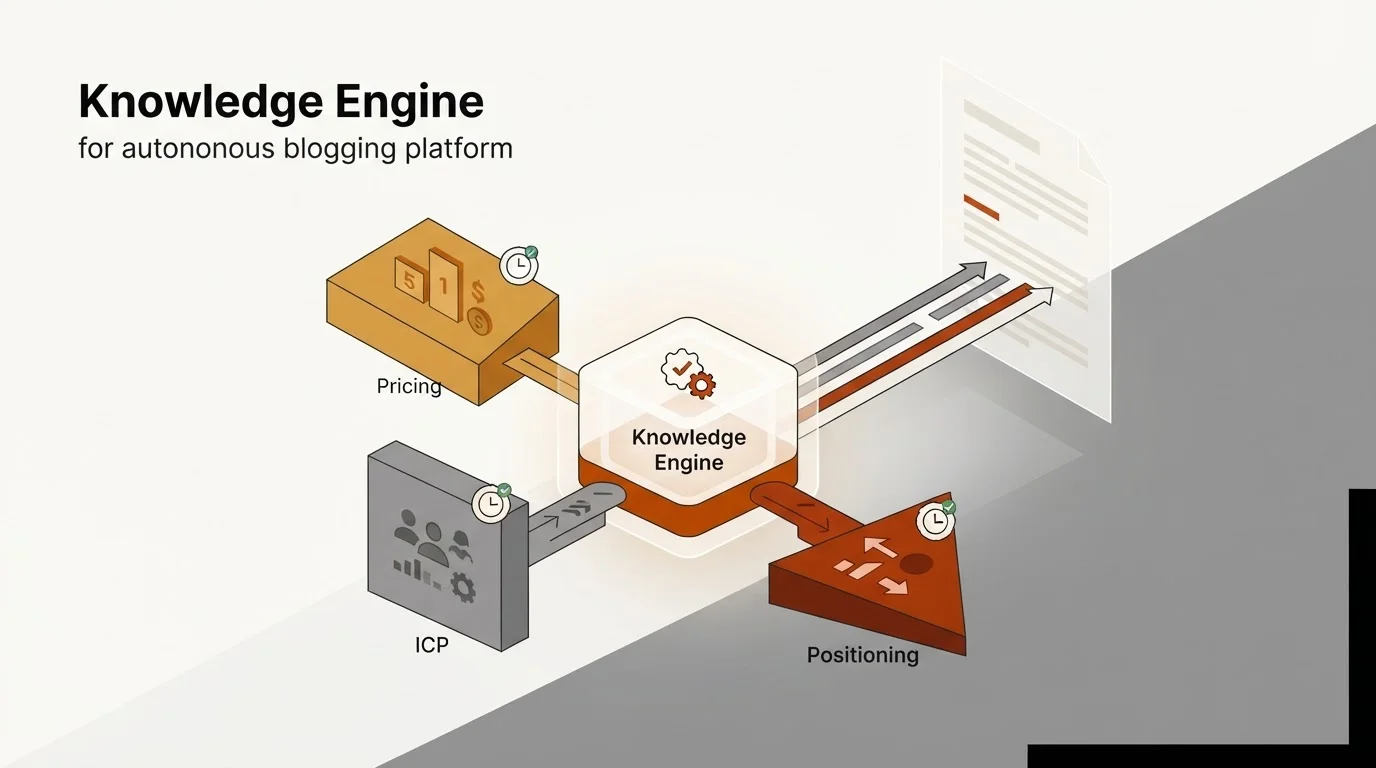
One of the primary objections to AI-assisted writing is the risk of inaccuracy. Founders often fear that automated tools will hallucinate pricing details or misrepresent complex technical features. Manually fact-checking every AI-generated draft can sometimes take as long as writing the post from scratch.
Autonomous platforms address this through a dedicated Knowledge Engine. This engine organizes your specific product details—such as pricing, limits, ICP data, and positioning—into 'bounded facts.' These facts are verified once by the founder or team and then reused across all content with strict provenance and verification controls.
By defining your product context once, you ensure that every generated post is grounded in truth. The system maintains 'freshness' by tracking when a fact was last updated, ensuring that if you change your API limits or pricing structure, every subsequent blog post reflects that change immediately without manual intervention.
3. Automating Media Logistics and Asset Management
Founders often underestimate the time spent on administrative friction. Formatting images, generating alt-text for accessibility, and ensuring screenshots are correctly placed can add hours of work to every publishing cycle. For a founder, managing these low-leverage tasks is an inefficient use of specialized time.
Modern autonomous platforms include a private SaaS product asset library. This system manages the entire media lifecycle, including visible approvals, bulk decisions, and safe archiving. Instead of hunting for the latest UI screenshot, you can pull from an approved repository where metadata like alt-text is generated automatically.
This 'hands-off' approach to media ensures that your articles remain visually engaging and compliant with SEO standards. It eliminates the back-and-forth of content staging, allowing you to approve a post's visual elements in a single click rather than managing individual files across different tools.
4. Intelligent Internal Linking and Technical SEO
Internal linking is a critical component of organic growth, yet it is frequently ignored because manual audits are tedious. A founder would need to remember every relevant past post to create an effective web of internal links, a task that becomes impossible as the blog grows.
Autonomous blogging treats SEO as a continuous, automated loop. Tools like Blogged verify potential link destinations and explain why a specific link fits a section. This allows the editor to insert or undo links without leaving the editor, ensuring that every piece of content supports your site's overall authority.
Beyond just links, the system handles the technical requirements of Generative Engine Optimization. It structures content to be easily indexed by AI Answer Engines, ensuring your product is the one cited when a potential customer asks a search engine for a solution. This technical execution happens in the background, requiring no SEO expertise from the founder.
Get practical updates on autonomous blogging time saving
Receive new articles and practical insights by email.
5. Maintaining Growth on 'Full Autopilot'
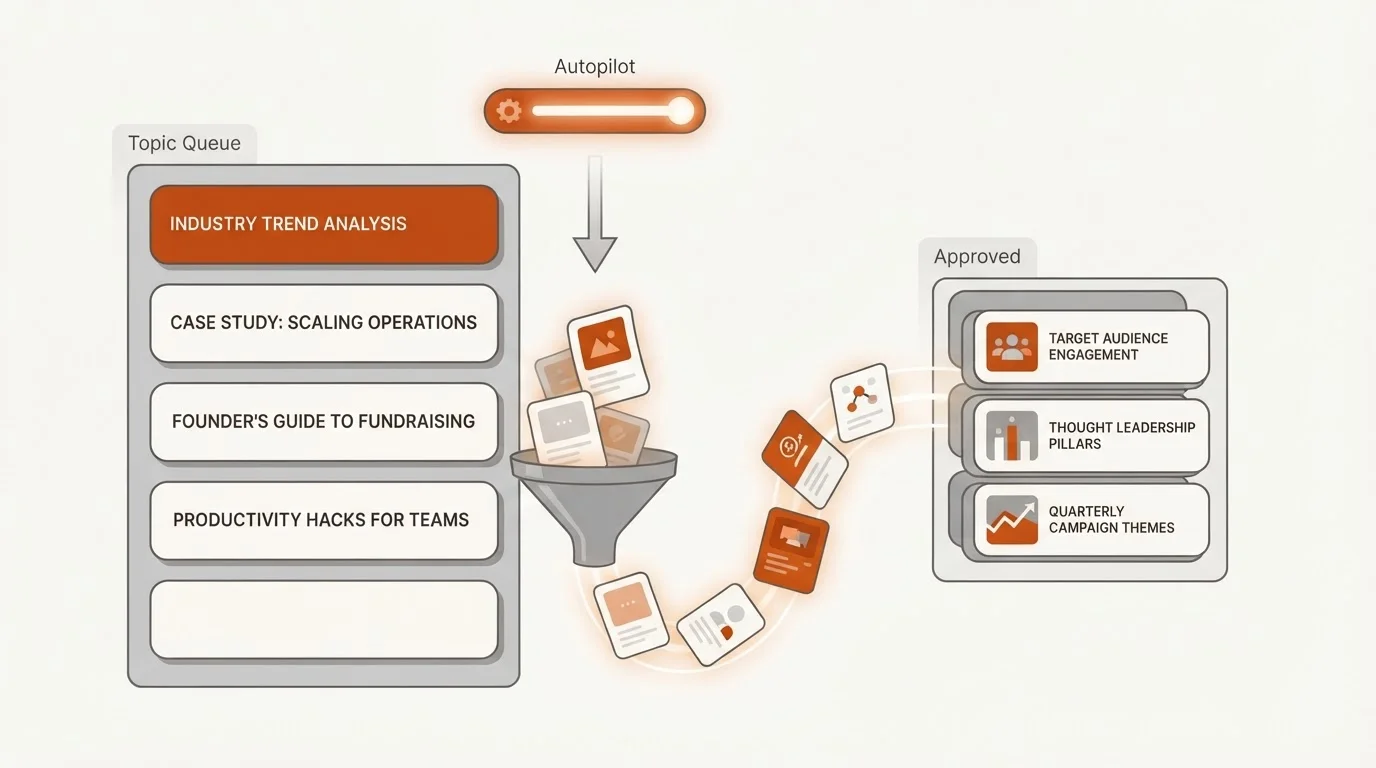
Consistency is the primary factor that determines the success of a B2B SaaS blog. Most marketing engines fail not because of a lack of quality, but because of a lack of cadence. When a founder gets busy, the blog is usually the first thing to be sacrificed, which halts the flow of organic leads.
Autonomous blogging enables a Full Autopilot mode that ensures your growth engine never sleeps. Once you have approved your content plan, the system refills a topic queue from your directions and publishes on your preferred cadence. This creates a durable stream of expert insights that builds trust with potential buyers who are researching your category.
This consistency is managed through a dashboard that lets you track Search Console performance, lead growth, and reader feedback. You retain the ability to step in and refine the strategy at any time, but the day-to-day execution no longer relies on your manual input. This allows you to scale your publishing velocity without increasing your workload.
Reclaiming Your Strategic Focus
The true value of reclaiming over 12 hours per week isn't just about productivity; it is about where that energy is redirected. When you offload content logistics, you can focus on high-leverage activities that an autonomous agent cannot perform.
- Product Innovation: Spend your extra time refining your roadmap and conducting deep-dive user research.
- Strategic Partnerships: Personal engagement is required for building alliances and closing high-value enterprise deals.
- Company Culture: Leading a growing team requires a level of empathy and vision that cannot be automated.
By organizing your product knowledge and ICP within a system like Blogged, you ensure your content remains a reflection of your vision while freeing yourself to actually build the company that the content describes.
Frequently Asked Questions About Autonomous Blogging
Q: How do I ensure the content actually sounds like me?
You retain control by approving the initial Content Directions and reviewing the final drafts. The system handles the research and structural work, while you provide the brand voice and proprietary insights.
Q: Can I stop the system if I need to change my strategy?
Yes. You can pause Autopilot or adjust your topic queue at any time. The system is designed to be a tool for orchestration, not a replacement for your strategic intent.
Q: Does this work for technical SaaS products?
Yes. By using a Knowledge Engine to store bounded facts about your product's architecture, APIs, and integrations, the system can produce highly accurate technical content that avoids the generic feel of standard AI writing.
Autonomous blogging represents a fundamental shift in how SaaS companies approach organic growth. By leveraging systems that manage the research, writing, and technical optimization cycles, you can maintain a high-authority blog while staying focused on your core mission. Reclaim your schedule, protect your mental energy, and let your content engine run on autopilot while you build the future of your SaaS.