
On this page
Maintaining content compliance is a foundational requirement for SaaS founders in regulated sectors like fintech, healthcare, and cybersecurity. In these industries, an outdated blog post or an inaccurate feature description is more than a marketing error; it is a regulatory liability. This guide provides a framework for transitioning from manual, error-prone content workflows to a structured autonomous governance model. By grounding content in a centralized knowledge engine, companies can address the dual challenges of privacy adherence and factual product accuracy. This shift transforms compliance from a resource-draining hurdle into a scalable growth asset for the modern SaaS enterprise.
The Challenge: Navigating the High Stakes of Regulated SaaS Content
SaaS companies operating in regulated sectors face a unique dilemma: the need for rapid organic growth versus the strict requirements for technical accuracy. The primary challenge is the unsustainable burden of manual oversight. As a company scales, the volume of marketing materials and product-led blog posts typically outpaces the ability of legal teams to review every line. This creates a dangerous 'freshness gap' where live content no longer reflects current security protocols or fee structures. In fintech, for example, misleading a user about a transaction fee or a data handling policy can trigger direct violations of consumer protection mandates.
Factual inaccuracies pose an immediate risk to brand integrity. When a guide from six months ago references a legacy encryption standard, it confuses users and increases the load on customer support teams. Beyond product accuracy, privacy mandates like the General Data Protection Regulation (GDPR) require constant vigilance. Under Article 83(5) of the GDPR, serious infringements can result in administrative fines of up to €20 million or 4% of the total worldwide annual turnover of the preceding financial year. This makes the cost of content errors potentially catastrophic for a growing startup.
Traditional AI generation tools often exacerbate these risks by introducing 'hallucinations'—inventing features or security claims that do not exist. For a SaaS founder, the risk of an AI-generated post claiming a non-existent SOC2 certification is a liability that outweighs potential SEO gains. A verifiable audit trail and factual constraints are required to prove due diligence to regulators, a feature that standard chat-based AI tools simply cannot provide.
Implementing Autonomous Governance with Blogged
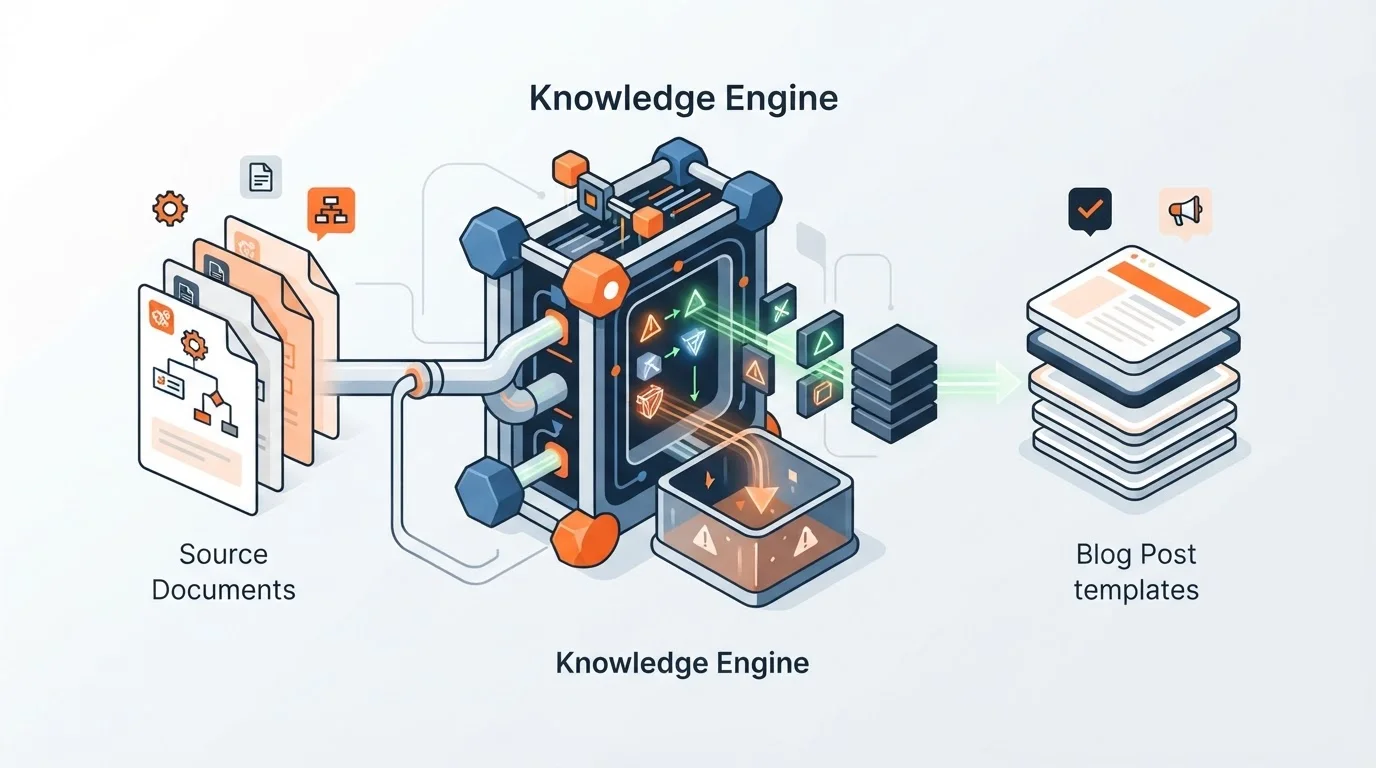
To solve these systemic issues, many founders are turning to Blogged, an autonomous blogging platform designed to handle the research, planning, and publishing of product-led content while maintaining strict compliance. The core of this solution is the platform's ability to ground content in a verifiable source of truth known as the Knowledge Engine. This moves the workflow away from generic AI generation and toward an evidence-based content strategy where every claim is anchored in the product's actual technical specifications.
The platform integrates directly with existing publishing infrastructure to ensure that the content review process remains secure and centralized. For instance, the Blogged Ghost AI Blog Publishing integration allows the platform to manage content creation and review internally, while Ghost handles the final rendering for the reader. This separation ensures that while generation is automated, the brand maintains absolute control over the final presentation and user data collection. By utilizing a signed webhook and content API, SaaS teams can maintain a secure connection across their digital properties without exposing sensitive internal systems.
Factual Grounding and the Knowledge Engine
A successful compliance strategy requires transforming raw product data into a structured knowledge base that an autonomous engine can reference. This process, known as factual grounding, ensures the AI does not invent features or compliance claims. Instead, every assertion is cross-referenced against the company's actual documentation, such as updated privacy policies, technical whitepapers, and mandatory legal disclaimers. This repository of truth informs the research and drafting phases, ensuring the engine describes encryption standards or data handling exactly as they are documented in your internal files.
Collaboration Without Bottlenecks

Operational scaling is supported by the platform's inclusion of unlimited team seats on every paid plan. This allows product managers, legal counsel, and marketing specialists to collaborate within a single environment without incurring additional software costs for each new reviewer. This structure eliminates the silos that previously led to compliance gaps. With entry-level plans starting at $99 per month, this model provides a predictable cost for scaling content operations safely. The goal is to move the human role from 'writing' to 'verifying,' which is a significantly more efficient use of expert time.
The Framework for a SaaS Content Compliance Case Study
When evaluating the success of an automated content program, founders should focus on three primary metrics: factual accuracy, risk mitigation, and operational velocity. A successful implementation typically follows a predictable sequence that serves as a blueprint for any SaaS content compliance case study. First, the team identifies 'high-risk' topics—such as data security or financial advice—that require the strictest grounding. By isolating these topics, the autonomous engine can be tuned to prioritize specific legal documentation over general market trends.
Second, the integration of a 'human-in-the-loop' review cycle ensures that nuance is never sacrificed for speed. Blogged includes 1 revision per article on its standard entry plans and up to 3 revisions per article on higher tiers. This structure encourages a culture of precision; teams learn to provide high-quality knowledge sources upfront to ensure the first draft is technically sound. When a revision is needed, it is focused on brand voice and stylistic nuance rather than correcting foundational technical errors, which have already been filtered out by the Knowledge Engine.
Finally, the direct delivery of content to the CMS eliminates manual copy-pasting errors, which is a frequent source of compliance drift. Using the WordPress AI Blog Publishing integration, teams can create and review articles within the Blogged environment and deliver them to a self-hosted WordPress site using a dedicated publishing plugin and an application password. The version approved by the legal team is the exact version that goes live, preserving the integrity of the audit trail.
Building Authority through Product-Led Content Accuracy
Transitioning to an autonomous governance model delivers immediate operational improvements beyond simple risk avoidance. The most significant result for SaaS founders is the substantial increase in E-E-A-T (Experience, Expertise, Authoritativeness, and Trustworthiness). Search engines and AI discovery tools prioritize content that demonstrates actual product knowledge and verifiable claims. By grounding your blog in your actual product documentation, you improve both your SEO rankings and your user trust.
Transparency is another byproduct of this model. Every article published through an autonomous platform like Blogged creates a record of its source grounding and review history. This level of transparency is invaluable during internal quality assessments or external regulatory inquiries. Furthermore, by utilizing integrations that collect consented visits and configured conversions, founders can track performance while remaining fully compliant with data privacy standards. This ensures that the growth driven by the blog is as ethically sound as it is effective.
Frequently Asked Questions About SaaS Content Compliance
Q: Can autonomous blogging platforms truly handle GDPR compliance?
Yes, provided the platform supports consented data collection and allows you to embed mandatory privacy disclosures directly into your templates. By grounding content in your specific Data Processing Agreement (DPA), the engine ensures your public claims match your legal commitments.
Q: How does a Knowledge Engine prevent AI hallucinations?
A Knowledge Engine acts as a technical constraint. Instead of the AI relying on its general training data, it is instructed to prioritize the specific product documentation and technical files you provide. If a claim isn't in your documentation, the system is designed to omit it.
Q: Is it expensive to implement autonomous compliance for a small SaaS?
Platforms like Blogged are built for lean teams, with plans starting at $99 per month. This cost is significantly lower than the price of a single regulatory fine or the hourly rate of a dedicated compliance officer managing manual reviews.
Q: How many team members can participate in the review process?
On Blogged, every paid plan includes unlimited team seats. This is crucial for compliance because it allows you to include legal, product, and marketing leads in the approval workflow without increasing your monthly software bill.
Get practical updates on saas content compliance case study
Receive new articles and practical insights by email.
The path to SaaS content compliance is an achievable goal, even for lean teams in complex industries. By moving away from manual review loops and embracing autonomous governance, founders can protect their brand, satisfy regulators, and drive organic growth. The integration of a factual Knowledge Engine ensures that every word published serves as a bridge of trust between the product and the user. In an era where search engines and AI discovery tools prioritize authority and accuracy, grounding your content in reality is the ultimate competitive advantage for any SaaS founder.