
On this page
For many SaaS founders, the content treadmill is a recurring trap. You spend valuable hours researching a trending topic or a news-heavy industry shift, only to see the resulting traffic flatline as soon as the hype cycle moves on. This cycle forces you to choose between building your product and feeding a blog that requires constant manual intervention to stay relevant. There is a more efficient path to sustainable growth: evergreen product content.
Unlike news or trend-based articles, evergreen content addresses the perennial problems your customers face and the fundamental ways your software solves them. It acts as the 'index fund' of your marketing strategy—a foundational asset that compounds in value long after the initial publish date. For a founder, this represents the most defensible use of time and budget. This guide will show you how to identify timeless topics, structure them for search and AI discovery, and automate the process to build lasting organic authority.
Why Evergreen Content is the Core of SaaS Growth
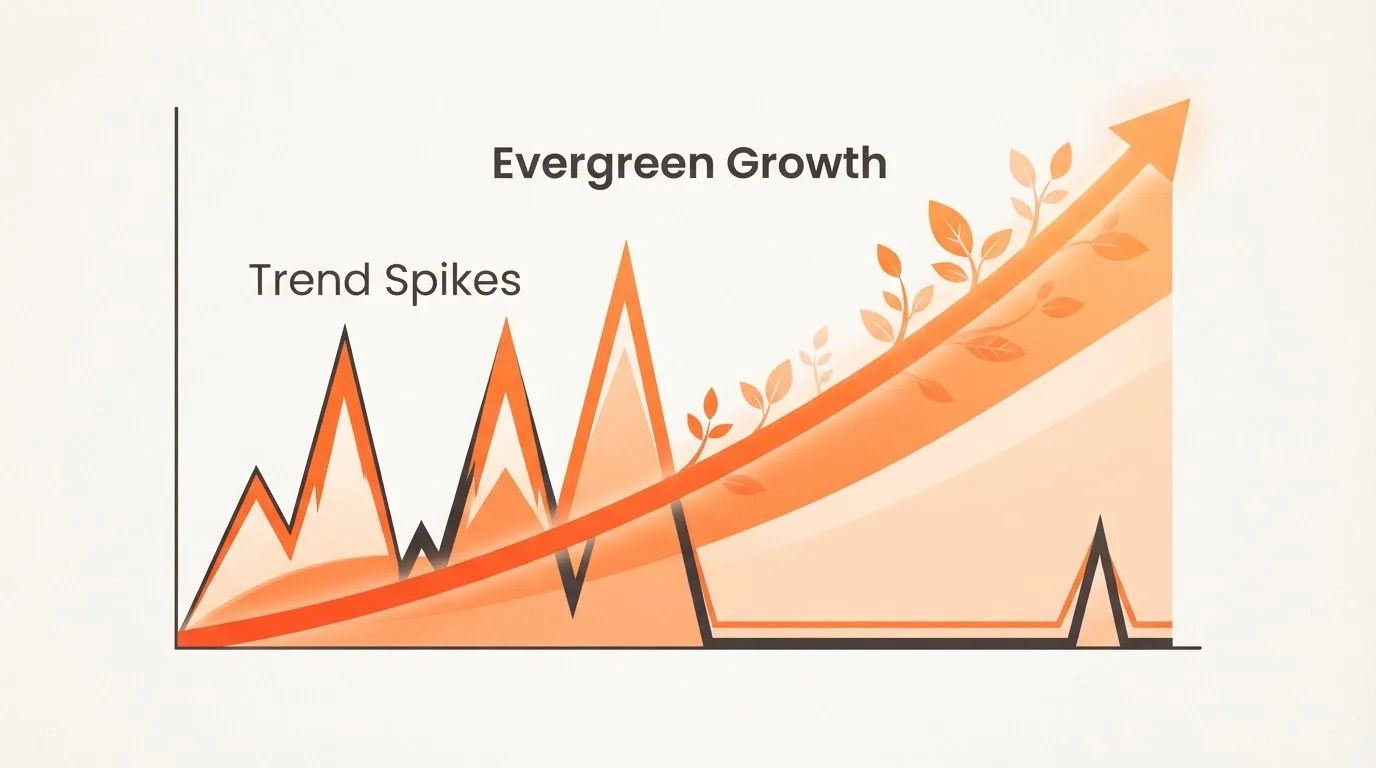
In the B2B SaaS sector, the most valuable visitors are rarely those chasing the latest news headlines. Instead, they are the users searching for answers to fundamental operational challenges. Evergreen content targets these high-intent users by focusing on topics with consistent, long-term search interest. By addressing 'Jobs to be Done' rather than transient industry gossip, you create assets that remain relevant for years.
This approach delivers a significantly higher return on investment (ROI) compared to trend-based campaigns because the cost of creation is amortized over a longer lifecycle. As evergreen pieces age, they naturally attract backlinks and social shares, which improves your overall domain authority. This rising tide makes it easier for every new page on your site to rank, creating a flywheel effect. For a lean SaaS team, evergreen content reduces the maintenance burden, allowing you to build a library of high-authority assets that generate leads while you focus on shipping code.
Identifying Your Product's Foundational Topics
The secret to an effective evergreen strategy is writing about the problem space your product occupies rather than just the features themselves. To find these topics, look for the 'why' behind your product. Analyze your customer support logs, sales calls, and frequently asked questions. If a prospect asks a question today, they will likely ask the same question three years from now.
Consider these three categories for your evergreen roadmap:
- Foundational How-To Guides: Focus on universal workflows. If you lead a project management SaaS, a guide on 'How to Structure a Project Plan' is evergreen; a post about 'New Dashboard Colors' is not.
- Industry Fundamentals: Explain the unchanging principles of your niche. A CRM founder should focus on 'The Fundamentals of Lead Scoring,' while a security founder might target 'Zero Trust Architecture Principles.'
- Category Comparisons: Helping users understand the difference between two technology approaches (e.g., 'Monolithic vs. Microservices') provides utility that stays relevant as long as those architectural patterns exist.
Mining Documentation for Organic Discovery
Founders often overlook a goldmine of content: their own product documentation. Technical documentation is the purest form of product knowledge, but it is rarely optimized for discovery by people who aren't already users. By transforming documentation into educational blog content, you can capture awareness-stage traffic from people searching for solutions to technical hurdles.
Blogged’s Knowledge Engine is specifically designed for this transformation. It allows you to provide public product sources, upload documents, or paste links directly into the platform to fuel your content strategy. This feature takes raw technical data and refines it into discoverable, product-led articles. For example, a complex API authentication guide can be transformed into a high-level educational piece on 'Security Best Practices for SaaS Integrations,' positioning your product as the authoritative solution for that specific challenge.
Best Practices for High-Authority Content Creation
Creating timeless content requires a shift in writing philosophy. You are not just trying to earn a click; you are building a definitive resource. This requires clarity, technical accuracy, and a structure that serves both human readers and modern discovery engines.
Focus on Foundational Concepts: When describing a solution, frame it around the underlying logic rather than specific buttons or menus that might change in your next UI update. Use industry-standard terminology first, then introduce your product’s proprietary features as the most efficient way to implement those standards. This ensures the content remains accurate even if your interface evolves.
Optimize for Search and AI Discovery: Modern SEO and Generative Engine Optimization (GEO) reward content that is factually dense and well-structured. Use technically correct terms that search engines use to understand your expertise—a concept known as entity salience. Ensure your primary keyword and related long-tail terms are integrated naturally. Modern discovery tools prioritize content that clearly explains 'how' and 'why' things work, making high-quality evergreen guides the primary fuel for AI-generated answers.
Stay updated on autonomous blogging for SaaS
Get insights and strategies on transforming product knowledge into discoverable content. Learn how to drive organic growth for your SaaS.
The Maintenance Loop: Fighting Content Decay
Evergreen does not mean 'never updated.' Even foundational concepts can lose authority if the context around them changes. Content decay happens when links break, industry benchmarks become outdated, or search competitors release more comprehensive guides. To protect your rankings, you must establish a routine maintenance loop.
Establish a quarterly audit cycle for your top-performing evergreen pages. During this audit, focus on three areas: updating statistics to the latest available benchmarks, refreshing product-specific instructions to match your current platform, and deepening the value by answering new 'people also ask' queries. Substantive updates—such as adding a new conceptual diagram or expanding an explanation—signal to search engines that the content is still the most authoritative resource available.
Automating Authority with Blogged
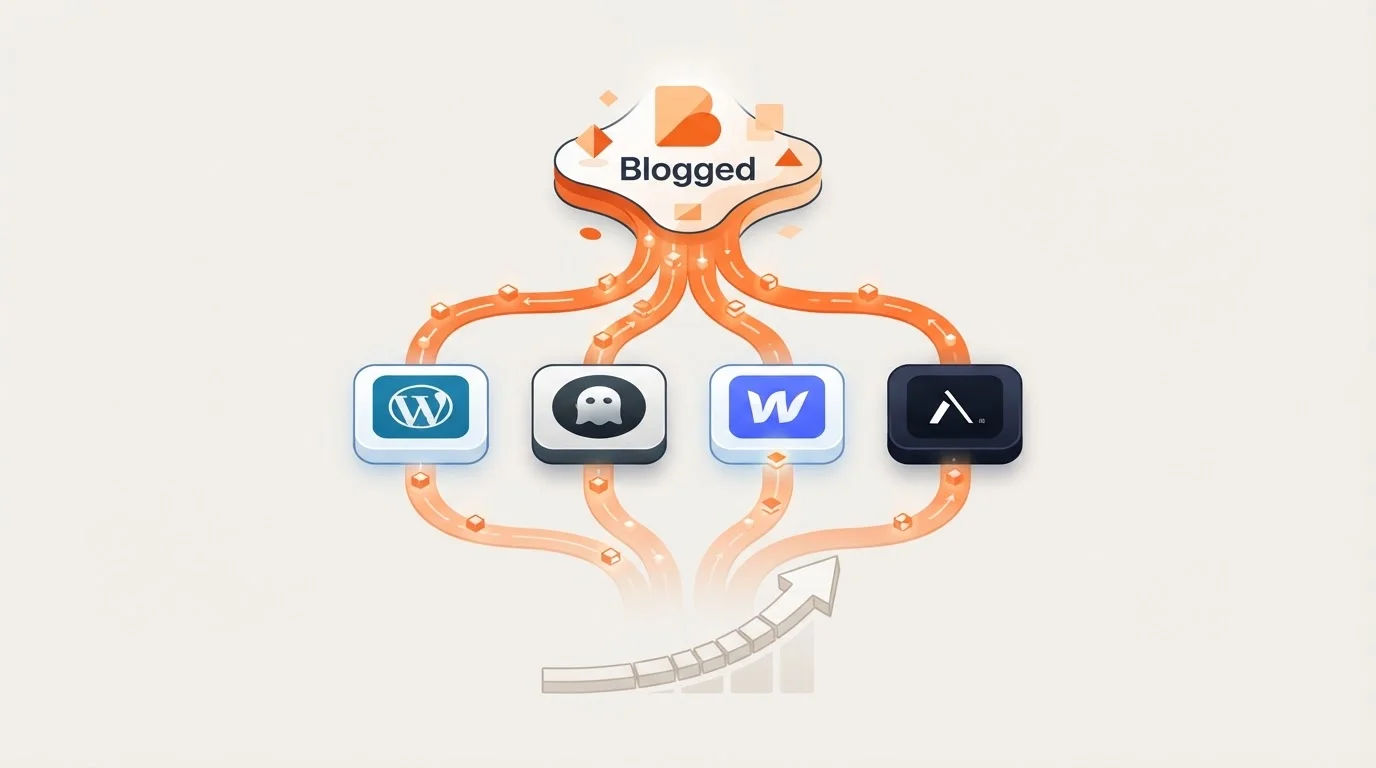
Building an evergreen library manually is a significant operational burden. Blogged provides an autonomous SEO and GEO blogging platform designed to let SaaS founders scale their organic growth without the overhead of managing a full content team. By handling the research, planning, optimization, and internal linking, Blogged ensures your product knowledge is consistently transformed into high-value assets.
Starting at $99 per month, Blogged manages the entire lifecycle of your blog on autopilot. It integrates directly with major platforms like WordPress, Ghost, Webflow, and Next.js. For instance, the WordPress integration allows you to review and deliver articles directly to your site via the Blogged Publishing plugin, while the Ghost integration manages content creation while letting Ghost render the reader experience. This autonomous approach allows you to build a self-sustaining growth engine with unlimited team seats, freeing you to focus on building your SaaS while your blog builds your authority.
Frequently Asked Questions About Evergreen Product Content
Q: How do I know if a topic is truly evergreen?
Ask if the information will still be useful to a new customer two years from now. If the topic solves a recurring problem or explains a core industry concept, it has evergreen potential.
Q: Does evergreen content need to be long-form?
Often, yes. Authority requires depth. Successful evergreen guides are typically comprehensive enough to be the definitive resource on a topic, providing enough detail to solve a user's problem completely.
Q: How does evergreen content help with Generative Engine Optimization (GEO)?
AI search engines prioritize well-structured, fact-heavy content. By creating comprehensive guides, you provide the source material that AI systems use to generate answers, increasing your chances of being cited as an authority.
Q: Can I turn a product announcement into evergreen content?
Yes, by shifting the focus from 'what we just launched' to 'how to solve X problem using this new capability.' Rewrite the post as a 'Best Practices' or 'Strategic Guide' to ensure it provides long-term utility.
Investing in evergreen product content is a strategic move that transforms your unique product knowledge into a permanent marketing asset. It reduces customer acquisition costs over time and builds the kind of organic authority that competitors find difficult to displace. By focusing on foundational problems and leveraging autonomous tools like Blogged to handle the execution, you can exit the content treadmill and build a sustainable engine for long-term growth. Start transforming your product knowledge into discoverable authority today.