
On this page
Organic growth represents the structural baseline of a sustainable SaaS company. While paid acquisition offers immediate feedback loops, fluctuating ad costs compress margins and make customer acquisition unpredictable over time. For founders, the primary hurdle is not a lack of depth or industry knowledge. The actual challenge lies in establishing a continuous system that converts technical insight into structured, discoverable content that matches real user search behavior.
A successful content strategy for SaaS founders must transition from high-volume generic blogging to systematic, product-led creation. This means treating your company blog as an infrastructure asset rather than an editorial diary. By anchoring every piece of content to specific user problems and technical solutions, you build an organic pipeline that consistently pulls qualified users into your signup funnel.
The Economics of Organic SaaS User Acquisition
Relying exclusively on paid channels ties your pipeline directly to ongoing advertising expenditure. When ad campaigns halt, lead generation drops to zero immediately. Organic content builds a compounding asset where an article published today continues to acquire users months or years down the line. This long-term equity helps stabilize your customer acquisition cost (CAC) and optimizes your enterprise health metrics over time.
For early-stage and scaling startups, organic search provides a highly predictable framework for long-term pipeline development. Every authoritative article acts as a permanent digital node that targets specific intent-driven queries. Over time, the cumulative traffic from these nodes outpaces paid alternatives, dramatically improving your lifetime value to customer acquisition cost ratio (LTV:CAC). Shifting your baseline to organic channels protects your monthly recurring revenue (MRR) from external ad market shocks.
Mapping Content Patterns to the Complete Buyer Journey
Standard inbound marketing often uses a simplified funnel that stops immediately after a conversion occurs. In a recurring subscription model, this approach creates an expensive structural vulnerability. An execution-focused content strategy for SaaS founders must address everything from initial discovery through long-term technical product adoption.
To construct a leaky-funnel solution, you must organize your content production into four distinct operational phases. Each phase targets a unique user cognitive state and demands a specific technical perspective. Neglecting any phase means you either miss high-intent searchers completely or fail to retain users once they enter your software environment.
Problem-Aware Content (Awareness Stage)
At the beginning of the journey, prospects are completely unfamiliar with your specific SaaS brand. Instead, they are actively looking for solutions to distinct operational symptoms or operational technical friction points. Your writing at this stage must focus on educational breakdown, diagnosis, and workflow optimization.
The goal here is to define the problem clearly and explain why current manual methods or legacy systems are failing. Providing objective analysis establishes structural trust and positions your company as an authority. By helping searchers diagnose their business bottlenecks, you introduce your software as the natural progression of their technical research.
Solution-Aware Content (Consideration Stage)
Once searchers identify their underlying operational problems, they begin actively evaluating prospective software classes and tools. They search for comparison grids, direct alternatives, workflow comparisons, and third-party integration capabilities. This is where you introduce your specific product-led content acquisition mechanisms.
SaaS buyers at this point need clear validation that your software fits perfectly into their existing engineering or operational stack. Focus heavily on detailed technical walk-throughs, architecture comparisons, and interoperability proof points. Demonstrating exactly how your application handles specific data pipelines or tasks establishes direct functional advantages over alternative platforms.
Product-Aware Content (Decision Stage)
The decision phase focuses entirely on eliminating any remaining technical or operational friction before a user signs up. Prospects look for detailed feature specifications, exact capabilities, clear data protection standards, and setup instructions. Content here must be direct, specific, and accurate to preserve long-term conversion integrity.
Provide explicit walkthroughs of your internal dashboards and highlight specific feature mechanics. Clearly state what your system accomplishes and how it simplifies standard day-to-day work tasks. This granular clarity helps potential users visualize their immediate time-to-value, encouraging self-serve conversions without requiring long procurement discussions.
Expansion and Retention Content (Adoption Stage)
Post-signup content acts as a direct layer of defense for your recurring revenue models. If new users do not find immediate utility or fail to understand advanced features, they will inevitably abandon the application. Creating content that addresses long-term execution ensures that customers realize continuous value from their investment.
Publish advanced optimization guides, template walkthroughs, and custom configuration tutorials for your user base. Documenting hidden use cases and complex automation sequences encourages deep team adoption across your client organizations. This deliberate educational layer directly strengthens user retention, increases lifetime value, and prevents avoidable revenue churn.
Stay updated on autonomous blogging for SaaS
Get insights and strategies on transforming product knowledge into discoverable content. Learn how to drive organic growth for your SaaS.
Building an Engine Around Product Knowledge
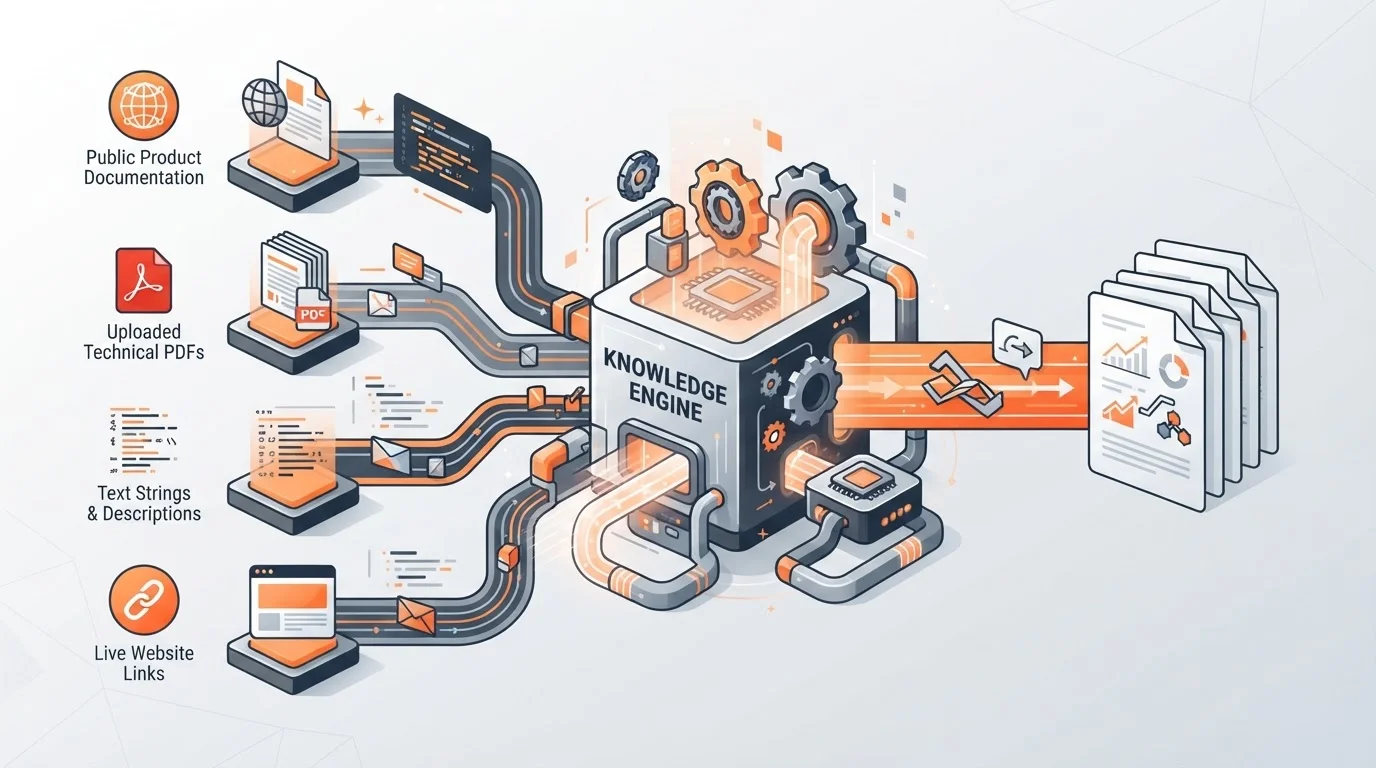
The most common bottleneck for a content strategy for SaaS founders is the continuous extraction of technical product facts. Founders possess the necessary domain expertise but lack the spare operational hours to draft individual articles manually. To execute successful organic growth strategies SaaS founders must develop a systemized process that maps core software details to external content engines.
Centralizing your internal product knowledge lets you maintain technical precision without sacrificing engineering focus. Using an autonomous blogging platform helps automate this extraction pipeline effectively. For instance, the Blogged Knowledge Engine allows founders to supply public product sources, upload technical documents, paste raw links, or enter written product descriptions to ground content in absolute reality. This prevents generic AI output and ensures all published pieces match your live code.
Mastering Generative Engine Optimization (GEO)
The mechanics of modern web search are moving beyond traditional lists of blue hyperlinks. Users increasingly rely on AI search assistants, conversational engines, and generative summaries to discover software options. This evolution requires SaaS companies to master Generative Engine Optimization (GEO) alongside classic SEO.
Generative discovery models prioritize factual precision, entity relationships, and verifiable assertions over simple keyword frequency. To be included in these AI-synthesized responses, your text must contain clear structured statements and authentic domain authority. Structuring your blog posts around precise entity definitions ensures your product is correctly cataloged by generative discovery engines. Utilizing automated platforms like Blogged simplifies this formatting process by managing technical structures, clean layouts, and automated interlinking required for GEO.
Streamlining Team Collaboration Without Friction
Scaling an organic SaaS user acquisition content machine requires deep alignment between product managers, developers, and writers. If your publishing schedule operates in an isolated marketing silo, it will eventually produce inaccurate technical guides that frustrate prospective customers. However, managing collaborative loops across multiple technical departments often creates massive administrative overhead.
To maintain speed, teams require a shared workspace where developers and editors can review content pipelines concurrently. Removing seat-based cost barriers ensures that every stakeholder can provide feedback on drafts before publication. To support this cooperative flow, every paid plan on Blogged includes unlimited team seats. This structural setup enables fluid peer review across your product team, while a system limit of 1 revision per article provides an efficient path to finalize content.
Integrating Technical Attribution and ROI Metrics
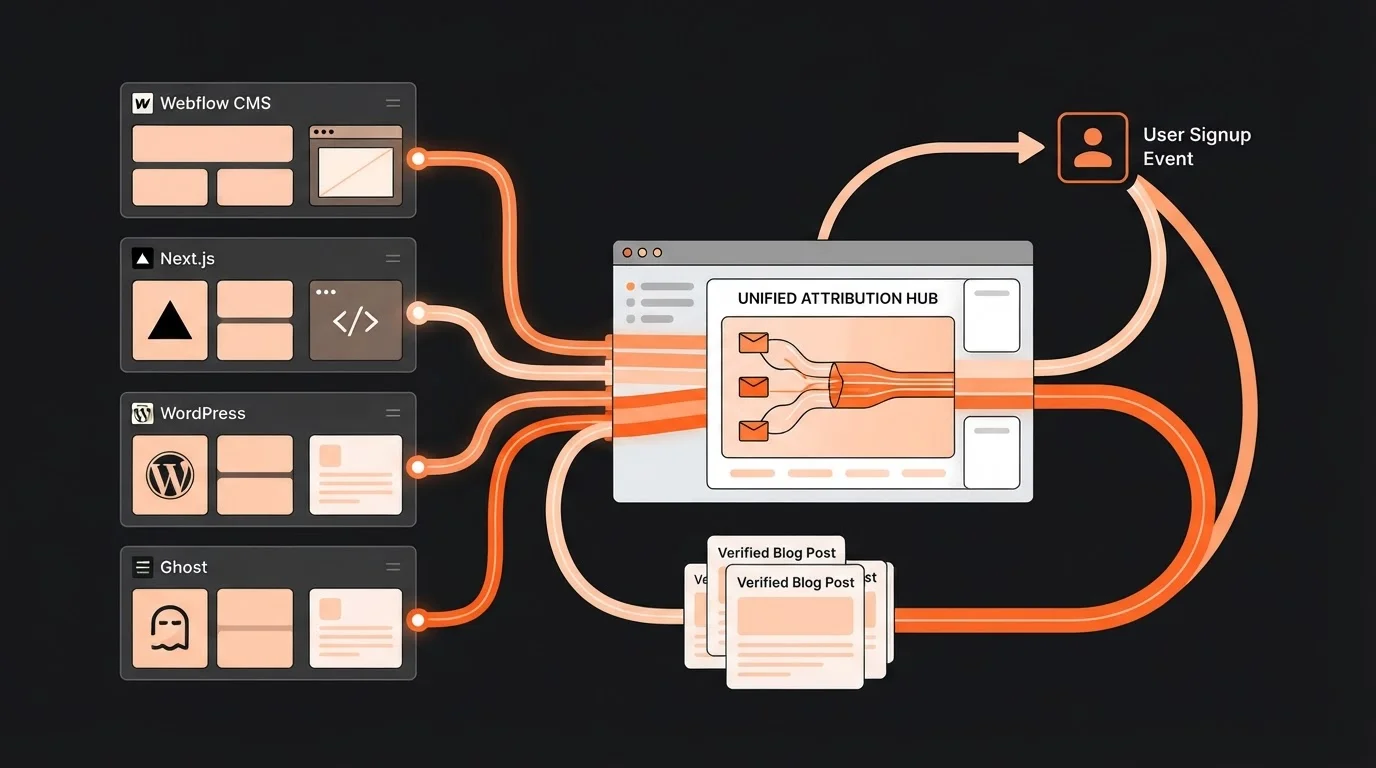
An organic content platform must provide concrete, revenue-linked data to justify its position in your marketing budget. Tracking simple impressions or surface-level page views fails to show how articles directly impact active software signups. Founders must implement accurate attribution tracking to map the entire conversion loop from first visit to paid plan.
Connecting your publishing destination to analytics pipelines ensures you collect high-integrity attribution data. Blogged provides native integrations with Webflow CMS, Next.js, and WordPress to manage this measurement framework seamlessly. These modules allow you to collect consented visits and track configured conversions for verified articles directly.
For self-hosted WordPress environments, the system connects via the Blogged Publishing plugin and an application password, maintaining clean performance loops across your web assets. Similar tracking applies to platforms like Ghost, where you create a custom integration in Ghost, copy its Admin API key, and verify your Ghost connection in Blogged to monitor user registration events.
Frequently Asked Questions
Q: How often should I publish new articles to establish steady organic growth?
Continuous publishing consistency is far more powerful than sporadic bursts of high-volume output. Delivering two deeply structured, product-led articles per week builds a predictable index for crawlers and AI search tools. This intentional cadence builds a reliable, high-utility technical asset library without overwhelming your internal review teams.
Q: Will utilizing automated content generation systems negatively impact our platform search rankings?
Modern search engines and generative models focus on factual correctness, clarity, and specific domain utility rather than tracking the underlying drafting mechanism. The key requirement is feeding deep, real-world context into the generation system to eliminate superficial content. Anchoring automation with specific engineering assets ensures your final pages remain deeply authoritative and highly ranking.
Q: What are the main mechanical structural differences between traditional SEO and GEO?
Classic SEO focuses on ranking individual pages for target keyword phrases within a list of standard index hyperlinks. GEO optimizes your text architecture so AI summarizers extract and cite your platform as an authoritative source in conversational search answers. GEO requires much higher factual density, clean schema structures, and precise internal link connections to help models locate and attribute product data.
An optimized content strategy for SaaS founders is a core operational pipeline that converts existing software knowledge into a self-sustaining customer generation system. By mapping detailed technical articles to the complete user journey and formatting text for modern generative engines, you create a compounding pipeline for user signups. This strategic organic foundation allows your company to decrease its dependence on paid ads while consistently acquiring high-intent customers.
Implementing autonomous blogging systems lets you execute this advanced strategy without the overhead of manual copywriting, formatting, and technical layout design. Utilizing platforms like Blogged allows you to transform deep engineering records into optimized assets that handle everything from discovery to conversion tracking automatically. Delegate your content execution to an autonomous system so your team can focus fully on developing exceptional product features.