
On this page
Quick answer: For fast-moving SaaS companies, the primary obstacle to organic growth isn't just writing new content—it's preventing existing content from becoming obsolete. InnovateCo, a rapidly scaling software provider, solved this by implementing an autonomous blogging strategy. By using Blogged to synchronize their blog with real-time product changes, they eliminated the stale content trap and maintained SEO rankings while their founding team focused on core development.
SaaS founders frequently face a difficult choice: build the product or talk about it. When development outpaces marketing, the result is a blog filled with deprecated features and outdated tutorials. This misalignment confuses users and signals to search engines that the site is no longer a reliable source of truth. This study details how InnovateCo moved from reactive, manual updates to a proactive, autonomous content engine.
The Hidden Cost of Agility: How Rapid SaaS Development Breeds Content Decay
In the competitive SaaS market, agility is a requirement, but it comes with a hidden cost: content decay. InnovateCo's product cycle involved weekly releases and frequent UI enhancements. While this delighted their power users, it created a massive backlog for their content efforts. Every time a feature was renamed or a dashboard was reorganized, dozens of blog posts became instantly inaccurate.
This discrepancy created a poor user experience. Potential customers landing on a 'How-to' guide would find instructions that no longer matched the live application. InnovateCo noticed a surge in support tickets where users were simply trying to navigate features that had changed since the last article was published. The team was spending significant resources revising old posts rather than creating new growth-oriented material.
From an SEO perspective, the damage was quantifiable. Search engines prioritize content freshness and accuracy. As InnovateCo’s posts aged without updates, their rankings for high-intent keywords began to slip. The 'stale content trap' occurs when the effort to maintain existing pages consumes the entire budget for growth, leading to a plateau in organic reach.
Moving from Reactive to Proactive: The Role of Autonomous Blogging
InnovateCo needed a system that could bridge the gap between their technical roadmap and their public-facing blog. They sought a solution that could act as an extension of their team—one that understood the product context deeply enough to update articles without constant manual intervention. This search led them to Blogged, an autonomous SEO and GEO blogging platform designed specifically for SaaS founders.
Unlike traditional AI writing tools that require manual prompting for every paragraph, Blogged offered a full-lifecycle approach. It handles research, planning, writing, optimization, interlinking, and publishing of product-led content. For InnovateCo, the appeal lay in the platform's ability to transform product knowledge into discoverable content on autopilot. This turned their blog from a static liability into a dynamic growth engine.
The leadership team found that most generic tools lacked the SaaS-specific nuances required for technical accuracy. Blogged stood out because it was built to handle the research-to-publish workflow. This ensured that every article was not only SEO-optimized but also tailored for Generative Engine Optimization (GEO), preparing their content for AI-driven search discovery.
The Knowledge Engine: Creating a Single Source of Truth
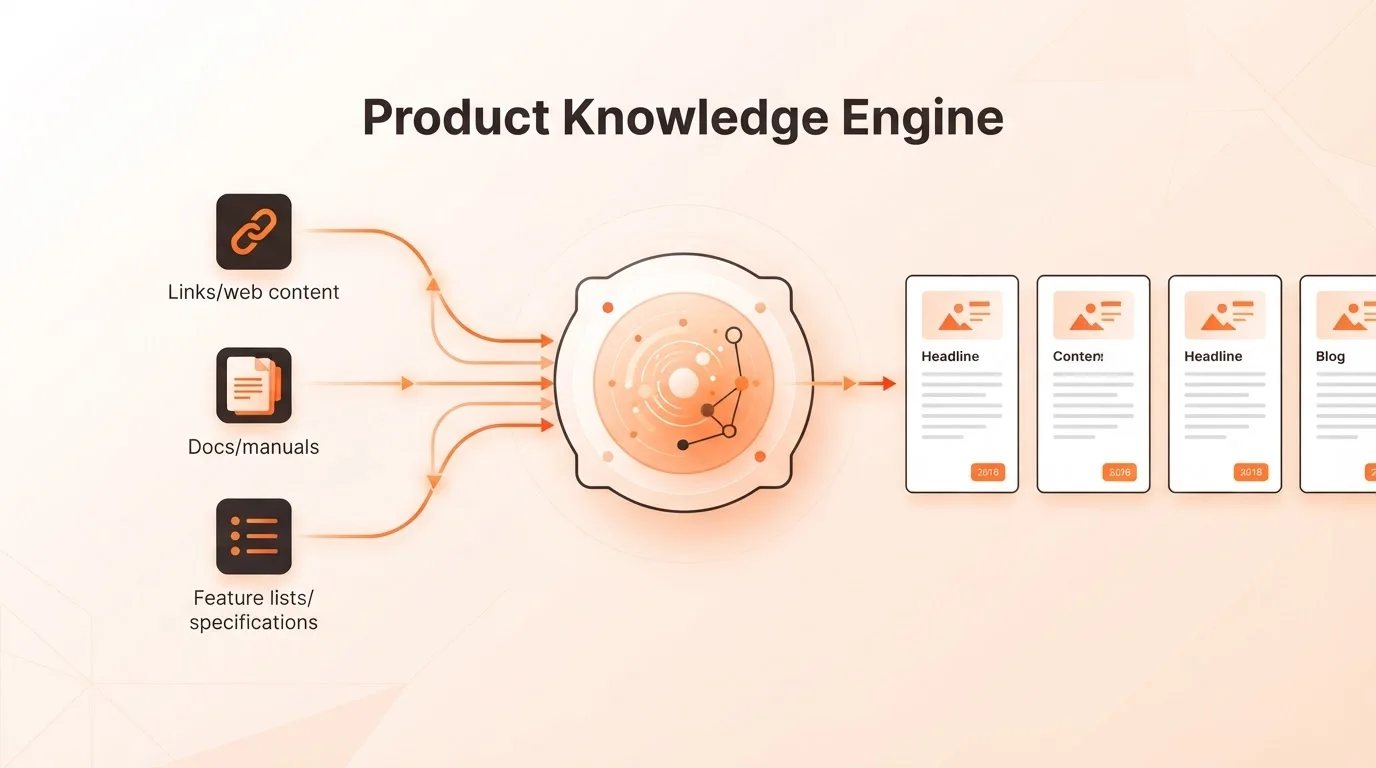
The foundation of InnovateCo’s success was the implementation of the Blogged Knowledge Engine. Instead of starting each article from a blank page, the team provided the platform with their internal source of truth. This feature allows users to provide public product sources, uploaded documents, pasted links, or written product descriptions to ground the AI in reality.
InnovateCo connected their technical documentation and public knowledge base directly to the platform. This ensured that the autonomous system had access to the latest feature specs, pricing tiers, and user personas. By organizing facts by product entity and facet, the platform could reuse specific context across various content pieces, ensuring that a change in one feature was reflected across every relevant post.
This structured approach to product data solved the accuracy problem. Because the platform draws from a verified knowledge base, it avoids the technical errors common in general-purpose AI. For a SaaS founder, this means the difference between an article that sounds good and an article that is technically correct. InnovateCo could now generate content that precisely described their product’s unique value proposition and competitive positioning.
Centralizing Product Context for Technical Accuracy
To maximize the platform's efficiency, InnovateCo used features that let users organize their product description, ICP, positioning, facts, pricing, limits, and keywords. This allowed Blogged to maintain a consistent brand voice. By having a centralized repository of facts, the team ensured that any updates to their subscription limits or feature availability were instantly available to the autonomous writer, maintaining content freshness across the entire site.
Seamless Publishing: Integrating Autonomous Content with WordPress and Next.js

One of the biggest hurdles for InnovateCo was the friction of the publishing process itself. Moving content from a draft to a live WordPress site often involved manual formatting and link checking. To solve this, they utilized the WordPress AI Blog Publishing integration, which connects to self-hosted WordPress through the Blogged Publishing plugin and an application password.
This integration allowed the team to create and review articles within the Blogged dashboard and deliver them directly to their WordPress website. The platform handled the heavy lifting of SEO optimization and internal linking, ensuring that each new piece of content was properly integrated into the site's architecture. This removed the technical bottleneck that had previously delayed their content updates.
For their more technical pages, InnovateCo leveraged the Next.js AI Blog Publishing integration. This enabled them to collect consented visits and configured conversions for verified articles. By tracking exactly how many readers were converting into product trials directly from the blog, they could verify the ROI of their content efforts in real-time. Similar capabilities are also available for Webflow CMS users, ensuring growth can be measured regardless of the stack.
Get practical updates on saas content freshness case study
Receive new articles and practical insights by email.
Collaborative Review and Human Oversight
While the platform handled the bulk of the work, InnovateCo maintained a lean review process to ensure brand alignment. Because every paid plan includes unlimited team seats, the founders and product managers could all jump in to provide feedback. The platform's structure, which includes 3 revisions per article, allowed the team to refine the autonomous output quickly, ensuring that the final published content met their high standards for strategic messaging.
The Founder’s ROI: Reclaiming Time While Scaling Organic Growth
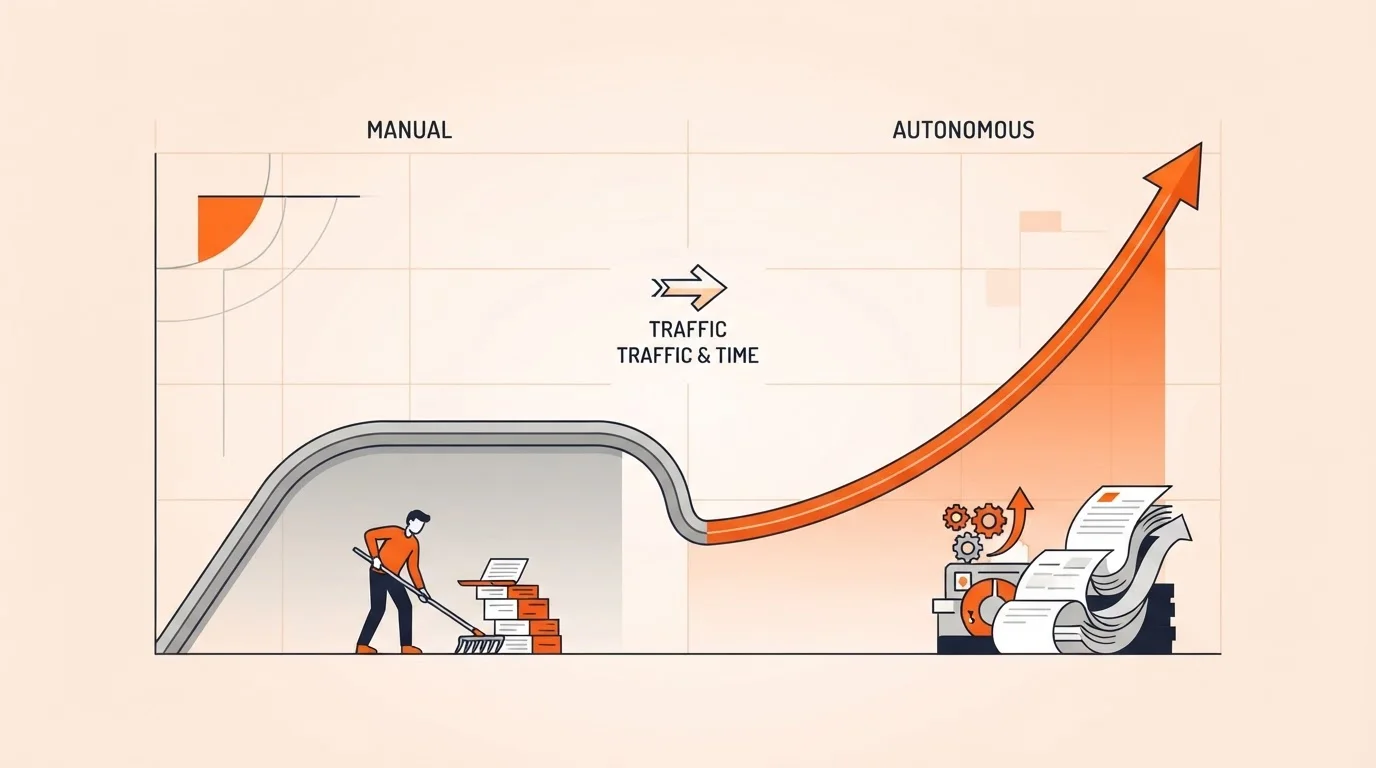
After six months of using autonomous blogging, InnovateCo saw a transformative shift in their marketing metrics. The most notable change was the total elimination of the content backlog. By automating the research and writing process, they were able to maintain a consistent publishing schedule of high-quality, product-led articles regardless of how busy the development team became.
Organic traffic to their product-specific pages increased as their content freshness scores improved. Search engines began rewarding the site for its technical accuracy and regular updates. More importantly, the lead growth and reader feedback metrics tracked through the platform showed that these visitors were converting into active users.
The operational ROI was equally significant. The time the founding team spent on content fell to a fraction of their previous manual workload, focused mostly on review time. This shift allowed them to accelerate their product roadmap, indirectly contributing to faster growth. The cost of the platform remained more predictable than the overhead of a full-time content marketer, yet the output was more technically grounded in their actual product data.
Frequently Asked Questions
Q: How does autonomous blogging handle technical updates to a product?
Autonomous platforms like Blogged use a Knowledge Engine to ingest your latest documentation, feature lists, and product descriptions. When you update these sources, the platform uses that new data to ensure all subsequent content is technically accurate and reflects the current state of your software.
Q: Does an autonomous blog require a full-time editor?
No. While human review for brand voice is recommended, the platform handles the research, writing, and SEO optimization. Most SaaS founders find they only need a small window each week to review and approve articles.
Q: Can Blogged integrate with my existing CMS?
Yes, Blogged offers direct integrations for WordPress (via a dedicated plugin), Webflow, and Next.js. It also provides a signed webhook and content API for custom builds, allowing you to deliver content wherever your blog lives.
Q: How does this impact SEO compared to manual blogging?
It often improves SEO because it ensures a consistent volume of fresh, interlinked, and keyword-optimized content. Because the platform is built for product-led SEO and GEO, it ensures your site remains discoverable in both traditional search engines and new AI-driven discovery tools.
Q: Is my product data safe when used to train the blog?
Blogged uses the information you provide (links, docs, descriptions) to generate content specifically for your site. The Knowledge Engine is designed to let you control what information is used for public-facing content.
InnovateCo’s transition to autonomous blogging demonstrates that content freshness is a solvable problem for agile SaaS companies. By aligning their blog with their product documentation through Blogged, they turned a resource-heavy burden into a scalable growth engine. For SaaS founders, the path to organic growth no longer requires a choice between building and marketing; with the right autonomous tools, your content can evolve as fast as your code.