
On this page
Achieving AI search presence for SaaS requires a shift from traditional keyword ranking to Generative Engine Optimization (GEO). This strategy ensures your product is cited as the authoritative source within AI-generated answers. Unlike standard SEO, which aims for a click on a blue link, AI search presence focuses on being the synthesis that tools like Google AI Overviews, Perplexity, and ChatGPT present to the user.
For SaaS founders, this shift is critical because informational search results are increasingly summarized directly on the results page. To stay discoverable, content must now be formatted for Retrieval-Augmented Generation (RAG), using structured data, semantic clarity, and an answer-first writing style that AI engines can easily ingest and attribute to your brand.
The Discovery Shift: From SERPs to AI Syntheses
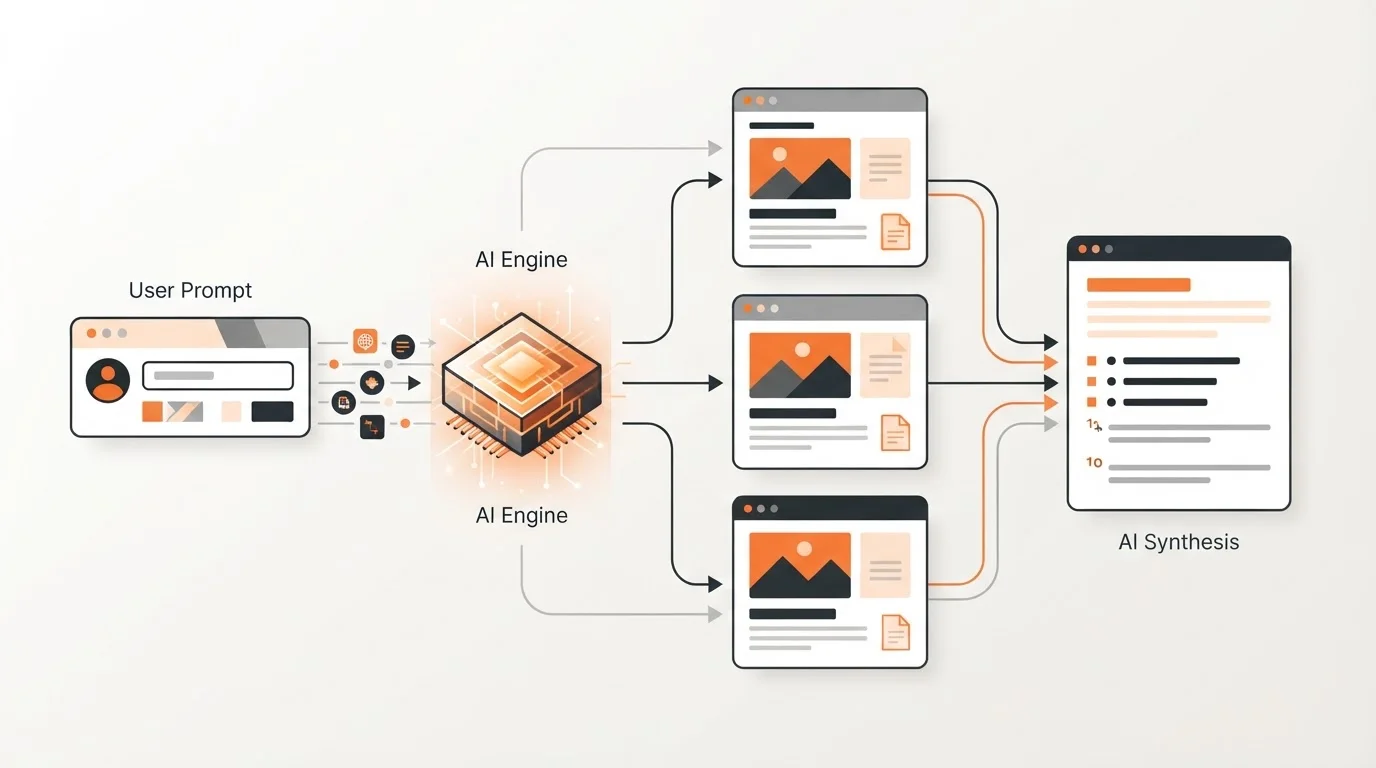
The way SaaS buyers research solutions has fundamentally changed. Buyers now provide context-rich prompts like, "Which project management tool integrates best with Slack and supports agile workflows for a 20-person team?" instead of clicking through ten separate links to compare features themselves.
In this environment, traditional SEO is the foundation, but GEO is the ceiling. SEO gets your site indexed; GEO gets your product cited. AI engines do not simply list your site; they synthesize information from various authoritative sources to build a custom answer. If your product is not part of that synthesis, it effectively does not exist for the modern buyer journey.
This shift introduces a new performance benchmark: Reference Rate. Rather than focusing solely on click-through rates, SaaS teams must now track how often their brand is mentioned and cited in AI-generated shortlists. Traffic referred directly from AI engines often arrives pre-qualified by the AI's recommendation, leading to higher intent interactions than broad organic search.
The Architecture of AI-Friendly SaaS Content
To optimize for AI engines, content must be structured for machine extraction. LLMs favor content that is clear, factual, and authoritative. Padded, long-form filler that delays the answer is now a liability. Modern SaaS content should follow an "Answer-First" structure to maximize discoverability.
Start every section with a concise, two-sentence answer to the primary question. AI crawlers scan for these high-density information blocks to use in summaries. Beyond specific keywords, ensure your content covers the full ecosystem of your product—use cases, integrations, and competitive differentiators. AI engines look for agreement across multiple sources, so consistent product positioning across your blog, documentation, and third-party profiles is essential.
Platforms like Blogged address this by transforming deep product knowledge into discoverable, product-led content. By handling the research and optimization cycles autonomously, Blogged ensures your blog remains a constant source of high-quality, "answer-shaped" content that AI engines trust.
Technical Foundations: Structured Data and Crawlability
While AI engines are highly capable, they still rely on technical signals to validate information. Schema.org markup serves as the machine-readable translation layer for your SaaS. It tells the AI exactly what your product does, who it's for, and how much it costs.
For SaaS visibility, four schema types are essential:
- SoftwareApplication: Defines your product category, operating system, and features.
- FAQPage: Provides direct question-and-answer pairs that AI Overviews frequently pull into summary sections.
- Article: Clearly labels your thought leadership and guides for easier indexing.
- Organization: Establishes your brand authority and links it to other verified profiles.
Beyond schema, ensure your content is rendered in clean, server-side HTML. AI crawlers can struggle with heavy JavaScript frameworks. If an AI cannot easily read your text in the initial crawl, it cannot cite you in a real-time response. Blogged's integrations with platforms like WordPress, Ghost, and Webflow ensure that content is delivered via optimized environments, maintaining the technical integrity required for AI discovery.
Leveraging Product Knowledge for GEO Citations
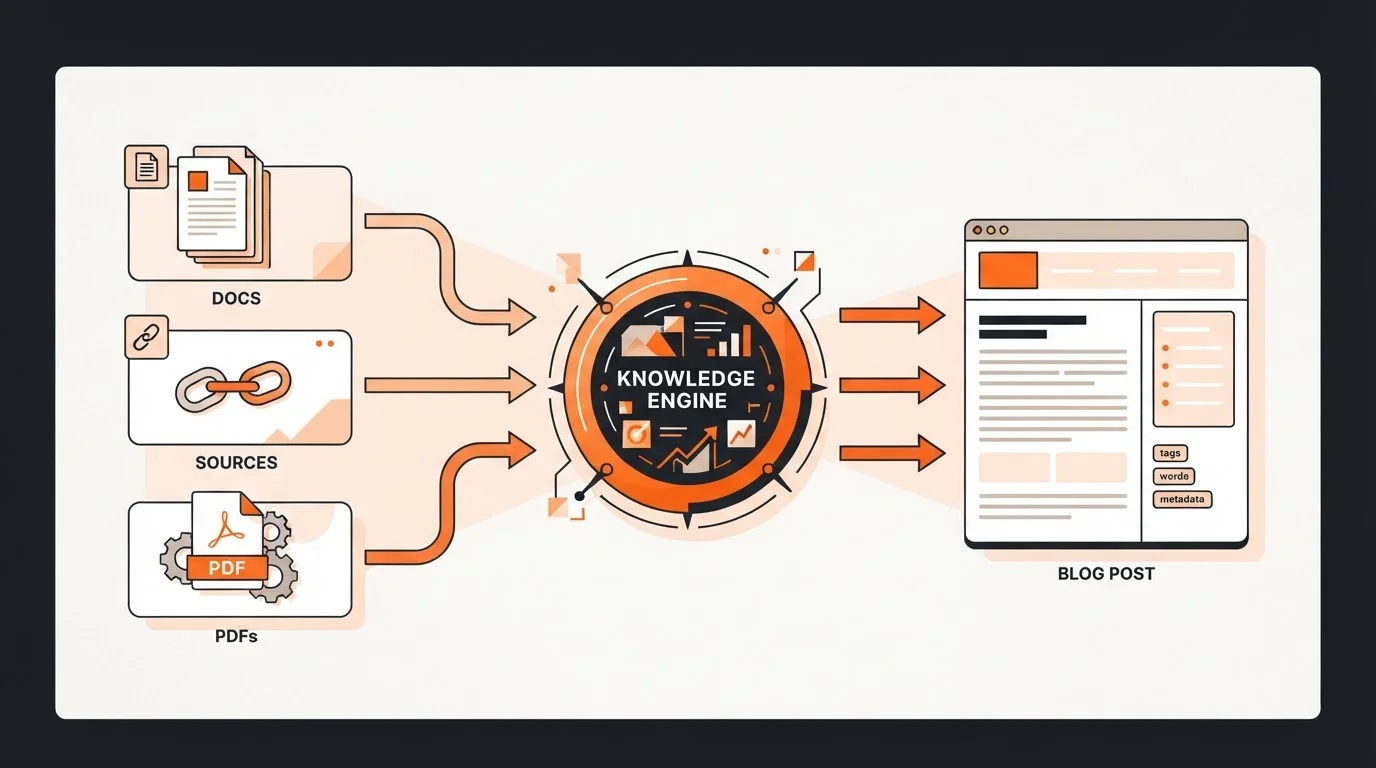
Generic content is a commodity in the AI era. To win citations, you must provide unique, product-specific value that an AI cannot find elsewhere. This is where your internal product documentation becomes your greatest SEO asset. Instead of writing broad articles, focus on specific workflows like "How to automate sprint planning using [Your Product]."
Blogged's Knowledge Engine is designed specifically for this purpose. It allows founders to provide public product sources, uploaded documents, or pasted links. The platform then ingests this raw product knowledge to generate content that is technically accurate and product-led. This ensures your SaaS isn't just mentioned generically but is cited for its specific, unique features—the key to winning the AI shortlist.
Measuring Success in a Zero-Click World
Traditional SEO metrics like "Total Organic Clicks" are becoming incomplete. With AI Overviews satisfying many queries directly on the search page, you must adapt your measurement framework to include AI-native KPIs. Monitor your Citation Frequency—how often your site appears as a footnote in tools like Perplexity or Google AI Overviews.
Track your Share of Model (SoM), which measures how often your brand is recommended relative to competitors for specific prompts. Blogged helps founders manage these complexities by letting users track Search Console performance, homepage engagement, and CTA outcomes. By connecting content output directly to lead growth, founders can see the tangible impact of their AI search presence beyond vanity metrics.
Frequently Asked Questions
Q: What is Generative Engine Optimization (GEO)?
GEO is the practice of optimizing content to be cited and summarized by AI-driven search engines and LLMs like ChatGPT and Google AI Overviews.
Q: Does traditional SEO still matter for SaaS?
Yes, traditional SEO remains the foundation. AI engines use search indexes to find sources; if you don't rank well in traditional indexes, AI engines are less likely to find and cite you.
Q: How does Blogged handle AI search presence?
Blogged uses an autonomous Knowledge Engine to ingest your specific product details, ensuring the content it publishes is factual, structured for AI extraction, and optimized for both search engines and generative models.
Q: What are the best metrics for AI search discoverability?
Focus on citation frequency, brand mentions within AI summaries, and direct-to-site conversion traffic from AI-driven search tools.
The Future of SaaS Growth: Autonomous Discovery
The era of "ranking first" is evolving into an era of "being the answer." For SaaS founders, the challenge is maintaining the high volume of expert, structured content required to feed these new discovery engines while still building the product.
Embracing autonomous platforms allows you to compete in the AI search landscape without the manual overhead. By automating the research, writing, and interlinking of product-led content, you ensure your SaaS remains discoverable, authoritative, and cited. The cost of inaction is a steady decline in visibility; the reward for early adoption is a distinct competitive advantage in the new frontier of search.