
On this page
For a SaaS company, a blog is far more than a collection of articles; it is the technical foundation of your organic acquisition strategy. While founders often prioritize the creative writing process, the underlying architecture frequently becomes a bottleneck. Without a robust structure, search engines struggle to find, understand, and prioritize your product-led content. This results in technical friction that prevents even the best guides from reaching your target audience. A capable blog architecture ensures that crawlers can navigate your site efficiently, recognizing the value of your feature announcements and educational resources without manual intervention.
Blogged addresses these technical hurdles by providing a 'Ready Blog' layer designed to handle the complex plumbing of SEO. By automating XML sitemaps, structured data, and performance optimizations, the platform transforms raw product knowledge into discoverable assets. This allows SaaS teams to maintain a high-performance blog that scales alongside their software, ensuring that every published piece contributes to long-term organic growth and sustainable traffic.
The Strategic Role of Blog Architecture in SaaS Growth
A SaaS blog acts as the primary vehicle for high-intent traffic, but its success depends on its invisibility to the reader and its visibility to the search engine. If your technical foundation is weak, your educational content remains buried. A well-designed architecture acts as a blueprint, helping search engine bots navigate the relationship between your product features and your industry insights. When bots can easily crawl your site, they can better index your pages, which is the first step toward ranking for competitive keywords.
Search engines evaluate sites based on crawlability and indexability. If a bot cannot find your latest feature guide, your 'crawl budget'—the limited time a search engine spends on your site—is effectively wasted. To prevent this, founders must ensure their site structure is logical and interconnected. Blogged empowers users to monitor this health by tracking Search Console performance and lead outcomes directly within the platform. This visibility allows teams to see exactly how their technical structure, such as internal linking and logical categorization, converts casual readers into product users. By treating the blog as a high-performance engine rather than a static archive, you ensure that every published word works toward your growth goals.
Automated XML Sitemaps: The Roadmap for Search Discovery
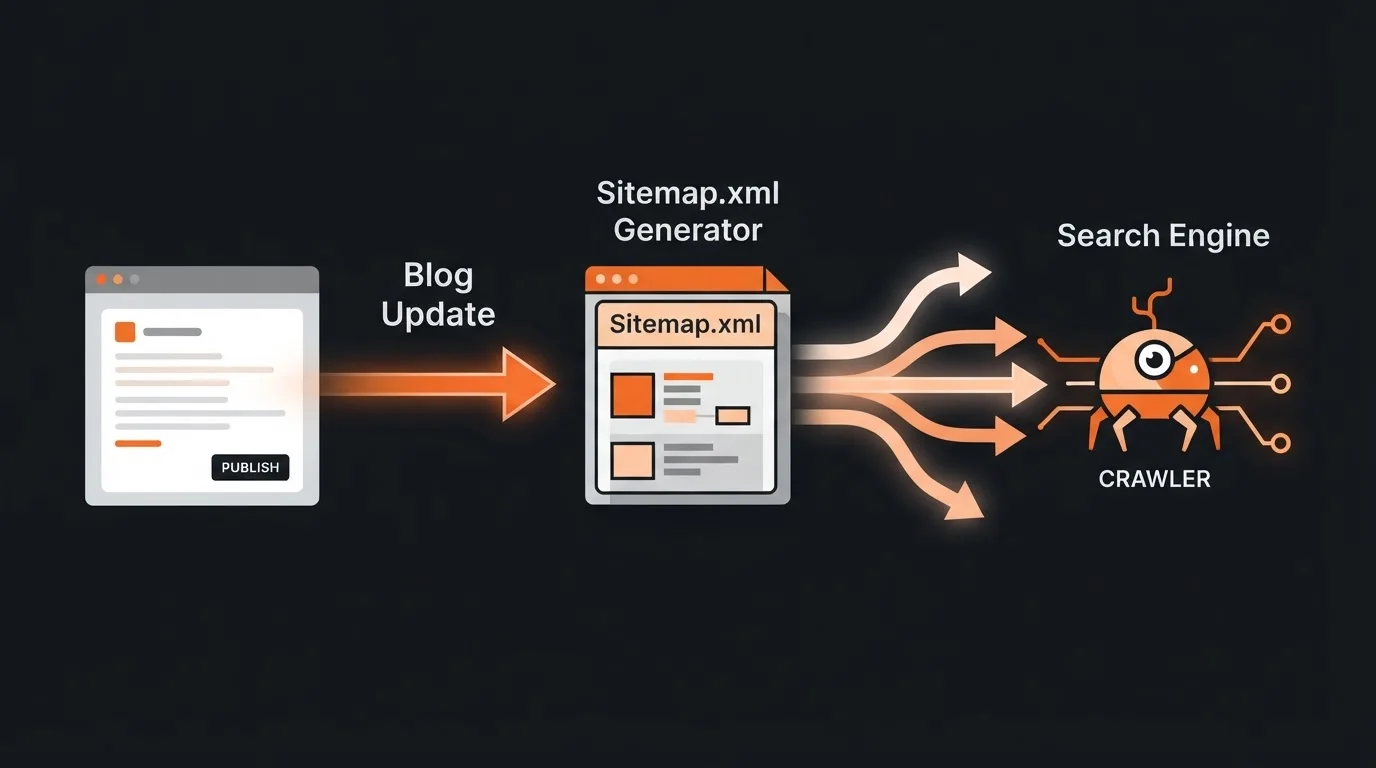
XML sitemaps are essential roadmaps for search engine crawlers. They list every high-value URL on your site, signaling to search engines which pages are essential and when they were last modified. For a fast-moving SaaS, manual sitemap management is not just tedious; it is prone to error. Every time you launch a new module or update a documentation-led post, search engines need to be notified immediately to refresh their index.
Blogged automates the generation and updating of XML sitemaps to ensure no content is overlooked. For self-hosted WordPress users, the platform connects through the Blogged Publishing plugin using an application password. This direct connection ensures that when an article is published or revised, the sitemap reflects the change instantly. Automated sitemaps reduce the risk of 'orphan pages'—content that exists but has no internal links pointing to it—making it as easy as possible for search engines like Google to find your new pages. By providing a clean, dynamic sitemap, the platform helps maintain content freshness, a critical signal for ranking in fast-paced software niches.
JSON-LD and Robots.txt: Building an AI-Ready Foundation
While sitemaps help bots find your pages, JSON-LD structured data helps them understand the context of your content. In the era of AI-driven search and generative experience optimization (GEO), providing machine-readable context is mandatory. JSON-LD allows you to explicitly label content as an 'Article,' 'Product,' or 'FAQ,' which often leads to higher click-through rates via enhanced search result displays or rich snippets.
Blogged handles these technical nuances autonomously. By marking up articles with schema, you inform search engines about the author, publication date, and content type. This clarity is essential for gaining authority in technical domains. Furthermore, the platform manages your robots.txt file, which guides crawlers on which areas of your site to ignore. A properly configured robots.txt ensures your crawl budget is spent entirely on high-value, product-led content rather than administrative folders or private staging areas. For founders, this means your content is optimized for both traditional search and AI discovery from the moment it goes live.
Integration Flexibility: WordPress, Ghost, and Webflow
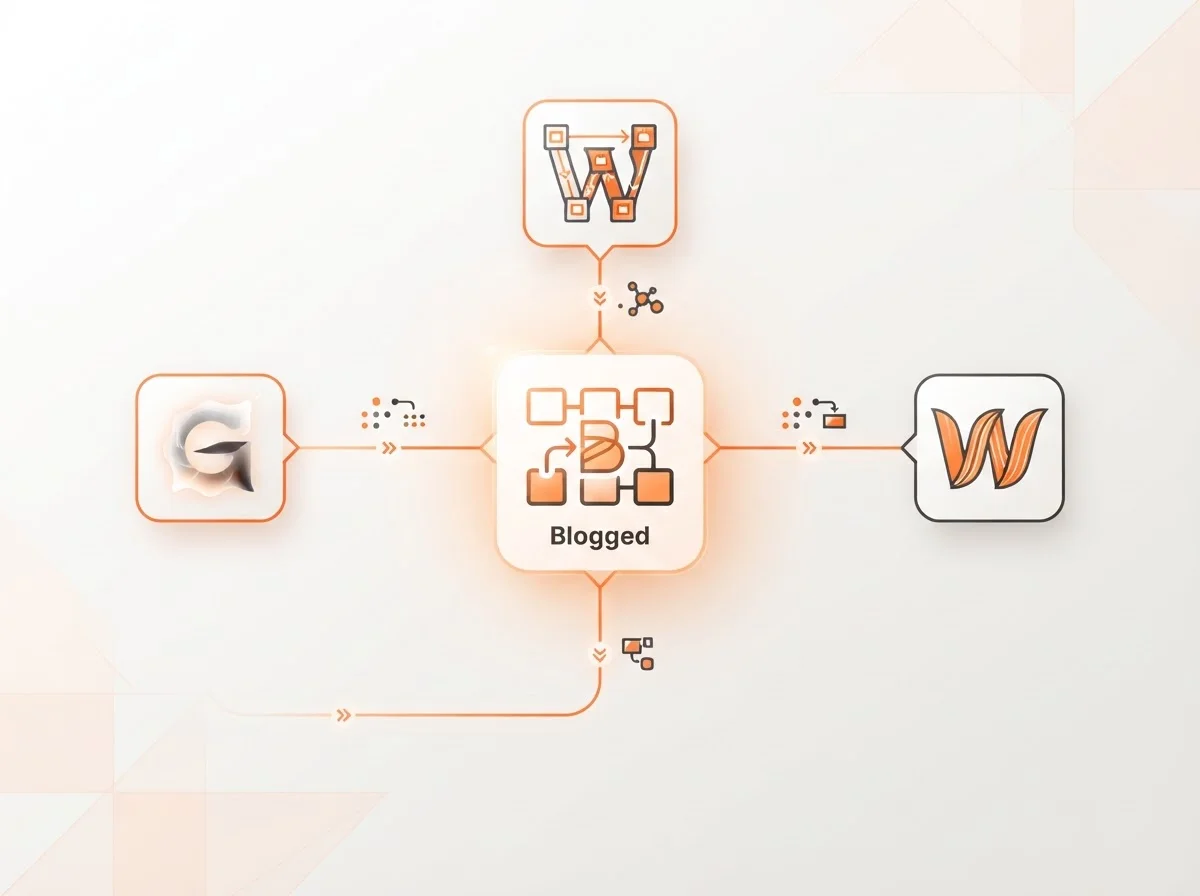
The 'Ready Blog' concept moves away from the traditional model where founders must manage complex plugins and server configurations. Instead, it offers an integrated solution where advanced SEO features are baked into the core design. This approach is particularly valuable for teams that want to streamline content delivery without hiring a dedicated SEO engineer to manage their CMS instance. Blogged supports multiple integration paths to fit your existing tech stack, ensuring that your blog architecture remains stable and performance-optimized.
For teams using WordPress, the WordPress AI Blog Publishing integration allows for the creation and review of articles within Blogged before delivering them directly to the website. Similarly, the Ghost AI Blog Publishing integration manages the content lifecycle while Ghost handles the reader-facing experience. These integrations allow users to collect consented visits and configured conversions for verified articles, bridging the gap between technical SEO and business analytics. Whether you use Webflow, Next.js, or a custom API setup, the architecture is designed to maintain high performance and efficient caching out of the box.
Transforming Product Knowledge into Discoverable Content

The ultimate goal of a SaaS blog is to turn deep product expertise into sustainable traffic. The Blogged Knowledge Engine facilitates this by ingesting existing product documentation, public links, or uploaded PDFs. This raw data is then structured into SEO-optimized content that fits perfectly within your blog’s automated architecture. To ensure technical accuracy, the platform includes a focused revision process, allowing founders to consolidate edits before the automated publishing system takes over.
Collaboration is a core component of this architectural approach. Blogged is listed at $99 per month, and every paid plan includes unlimited team seats. This allows marketers, product managers, and founders to collaborate on the content strategy without worrying about per-user licensing costs. By combining this collaborative flexibility with autonomous technical SEO, Blogged provides a scalable engine for organic growth. Beyond articles, the platform includes support for 2 static pages, which are typically used for essential components like an 'About' or 'Contact' page, ensuring they share the same high-level SEO attributes as your blog posts.
Frequently Asked Questions
Q: How does Blogged update my XML sitemap automatically?
Blogged connects directly to your CMS via API or a dedicated plugin. Every time a post is published or updated, the system triggers a sitemap refresh to ensure search engines have the most current roadmap of your site.
Q: Do I need a separate SEO plugin if I use Blogged?
For many SaaS founders, Blogged handles essential sitemaps, JSON-LD, and robots.txt configuration natively. If you use the WordPress integration, Blogged works alongside your existing setup while ensuring your blog layer is fully optimized for discovery.
Q: Can I host more than just blog articles on Blogged?
Yes, Blogged includes support for 2 static pages. These are generally used for foundational site components like your Homepage or About Us page, ensuring they benefit from the same SEO-ready architecture.
Q: Does an automated sitemap guarantee my content will rank?
No sitemap can guarantee rankings, but it significantly improves the speed and probability of discovery. By providing clean URLs and accurate 'last modified' dates, you make it as easy as possible for Google to crawl and index your content.
Get practical updates on blogged automated xml sitemaps
Receive new articles and practical insights by email.
A robust blog architecture is the silent partner in any successful SaaS growth strategy. By automating technical requirements like XML sitemaps, structured data, and CMS integrations, you remove the friction that often prevents high-quality content from being discovered. Blogged provides this essential infrastructure, allowing founders to focus on building their product while their blog autonomously drives organic acquisition. If you are ready to stop managing technical SEO debt and start scaling your traffic, exploring an autonomous blog layer is the natural next step for your SaaS.