
On this page
For a SaaS founder, driving organic growth is rarely a question of content volume alone. The real challenge lies in maintaining a high standard of product-led substance while your attention is split between engineering, customer success, and operations. Traditional content workflows demand significant hours for research, search engine optimization, and technical formatting. While various on-page AI tools have emerged to streamline these tasks, they approach the problem from fundamentally different angles. Selecting the best AI blogging tool for SaaS requires looking past generic text generation to evaluate core features, operational workflows, and product fit. For some teams, the priority is granular, keyword-by-keyword optimization of manual drafts. For others, the goal is an autonomous system that transforms core product mechanics into discoverable content. This guide analyzes these distinct operational models so you can choose a solution that matches your current growth stage and available engineering bandwidth.
The Core Features of Modern On-Page AI Platforms
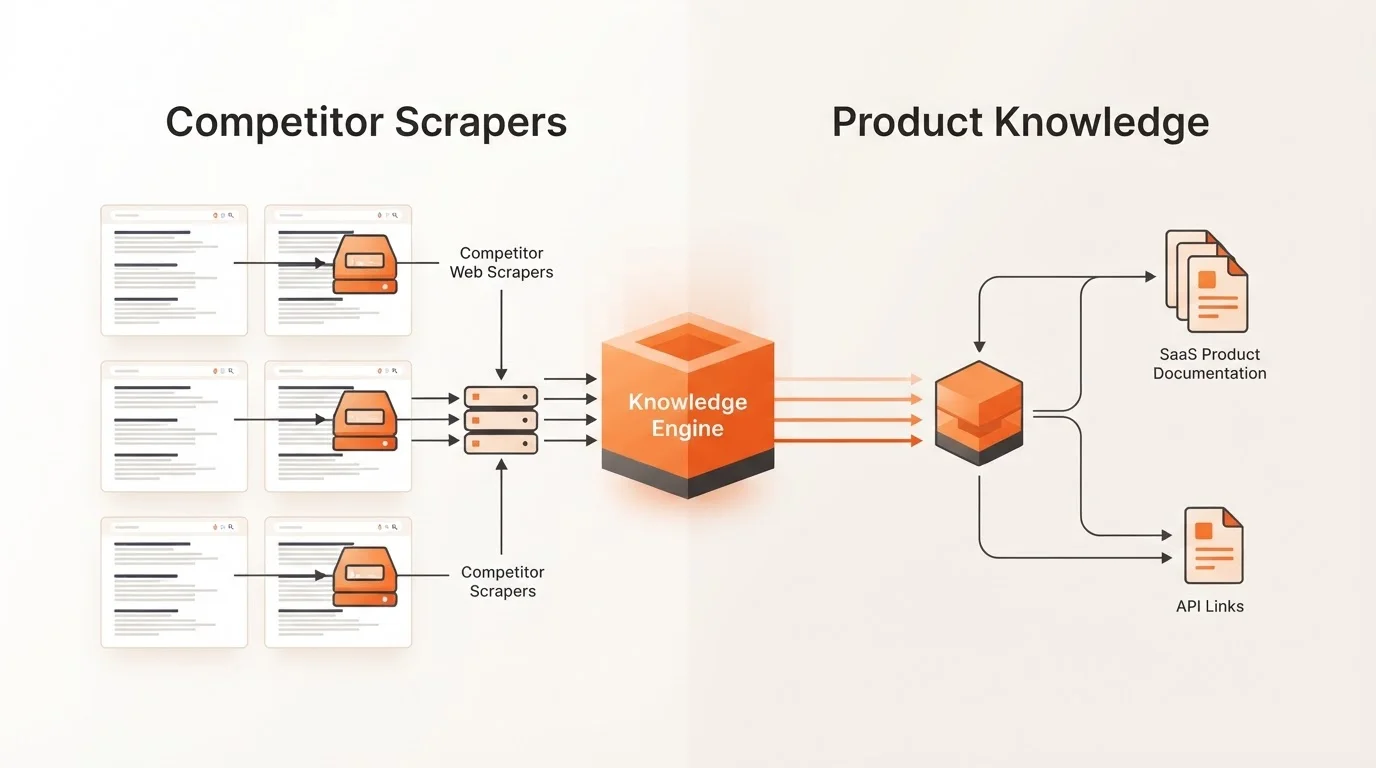
Search platforms and modern generative discovery engines reward specific, authoritative content rather than repetitive keyword stuffing. As a result, on-page AI features have evolved from basic grammar checkers into sophisticated data engines. Most platforms approach content creation through one of two methodologies: competitor-centric search engine optimization or product-centric knowledge integration. Competitor-centric tools focus on analyzing existing search engine results pages (SERPs). These platforms scan the top-ranking URLs for a target keyword, extract semantic patterns, and recommend specific entities, word counts, and headings. They are built primarily for dedicated SEO specialists who want to audit content line by line and fine-tune technical relevance scores before publishing. Product-centric platforms, like Blogged, invert this relationship by treating your internal software documentation as the primary source of truth. Instead of merely scraping what competitors have already written, these systems ingest technical assets to write highly accurate, feature-focused content. For a software company, this ensures that the AI accurately explains your application's user interface, APIs, and business logic without inventing false capabilities.
Workflow Breakdown: Keyword-First vs. Product-First Execution
The operational efficiency of any content solution depends heavily on its day-to-day workflow. Reviewing how a tool integrates into your existing marketing stack reveals the true human-in-the-loop commitment required to maintain a consistent publishing cadence.
The Keyword-First Optimization Workflow
A standard on-page AI workflow begins with manual keyword research. A team member identifies a high-intent search phrase, inputs it into an optimization tool, and generates a content brief based on competitor metrics. A writer then drafts the article within a specialized editor, adjusting vocabulary to fulfill the tool's real-time optimization suggestions. While this mechanical process helps ensure technical search compliance, it leaves the burden of drafting, fact-checking, and cross-referencing entirely on your team. For lean software startups, this manual workflow often leads to a high cost of inaction—weeks where no content is published because engineering or product priorities take precedence over copywriting.
The Product-First Autonomous Workflow
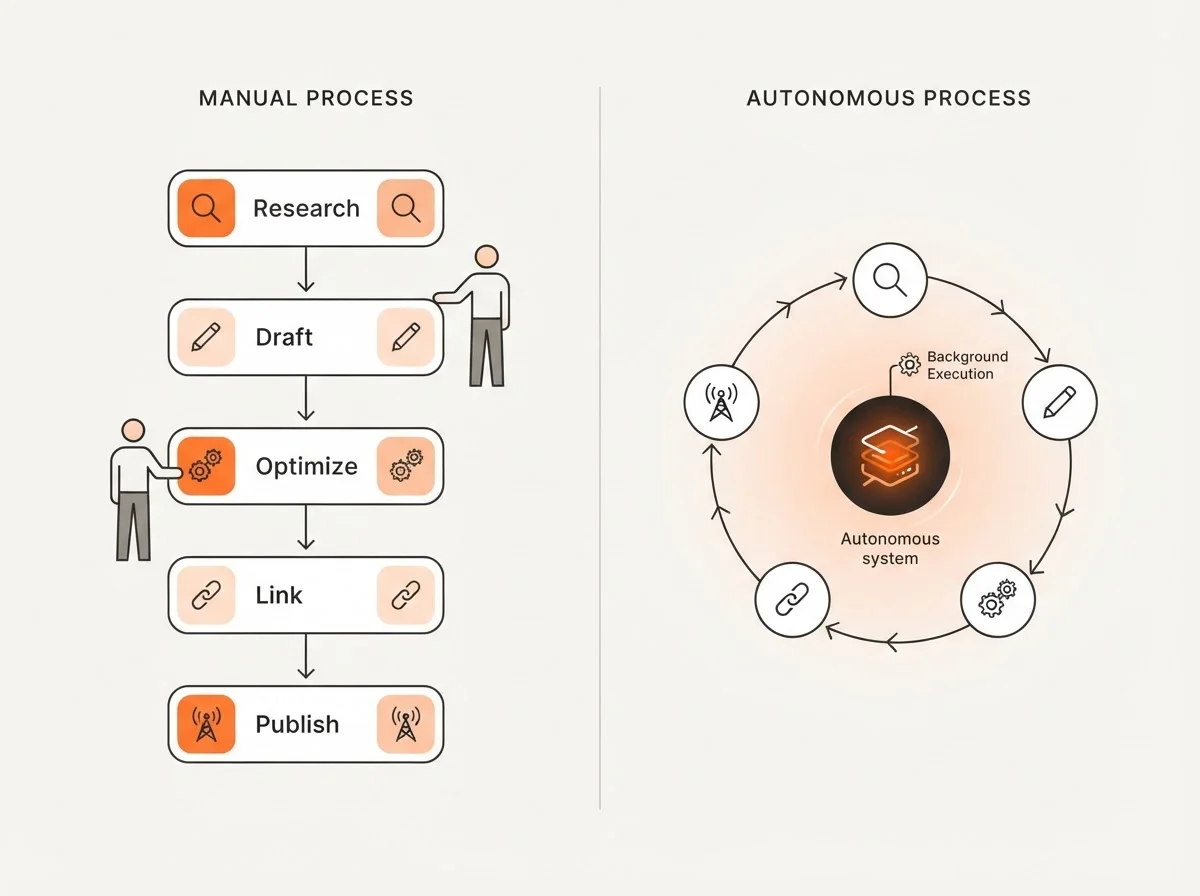
An autonomous SEO platform comparison highlights an alternative model: the product-first workflow. Instead of treating every article as an isolated writing project, this approach leverages an automated system to handle research, planning, writing, optimization, and internal linking simultaneously. By organizing factual data by product entity and facet, an autonomous platform maintains a continuous record of your software's unique value proposition. The system utilizes this structured asset base to build topical authority over time. It systematically covers use cases, integration guides, and customer pain points on autopilot, requiring human intervention only for final strategic approval rather than manual drafting.
Evaluating Technical SEO and Generative Engine Optimization (GEO)
As technology shifts toward conversational answers across platforms like ChatGPT, Google Gemini, and Perplexity, standard search optimization is no longer sufficient. SaaS content must now satisfy both traditional search algorithms and generative discovery models. Traditional systems evaluate technical factors such as meta tags, semantic density, and inbound link architecture. While these elements remain vital for ranking on standard search result pages, generative engines prioritize content that is easily quoted and cited through structured, factual depth. Platforms that build content directly from an integrated product knowledge base naturally produce the precise data definitions that generative discovery engines look for when sourcing answers for users.
Autonomous vs. Optimization Tool Comparison
| Dimension | Technical Optimization Tools | Blogged Autonomous Platform |
|---|---|---|
| Core Strategic Focus | Competitor SERP analysis & manual editing | Autonomous product-led content generation |
| Primary Information Source | Public web scrapers & top-ranking URLs | Integrated product docs, links, & text sources |
| Operational Workload | Manual drafting inside an assisted editor | Autopilot operation from research to live publishing |
| Internal Link Management | Manual suggestions per text block | Fully automated contextual interlinking |
| Supported CMS Integrations | Varies (often limited to single plugins) | WordPress, Webflow, Ghost, and Next.js |
| Target User Persona | SEO agencies & dedicated content managers | SaaS founders, product teams, & lean marketers |
Analyzing Product Fit for Your Software Business
Determining the ideal tool depends entirely on your existing team structure and marketing goals. If your company employs a dedicated content marketer or retains an external SEO agency to optimize every page manually, a specialized technical optimizer can serve as an excellent addition to their existing toolkit. However, if you are a SaaS founder navigating early growth with a lean team, your primary constraint is time. Forcing a complex, keyword-first optimization tool onto a team without dedicated writing resources often results in abandoned software and stagnant organic traffic. In this scenario, an autonomous solution represents the superior product fit. By connecting your technical product knowledge once, the system handles the continuous operational burden of running your corporate blog, allowing your internal team to remain focused on product development and core business growth.
Frequently Asked Questions
Q: How do autonomous blogging platforms maintain technical accuracy regarding complex software features?
Autonomous platforms like Blogged use a specialized Knowledge Engine to ingest your actual product data. Founders can provide public product sources, uploaded documents, pasted links, or written descriptions. Because the underlying AI references these structured facts, organized systematically by entity and facet, it avoids the generic text hallucinations common in standard generative tools.
Q: What CMS platforms can an autonomous content system connect to?
Modern autonomous blogging infrastructure is designed to integrate natively with a variety of engineering architectures. For example, Blogged supports direct integrations with self-hosted WordPress sites through a dedicated publishing plugin, Webflow CMS environments, Ghost setups using Admin API keys, and custom Next.js web applications via programmatic APIs and signed webhooks.
Q: Is human review still necessary when utilizing an autonomous SEO platform?
Yes. While an autonomous platform manages the entire lifecycle of research, internal linking, optimization, and drafting, a final human review ensures perfect alignment with your brand's unique strategic vision. The platform automates the time-consuming administrative and technical tasks, shifting your team's role from manual writers to strategic editors.
Get practical updates on on-page ai features and product fit
Receive new articles and practical insights by email.
The choice between standard on-page AI tools and autonomous blogging platforms depends on who will be executing your content strategy. If your operation relies on a full-time content manager who requires granular control over keyword density and competitor metrics, standard optimization software provides the necessary fine-tuning capabilities. But if your priority is transforming your software's functional capabilities into discoverable, product-led content without hiring an expensive editorial team, an autonomous platform is the logical choice. By deploying an autonomous system that plans, writes, optimizes, and links your content directly to your target CMS, you can establish consistent topical authority while keeping your primary focus on building an exceptional product.