
On this page
For a SaaS founder, the gap between writing a great article and seeing it rank on Google is often filled with technical friction. You need more than just words; you need a robust technical architecture that search engines can navigate with ease. A ready blog must function as a high-performance SEO layer, not just a collection of pages. Blogged handles this architectural heavy lifting autonomously, allowing founders to focus on product development while the platform manages the intricate details of discoverability. By automating sitemaps, JSON-LD schema, robots.txt management, and RSS feeds, Blogged ensures your product knowledge is indexed, understood, and distributed without manual intervention.
The Importance of a Fully Optimized Blog Architecture
A blog's architecture is the silent engine of organic growth. Without a well-structured foundation, even the most insightful product-led content can struggle for visibility. Search engines rely on specific technical signals to crawl, index, and eventually rank your posts. For SaaS companies, this foundation is even more critical as it often bridges the gap between technical documentation and marketing content.
Beyond basic metrics like site speed, modern SEO requires specialized architectural elements. You must consider how effectively search engine crawlers can discover every new page and whether your content is structured in a way that AI agents and search algorithms can interpret. This is where features like dynamic sitemaps and structured data become indispensable.
Automation is the key differentiator for busy teams. Instead of manually updating configuration files every time a new feature is launched or an article is published, a platform should streamline these operations. This efficiency directly impacts how quickly your changes are indexed and how accurately your site structure is represented in search results.
Internal linking also plays a vital role in this architecture. A well-organized internal link structure helps distribute domain authority across your site. Blogged enhances this by verifying destinations and showing why a link fits a specific section, allowing editors to insert or undo links without ever leaving the post. This level of technical oversight ensures a strong, interconnected content ecosystem that benefits both users and search engines.
Automated Sitemap Generation: Visibility on Autopilot
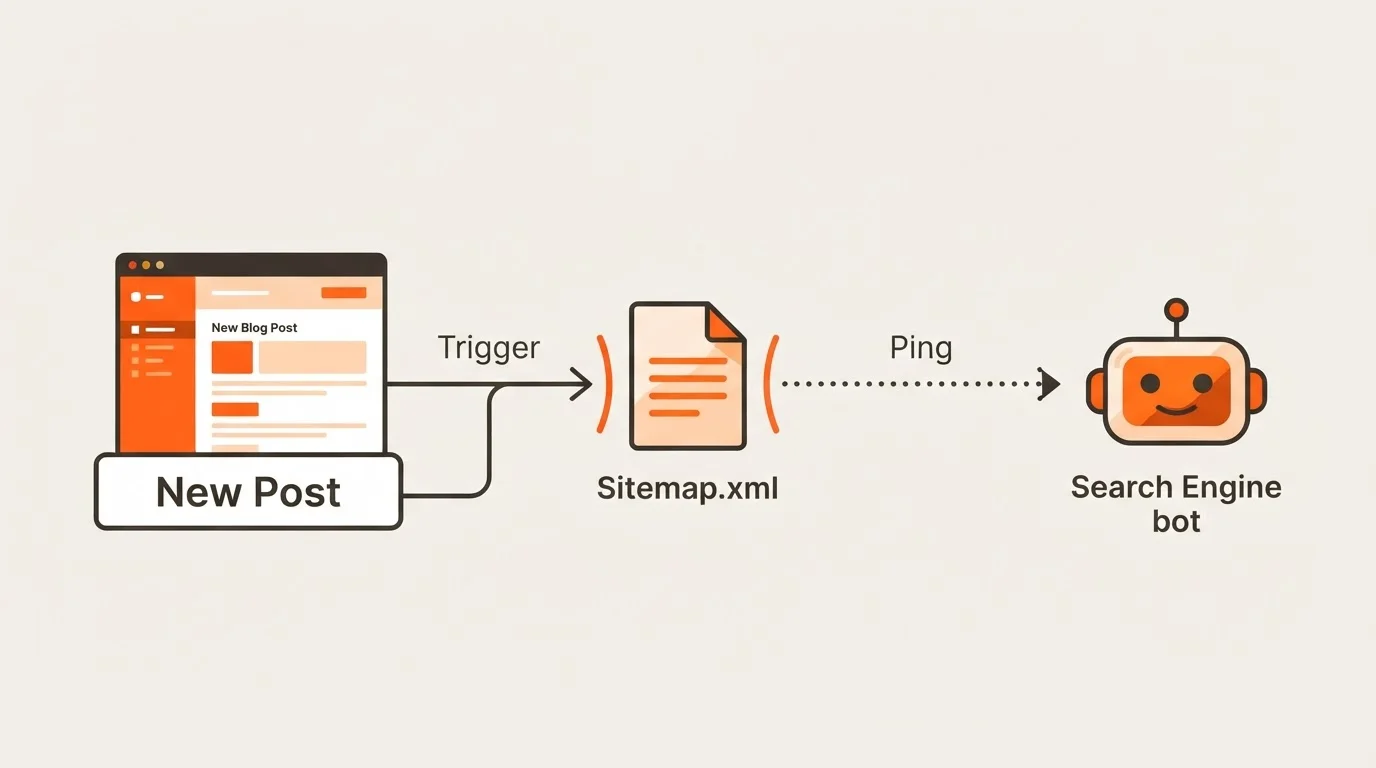
A sitemap acts as a roadmap for search engines, listing every important page that needs to be crawled. For a growing SaaS blog, manual sitemap management is an operational bottleneck. As your content library expands, the risk of orphaned pages—articles that exist but aren't linked anywhere—increases significantly.
Blogged automates this process through dynamic sitemap generation. Every time a post is published, updated, or removed, the sitemap.xml file updates in real-time. This ensures that Google Search Console and other webmaster tools always have a current map of your content. This automation is particularly valuable for teams using the platform's unlimited team seats, as it prevents technical SEO debt from accumulating during high-volume publishing cycles.
To ensure your sitemap is working effectively, you should verify its accessibility at a standard URL like yourdomain.com/sitemap.xml. A properly automated sitemap will reflect new article publications nearly instantly, often updating the 'last modification' timestamp to signal to crawlers that fresh content is ready for indexing. This speed is essential for SaaS companies that need to rank quickly for new feature keywords or industry news.
Leveraging JSON-LD for Enhanced Search and AI Discovery

Structured data, specifically in the JSON-LD format, provides search engines with explicit context about your content. Instead of just seeing text, search engines see an 'Article' with a specific 'Author,' 'Date Published,' and 'Organization.' This metadata is the primary way to secure rich results—those enhanced snippets in search results that include star ratings, author photos, or publishing dates.
Blogged supports both manual and fully automated workflows for JSON-LD, ensuring that every piece of content is wrapped in the correct schema markup. This is not just for Google; it is increasingly important for Generative Engine Optimization (GEO) and AI discovery. When an AI agent crawls your site, it uses JSON-LD to understand the relationship between your product entities and your content.
Tracking the impact of this structured data is straightforward with Blogged's integrated analytics. Users can track Search Console performance, lead growth, and reader feedback to see how technical SEO translates into actual business outcomes. By organizing product knowledge into bounded facts with provenance and verification, the platform ensures that the data feeding your JSON-LD is both accurate and consistent with your brand positioning.
Controlling Crawlability with Robots.txt Management

The robots.txt file is the gatekeeper of your site. It tells search engine bots which directories to ignore and which to prioritize. For a SaaS blog, this is vital for conserving 'crawl budget'—the limited number of pages a bot will crawl on your site during a single visit. You don't want Google wasting resources on administrative pages or staging environments when it could be indexing your latest product guide.
Blogged provides granular control over robots.txt, allowing users to organize facts by product entity and facet to inform their crawling strategy. If you have private asset libraries or specific product documentation that isn't intended for public search, you can easily exclude those paths. According to industry standards at agent-ready.dev, a clear robots.txt is a primary factor in whether an AI agent can even find the right pages to process.
Even for smaller blogs, precise control is necessary. Whether your site has a few dozen pages or thousands, a misconfigured robots.txt can accidentally de-index your most valuable assets. Regular reviews of your directives ensure that your crawl strategy stays aligned with your marketing goals, particularly as you scale your asset libraries and content volume.
Get practical updates on blogged ready blog features
Receive new articles and practical insights by email.
RSS Feeds: The Engine for Content Distribution
RSS (Really Simple Syndication) feeds might seem like legacy technology, but they remain a cornerstone of modern content distribution. They allow other platforms, newsletter tools, and dedicated readers to subscribe to your updates automatically. For a SaaS founder, an RSS feed is a 'set and forget' way to ensure your content reaches syndication networks and industry aggregators.
Blogged follows a discipline similar to static site setups, ensuring that your RSS feed is generated from a single source of truth. This means your metadata, sitemaps, and feeds are always consistent. According to insights from SeoGeo Tech, this discipline prevents discrepancies that can confuse both users and automated syndication tools.
By automating the publishing loop through the Autopilot feature, your RSS feed becomes a reliable stream of fresh content. You can build a durable SaaS content plan and let the platform refill your topic queue, ensuring that your subscribers—and the platforms that follow your feed—always have something new to consume. This consistency builds authority and keeps your brand top-of-mind for your target audience.
Advanced Governance: Internal Linking and Privacy

Beyond the standard files and feeds, a professional SaaS blog requires advanced governance features to maintain quality and compliance. One of the most critical aspects is the handling of internal links. Blogged's internal linking tool doesn't just suggest links; it verifies the target destination and explains why it fits the specific context of the paragraph. This prevents broken links and ensures that your internal link juice is flowing to the right pages.
Privacy and compliance are also built into the blog layer. Blogged allows users to connect approved tracking tags with Global Privacy Control (GPC), Do Not Track (DNT) signals, and specific user consent behaviors. This ensures that your analytics are compliant with global regulations without requiring you to build a custom consent management platform for your blog.
Finally, content integrity is protected through version control. Blogged includes one revision per article, emphasizing a workflow of deliberate, high-quality updates. This ensures that every change to your technical SEO architecture or content is tracked, giving you a safety net as you refine your organic growth strategy.
Frequently Asked Questions
Q: How often is the sitemap updated?
The sitemap is updated automatically every time you publish, update, or delete a post, ensuring search engines always have the most current list of your pages.
Q: Does Blogged support custom JSON-LD schema?
Yes, Blogged generates standard Article and Organization schema automatically but also allows for manual review and adjustment to fit specific content workflows.
Q: Can I edit the robots.txt file manually?
Yes, the platform provides an interface to manage robots.txt directives, allowing you to control exactly which parts of your blog are accessible to crawlers.
Q: Does the RSS feed include the full text of articles?
The feed is designed for optimal distribution and can be configured to meet the needs of different syndication platforms and aggregators.
Q: How does Blogged handle internal link verification?
The editor checks the destination URL of every internal link to ensure it is active and provides context on why that specific link is relevant to the section you are writing.
Building a successful SaaS blog requires more than just great writing; it requires a technical foundation that works on autopilot. By automating sitemaps, JSON-LD, robots.txt, and RSS feeds, Blogged removes the technical barriers to organic growth. This architectural precision ensures your product knowledge is always discoverable, structured for AI, and ready to scale. Instead of getting bogged down in configuration files and SEO plugins, founders can leverage a ready blog layer that handles the architecture, allowing them to focus on what matters most: building their product.