
On this page
For many SaaS founders, the most significant barrier to growth isn't a lack of features, but a lack of visibility. While building a superior product is the technical objective, driving saas founder organic leads growth is the commercial necessity. The challenge lies in the 'Invisible Builder' paradox: the more time you spend perfecting the code, the less time you have to market it. Traditional content marketing often fails lean teams because it demands a choice between high-quality manual writing or expensive, generic agencies that fail to grasp your product’s technical nuances.
The shift to autonomous blogging provides a third path. By leveraging systems that ingest product knowledge and handle the entire lifecycle—research, writing, internal linking, and publishing—founders can build a self-sustaining lead engine without sacrificing their product roadmap. This approach moves beyond simple AI drafting, focusing instead on product-led content that satisfies both traditional search algorithms and the new era of AI-driven discovery.
The Scaling Bottleneck: Why Manual Content Fails Lean Teams
Organic search is widely recognized as one of the most effective channels for B2B SaaS, yet the operational overhead is the primary reason most blogs stall. Founders typically start with a burst of energy at launch, only to see their publishing frequency drop as technical debt or feature requests take priority. This inconsistency does more than just slow traffic; it sends a signal to search engines that the site is stagnant.
There are three core bottlenecks that prevent manual blogging from scaling organic lead generation. First is the Expertise Gap: a founder is the best person to explain the 'why' behind a feature, but they are rarely SEO specialists. Spending hours on keyword research and internal link mapping is a low-leverage use of a founder's time. Second is the Consistency Penalty; search engines and AI discovery tools prioritize sites that provide a steady stream of fresh, relevant information. Missing even a few weeks of publishing can lead to a months-long recovery period in rankings.
Finally, there is the Product-Context Gap. When founders outsource to freelance writers, the result is often 'top-of-funnel fluff' that lacks the depth needed to convert a technical buyer. To drive real saas content marketing ROI, content must be product-led, demonstrating exactly how the software solves a specific problem. Autonomous blogging solves this by ensuring the system understands the product’s core entities and facets before a single word is written.
Navigating the New Frontier: SEO vs. GEO
The way users find SaaS solutions is changing. While traditional Search Engine Optimization (SEO) still focuses on ranking links in a list, founders must now prepare for Generative Engine Optimization (GEO). Today, potential customers use AI-powered tools like Perplexity, ChatGPT, and Google’s AI Overviews to find recommendations. If your product isn’t cited in these direct AI answers, you are missing a massive segment of the market.
Autonomous blogging platforms like Blogged are built for this two-front war. By structuring content to be authoritative, factual, and deeply rooted in product specifics, the platform ensures your SaaS is recognized as a recommended solution in both traditional and generative environments. The goal is to move from being a 'link in a list' to becoming a 'cited authority' that AI engines trust for direct answers.
This transition requires more than just high volume; it requires precision. Autonomous systems handle the technical heavy lifting, such as automated internal linking and search-optimized headers, while ensuring the content remains focused on your unique value proposition. This allows founders to maintain strategic oversight of their brand voice without needing to manage the daily publishing grind.
The Workflow: From Product Knowledge to Lead Generation
The foundation of successful autonomous blogging is the integration of technical DNA into the content engine. It is not enough to talk about the industry; you must demonstrate product-led content leads by showing how your specific features solve user pain points. This starts with a centralized knowledge base that the system uses to ground its writing.
By organizing facts by product entity and facet, founders ensure the AI understands the nuance between different tiers of their service or specific integration capabilities. This prevents the generic hallucinations common in standard AI tools. Once the knowledge base is established, the system can operate on autopilot, maintaining a consistent publishing cadence that builds authority over time.
Comparison: Content Models for Growing SaaS Teams
| Feature | Manual (Founder-Led) | Outsourced (Agency) | Autonomous (Blogged) |
|---|---|---|---|
| Cost per Lead | High (Founder Time) | Variable | Predictable / Fixed |
| Consistency | Low (Sporadic) | High | Absolute (Scheduled) |
| Product Depth | Absolute | Low to Medium | High (via Knowledge Engine) |
| SEO/GEO Tech | Manual/Technical | Variable | Built-in / Automatic |
| Team Collaboration | Limited | Per-Seat Cost | Unlimited Team Seats |
| Revisions | Infinite (Time Sink) | Per Contract | 1 to 3 Revisions per Article |
Phase 1: Grounding the Knowledge Engine
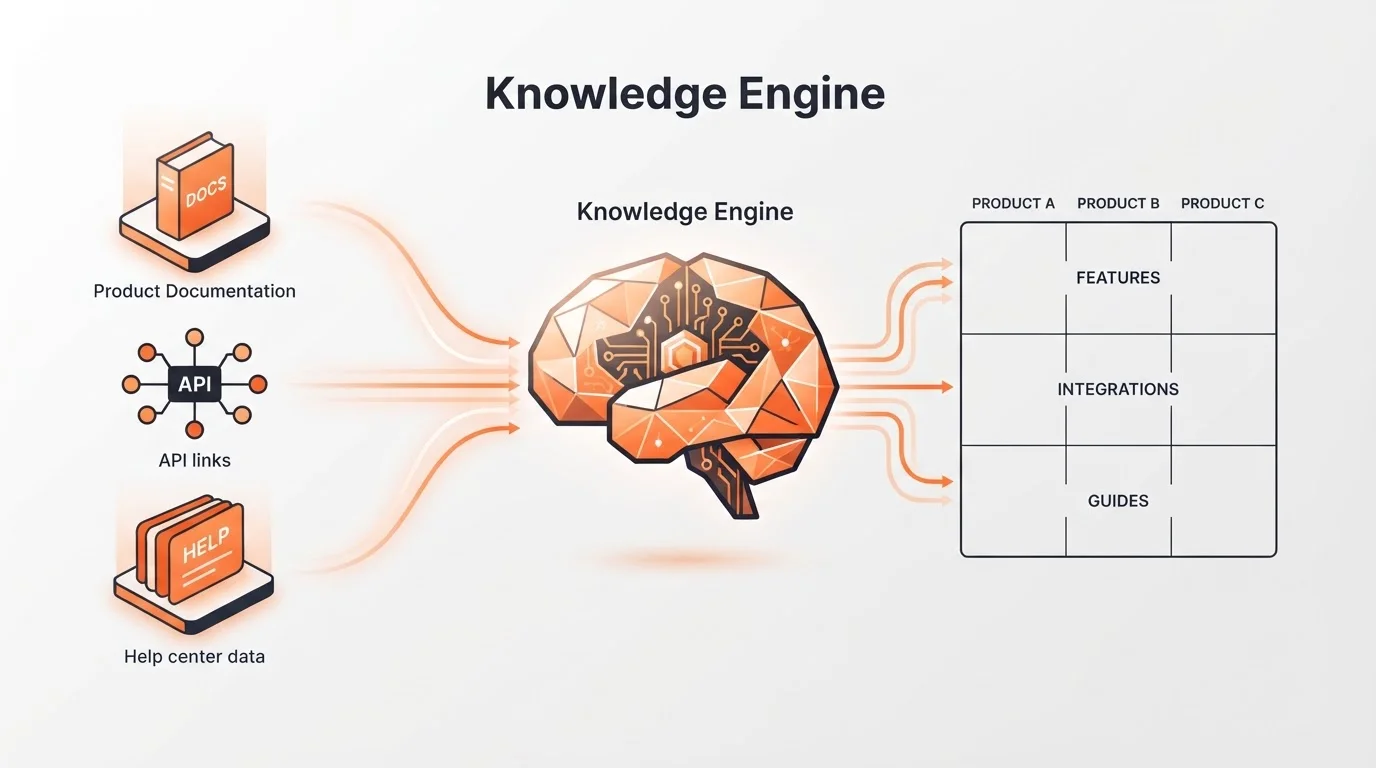
The first step in an autonomous strategy is feeding the Knowledge Engine. Founders can provide public product sources, upload technical documents, or paste direct links to help centers. This ensures the engine has access to the 'source of truth' for the product. Unlike generic AI, which draws from the entire internet, an autonomous platform uses this specific context to ensure every article is factually accurate and aligned with your brand.
Blogged allows users to organize these facts by product entity, making it easy for the system to distinguish between core features, enterprise use cases, and technical integrations. This structured data approach is what allows the blog to function as an extension of the founder's own expertise, rather than a disconnected marketing silo.
Phase 2: Strategic Content Planning with Autopilot
Once the knowledge is ingested, the founder sets the strategic direction. Rather than writing individual posts, you approve Content Directions based on feature launches or competitor gaps. The Full Autopilot feature then refills a topic queue based on these approved directions, ensuring the blog never goes dark.
This system allows founders to maintain a cadence of two to three posts per week—a frequency that significantly improves visibility in search results. You retain the ability to review or revise articles, but the heavy lifting of research and drafting is removed from your daily to-do list. This shift from 'creator' to 'director' is essential for scaling a SaaS to the next level of growth.
Get practical updates on saas founder organic leads growth
Receive new articles and practical insights by email.
Phase 3: Native Publishing and Conversion Tracking

The final stage is delivering content where your audience can find it. Modern autonomous platforms offer deep integrations with common SaaS stacks. For instance, the WordPress AI Blog Publishing integration uses a dedicated plugin and application password to deliver verified articles directly to your site. This allows founders to collect consented visits and track configured conversions for every article published.
Similar deep integrations exist for Ghost, Webflow CMS, and Next.js environments. For Ghost users, verifying a connection involves creating a custom integration and using an Admin API key. These native connections are vital because they allow you to see exactly which blog post led to a sign-up, providing the data needed to prove saas content marketing ROI. By treating the blog as a measurable revenue channel, you can justify the investment in organic growth.
Why Consistency and Authority Drive ROI
The effectiveness of an autonomous blog isn't just about the number of words published; it’s about the compound authority generated over time. When a site consistently publishes high-quality, product-led content, it begins to rank for long-tail keywords that competitors might ignore. These keywords often have lower search volume but much higher commercial intent because they address specific technical problems.
Furthermore, by providing factual, structured content, your site is more likely to earn GEO citations. When a user asks an AI 'How do I automate X?', the AI looks for authoritative sources to cite. Because your blog is grounded in the Knowledge Engine, it becomes a prime candidate for these citations. This leads to pre-qualified traffic; by the time a visitor clicks through to your trial page, they already understand how your software solves their problem. The result is a more efficient sales funnel where the content does the heavy lifting of education and qualification.
Lessons for the Modern SaaS Founder
Scaling a SaaS requires a shift from doing the work to building systems that do the work. The founders who succeed in the next era of search are those who treat their content as a technical asset. First, remember that your product documentation and changelogs are a goldmine; use them to ground your content engine. This ensures your marketing is as technically sophisticated as your software.
Second, prioritize consistency over perfection. A single 'perfect' post published once a quarter will never outperform a steady stream of high-quality, SEO-optimized articles. Automation ensures the engine keeps running even during high-intensity development cycles. Finally, focus on outcomes. Use a platform that tracks CTA and lead outcomes to ensure your content is driving real growth, not just vanity metrics like page views.
Frequently Asked Questions
Q: Is autonomous blogging just another word for AI writing?
No. While AI generates text, an autonomous platform manages the entire lifecycle, including keyword research, fact-checking against your product documents, SEO/GEO optimization, and direct publishing to your CMS.
Q: Does automated content hurt my Google rankings?
Google rewards helpful, original content that serves the user. By using a Knowledge Engine to ground content in your specific product facts and facets, you avoid the generic, low-value content that search engines penalize.
Q: How much control do I have over the output?
You maintain strategic oversight by approving content directions and managing the topic queue. You can review and revise any article (Blogged offers 1 to 3 revisions depending on the plan) before it goes live.
Q: Can my team help manage the blog?
Yes. Paid plans include unlimited team seats, allowing product managers or editors to participate in the review and approval process without additional costs.
Q: What integrations are available for publishing?
Blogged integrates natively with WordPress, Ghost, Webflow, and Next.js, allowing you to deliver content directly to your site and track visitor engagement and conversions.
The era of manual, time-consuming blogging is becoming a liability for lean SaaS teams. As search evolves into a mix of traditional links and generative AI answers, the ability to produce high-context, product-led content at scale is no longer optional—it is a requirement for survival. By deploying an autonomous blogging platform, founders can transform their technical expertise into a discoverable lead engine, reclaiming their time to focus on building the future of their product. The shift to automation isn't just about efficiency; it's about ensuring your product gets the visibility it deserves in an increasingly crowded market.