
On this page
Building a SaaS product is an exercise in resource management. For most founders, the choice between refining a feature and marketing the platform is often a zero-sum game. You know that capturing specific market segments requires SaaS niche keyword domination, but the manual effort of researching, writing, and optimizing high-intent content is often more than a small team can handle. The result is a common industry stalemate: a powerful product that remains invisible to the very users searching for its specific solutions.
Consider the strategic position of a company like InnovateCo, a hypothetical SaaS specializing in resource management for specialized engineering teams. Despite being technically superior, they might remain invisible on search engine results pages (SERPs) because they cannot match the content volume of established incumbents. This guide explores how a startup in this position can break the stalemate by leveraging autonomous blogging and strategic competitor analysis to secure a dominant position in their niche.
By moving away from the traditional content treadmill and adopting a platform that transforms product knowledge into discoverable, product-led content, founders can scale their organic footprint while keeping their focus entirely on their roadmap. This strategic blueprint outlines the path from obscurity to authority without the overhead of a full marketing department.
The Challenge: The Paradox of Product Expertise and Content Bandwidth
Vertical SaaS often requires a high degree of technical authority. Generic content fails in these spaces because the primary audience—engineering leads, project managers, or specialized architects—has a low tolerance for fluff. They are searching for specific solutions to complex workflow problems, not generic listicles. Founders typically attempt three standard approaches to solve this, each with significant drawbacks.
In-house writing by the CEO or CTO ensures technical accuracy but consumes 10 to 15 hours per post, leading to a silent blog as the product roadmap intensifies. Hiring generalist freelance writers often results in high volumes of text that lack technical depth, requiring the founder to spend more time editing than it would have taken to write the piece themselves. Finally, traditional SEO agencies offer broad keyword research but often struggle to map those terms to a unique SaaS feature set, attracting traffic that rarely converts into actual product signups.
The core issue is not a lack of effort; it is the struggle to sustain the research, writing, optimization, and publishing cycles every week while scaling a company. A force multiplier is required to turn internal product knowledge into a high-frequency, high-quality content engine.
Strategic Intelligence: Leveraging Competitor Blog Watch
The first step in dominating a niche is realizing that you do not need to guess what to write about. Your competitors are already providing the roadmap. By using strategic monitoring, a SaaS founder can identify the Content Delta—the specific gaps where competitors are ranking for broad terms but failing to address the nuanced, long-tail needs of the niche.
Instead of trying to outrank a billion-dollar incumbent for a high-competition term like "project management software," the goal is to spot underserved queries. For a specialized engineering SaaS, this might mean targeting terms like "resource allocation for sub-sea engineering teams" or "real-time capacity planning for hardware-software hybrid sprints." Strategic competitor monitoring allows you to identify underserved gaps and turn them into comprehensive, product-led guides.
This approach shifts the focus from high-volume informational terms to high-conversion bottom-funnel terms (BOFU) where users are actively seeking a solution to buy. By watching which articles competitors update or promote, you can anticipate market shifts and respond with superior, more specific content in a fraction of the time.
Implementation: From Product Knowledge to Autonomous Content
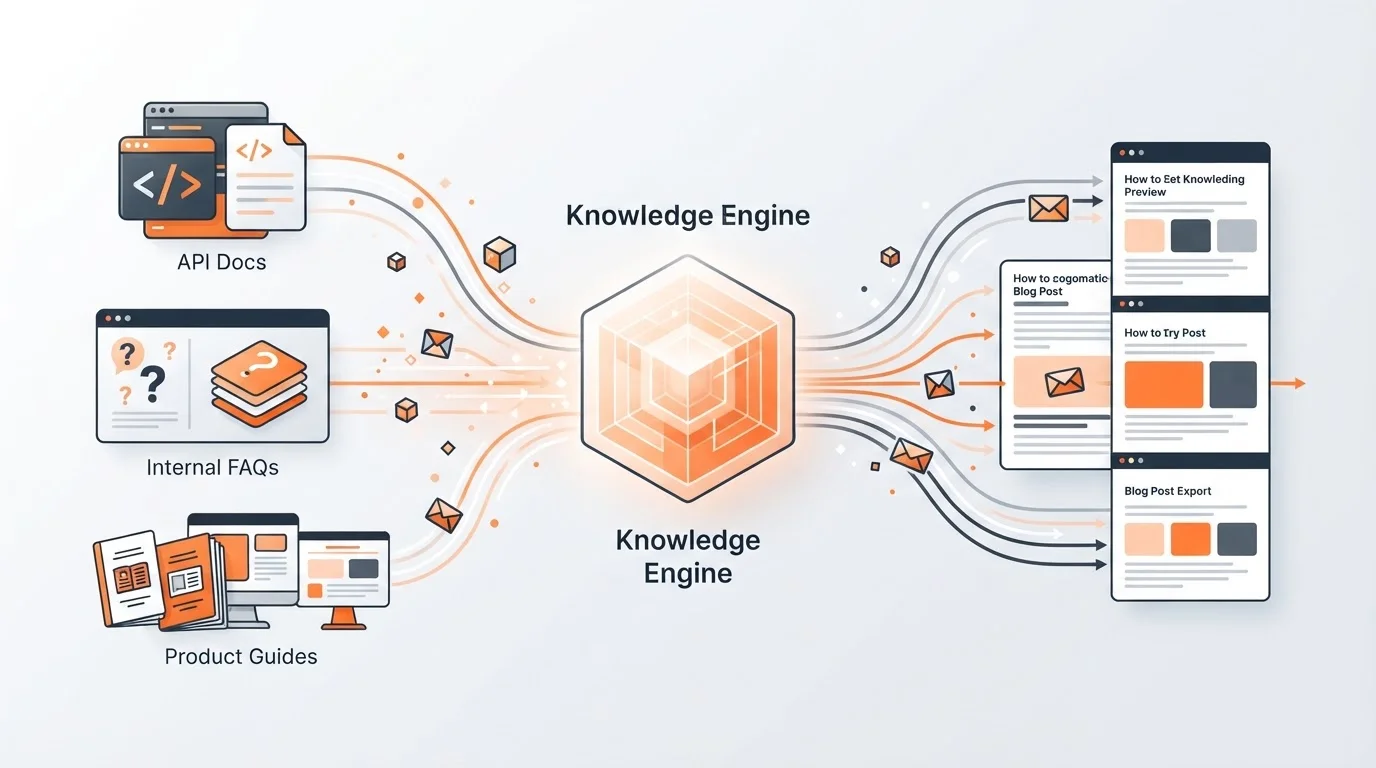
The bridge between strategic intent and live articles is a robust Knowledge Engine. For a technical SaaS, this means you don't have to teach an AI how your product works from scratch every time you want a new post. Instead, you provide the platform with your existing technical documentation, internal FAQs, and direct product descriptions to ground the output in reality.
Blogged's Knowledge Engine for Autonomous SaaS Blogs allows users to feed the system with public sources, uploaded PDF documents, pasted links, or raw text descriptions. This ensures that every article generated is deeply integrated with the product's actual capabilities, preventing the hallucinations or generic advice common in standard AI writing tools. The workflow becomes a cycle of strategic oversight rather than manual labor.
The founder approves a content plan generated by the autonomous system, which has already researched the niche keywords and analyzed competitor gaps. The system then handles the drafting, SEO/GEO optimization, and internal linking automatically, ensuring the content is both human-readable and search-engine-ready.
Seamless Publishing and CMS Integration
Efficiency is lost if a founder has to manually copy-paste content into their CMS, fix formatting, and re-upload images. Direct integration allows for a one-click review-to-publish workflow that keeps the technical stack simple. For those running a site on WordPress, a specialized publishing plugin and an application password allow the autonomous platform to deliver verified articles directly to the dashboard as ready-to-publish drafts.
If the SaaS uses Ghost, the integration manages content creation and review while Ghost itself renders the reader experience. By creating a custom integration in Ghost and using its Admin API key, the founder can verify the connection and begin syncing content immediately. Similarly, the Webflow CMS integration allows teams to track conversions for these verified articles, ensuring that the content is driving signups and not just vanity views.
Comparing Content Production Models for SaaS
To understand the ROI of an autonomous approach, founders must compare the traditional methods against the automated model. The following table highlights the operational differences across key performance areas.
| Feature | In-House Team | Freelance/Agency | Autonomous (Blogged) |
|---|---|---|---|
| Setup Time | Months (Hiring) | Weeks (Vetting) | Minutes (Knowledge Sync) |
| Product Knowledge | Very High | Low to Medium | High (via Knowledge Engine) |
| Consistency | Often Sporadic | Variable | Fully Automated |
| SEO Optimization | Manual Research | Manual Research | Autonomous Research |
| Founder Involvement | High (10+ hours/week) | Medium (5+ hours/week) | Minimal (<1 hour/week) |
| Technical Accuracy | High | Variable | High (Fact-Grounded) |
Tangible Outcomes: Dominating the Long-Tail
Consistency is the primary driver of SEO success. By publishing high-quality, product-led articles at a cadence that is impossible to sustain manually, a SaaS can achieve top rankings for dozens of high-intent niche keywords within months. This isn't just about traffic volume; it is about funnel quality. When a blog becomes the go-to resource for specific workflow questions, visitors enter the sales funnel with a deep understanding of the product's unique value proposition.
Because the content is built on actual technical documentation, the transition from reader to trial user is much smoother. The SaaS founder competitive advantage here is clear: while competitors are manually grinding out occasional blog posts or paying high agency fees for generic content, an automated engine runs a lead-generation machine on autopilot. This frees the founding team to focus on high-leverage activities like closing funding rounds or shipping major product updates.
The Future of Discovery: Moving from SEO to GEO
The search landscape is shifting toward Generative Engine Optimization (GEO). Traditional search is evolving into AI-driven answer engines like Perplexity, ChatGPT, and Google AI Overviews. These engines do not just look for keywords; they look for authoritative, specific sources to cite in their generated answers. Because an autonomous system like Blogged produces structured, specific, and product-led content, these articles become highly citable by LLMs.
When a user asks an AI agent a technical question related to your niche, the AI is more likely to pull data from your blog if the content is grounded in real product knowledge rather than generic filler. This Answer Engine Optimization is becoming a primary discovery layer for SaaS researchers. By building an autonomous content engine early, you are not just winning today's SERPs—you are securing visibility in the future of AI-driven search.
Choosing the Right Plan for Niche Domination
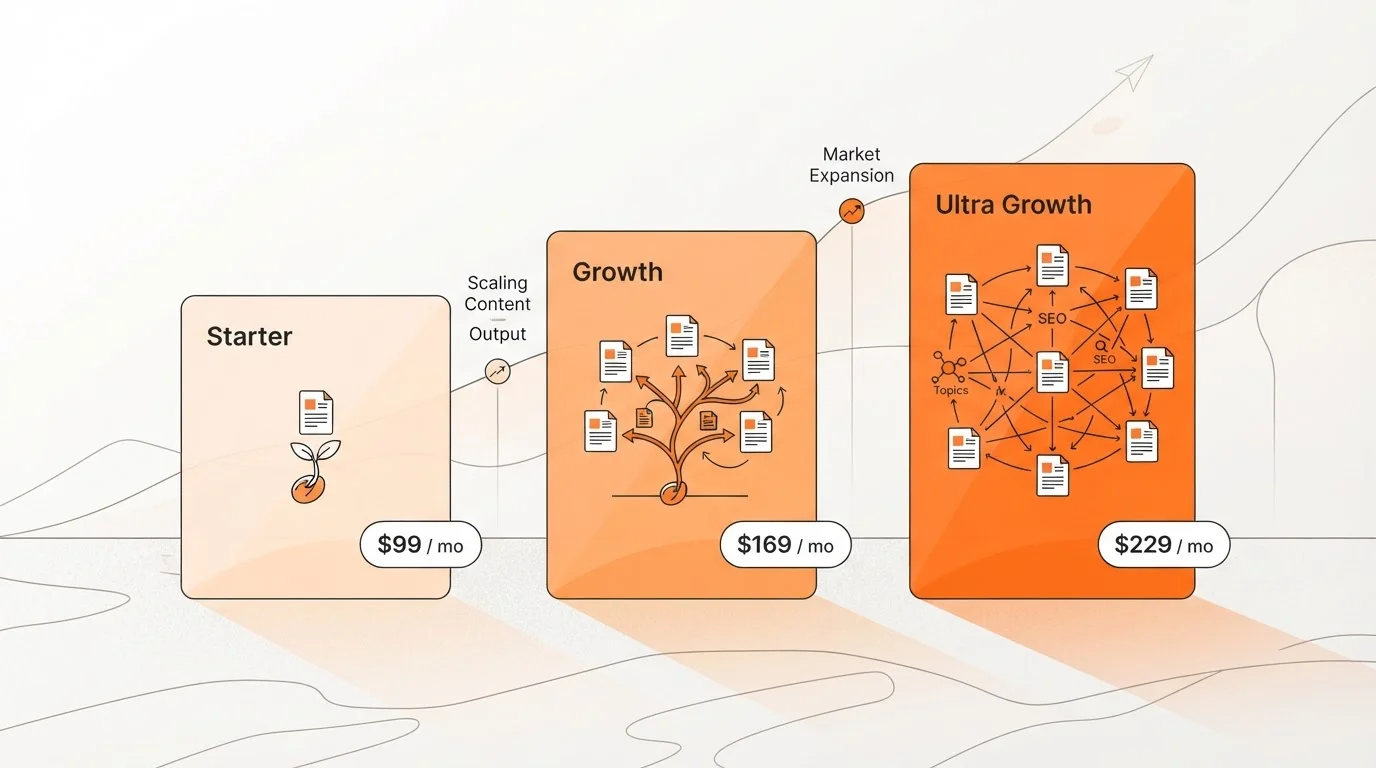
Scaling an organic strategy should match the growth stage of the company. Blogged offers tiered pricing designed to provide the necessary infrastructure for different levels of market expansion. Each plan handles the full lifecycle of content: research, planning, writing, optimization, internal linking, and direct publishing to your chosen CMS.
- Blogged Starter: At $99 per month, this plan is built for founders launching their first consistent organic strategy. It includes the core autonomous features for research and publishing.
- Blogged Growth: At $169 per month, this plan increases capacity for teams looking to capture larger keyword clusters and dominate multiple niche segments.
- Blogged Ultra Growth: At $229 per month, this plan is optimized for rapid market expansion and comprehensive multi-channel content domination.
These tiers allow a SaaS to start lean and scale their content output as their organic revenue grows, ensuring that the marketing budget always stays aligned with ROI.
Frequently Asked Questions
Q: How does autonomous blogging handle technical accuracy for complex SaaS products?
Accuracy is maintained through the Knowledge Engine. By feeding the system your actual documentation, FAQs, and product descriptions, the content remains grounded in your product's specific features rather than generic web data.
Q: Does this replace the need for an SEO strategist?
It automates the execution of an SEO strategy. While the platform handles the research, writing, and optimization, founders still maintain oversight of the content roadmap to ensure it aligns with high-level business goals.
Q: Can I review and edit the articles before they go live?
Yes. The platform handles the heavy lifting of drafting and optimization, but users can review and refine every article within the internal editor before it is published to their CMS.
Q: Which CMS platforms are supported for direct publishing?
Blogged integrates directly with self-hosted WordPress, Ghost, and Webflow, ensuring a seamless workflow from content creation to publication.
Achieving SaaS niche keyword domination is no longer reserved for companies with large marketing budgets. By leveraging autonomous blogging and competitive intelligence, even small founding teams can outmaneuver industry giants. The ability to transform stagnant product knowledge into a high-frequency, product-led content engine is a significant competitive advantage in a crowded market.
It allows you to build a sustainable, compounding organic growth channel that works 24/7, freeing you to do what you do best: building the future of software. By focusing on high-intent, long-tail keywords and ensuring technical accuracy through grounded knowledge, founders can finally stop trading development time for marketing reach.
Get practical updates on saas niche keyword domination case study
Receive new articles and practical insights by email.